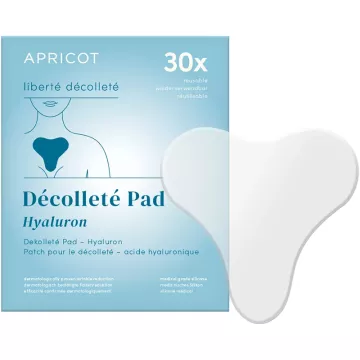
What are some tips for taking care of your décolleté?
The skin on the décolletage is thin, has few sebaceous glands, and is exposed to UV rays and friction from clothing. It often shows signs of aging sooner than the skin on the face. A few simple steps can help maintain the comfort and appearance of this area over the long term:
- Daily moisturizing: Apply a cream or serum enriched with hyaluronic acid, vitamin E, glycerin, or aloe vera every morning and evening. For more comprehensive routines, see the moisturizing page.
- Sun protection: Apply SPF 30 or 50 sunscreen to the décolletage every day, summer and winter, and especially under light or low-cut clothing when exposed to the sun. This is the most effective proven anti-aging measure.
- Gentle cleansing: Choose a cleanser free of alcohol and harsh surfactants; do not scrub this delicate skin.
- Weekly exfoliation: Use a gentle, fine-grained scrub or AHAs at a controlled cosmetic concentration to support superficial skin renewal. This is different from baking soda (alkaline pH ~9), which should be used sparingly on delicate skin. AHAs and BHAs increase photosensitivity: SPF is essential in the days following use.
- Gentle self-massage: Use upward strokes with argan, jojoba, or sweet almond oil to promote a sensation of warmth and relaxation.
- Targeted treatments: Products rich in cosmetic retinol or peptides can help enhance skin radiance and suppleness. Cosmetic retinol is distinct from medical retinoids (prescription-only, contraindicated during pregnancy).
- Internal hydration: 1.5 to 2 liters of water per day, according to general recommendations (adjust as needed).
What products are recommended for décolleté care?
- Targeted moisturizers: enriched with antioxidants (vitamin E, vitamin C, niacinamide) to neutralize environmental free radicals.
- Serums concentrated in hyaluronic acid: provide immediate moisturizing benefits and skin comfort.
- Sheet masks infused with hydrating or brightening active ingredients, once a week.
- SPF 30 or 50sunscreen formulated for the body, to be applied daily.
- Nourishing balms for particularly dry areas in winter.
Note: Collagen used in cosmetics is too large a molecule to penetrate the dermis. Products containing collagen primarily act as film-forming agents and provide surface hydration; to support endogenous collagen synthesis, research is focused instead on bioactive peptides, stable vitamin C, and cosmetic retinol.
How can you prevent skin aging on the décolleté?
Prevention relies on a combination of several strategies:
- Daily, consistent sun protection (SPF 30 or 50), the primary factor in photo-induced skin aging.
- Regular moisturizing (morning and evening).
- Skincare products rich in antioxidants to limit oxidative stress.
- Avoiding tobacco, which impairs microcirculation and breaks down collagen.
- Quality sleep and a varied diet.
- Wear protective clothing during prolonged sun exposure.
What habits can improve the skin on the décolleté?
Several daily habits contribute to the quality of the skin on the décolleté:
- A targeted skincare routine in the morning and evening (gentle cleansing, appropriate moisturizer, SPF in the morning).
- Loose-fitting clothing made of breathable fabrics that doesn’t cause repeated friction.
- Sleep on your back rather than on your side to minimize dynamic creases.
- Regular hydration from within.
- Regular physical activity, which supports microcirculation and overall skin health.
How to choose décolleté skincare products based on your skin type?
- Dry skin: creams and serums rich in emollients (shea butter, argan and coconut oils) and humectants (glycerin, hyaluronic acid).
- Oily skin: Light, non-comedogenic textures; fluid lotions, possibly containing salicylic acid (BHA) at cosmetic concentrations (max 2% according to EC 1223/2009; photosensitizing).
- Combination skin: Water-based balancing products that hydrate without weighing the skin down.
- Sensitive skin: gentle, well-tolerated formulas (dermatologically tested), free of heavy fragrances, and enriched with allantoin, panthenol B5, or chamomile. Test on the inner elbow 24 to 48 hours before using a new product.
How important is diet for the décolleté?
Diet contributes to the overall quality of the skin:
- Antioxidants (vitamins C, E, A, polyphenols) found in fruits, vegetables, berries, leafy greens, and citrus fruits.
- Omega-3s (fatty fish, nuts, flaxseeds, canola oil), which have an overall beneficial effect on systemic inflammation.
- Adequate protein intake (amino acids that are precursors to collagen).
- Regular hydration throughout the day.
- Limiting added sugars (WHO recommendations suggest < 10% of total energy intake from free sugars) and alcohol, which can affect skin quality.
What professional treatments are available for the décolleté?
Several medical or cosmetic procedures can be offered for this area, **following an evaluation by a dermatologist or cosmetic physician**:
- Chemical peels (glycolic acid, trichloroacetic acid depending on concentrations): controlled exfoliation and enhancement of radiance. Post-peel photosensitivity requires strict sun protection.
- Microdermabrasion: mechanical exfoliation performed in a clinic.
- LED phototherapy: gentler approaches; clinical results vary depending on the protocol.
- Fractional laser, IPL, radiofrequency: medical techniques to target pigmented spots or improve skin elasticity; specific indications; should be performed by a trained physician.
All of these procedures carry a risk of adverse effects (redness, post-inflammatory hyperpigmentation, burns depending on skin type). None should be self-administered; the risk-benefit ratio should be evaluated with a doctor.
How does sleep affect the skin on the décolletage?
Sleep plays a role in the skin’s nighttime repair, hormonal regulation, and microcirculation. Insufficient sleep can lead to a duller complexion and a perceived loss of elasticity. As a general guideline: 7 to 9 hours of sleep per night, depending on individual needs. To minimize dynamic wrinkles on the décolletage, sleeping on your back is often recommended over sleeping on your side. Silk pillowcases can help if you prefer to sleep on your side.
Can existing marks on the décolleté be reduced?
It is not possible to “reverse” skin aging, which is a normal biological process. However, there are several approaches that can visually reduce the signs of aging:
- A regular skincare routine with targeted active ingredients (cosmetic retinol, stable vitamin C, peptides, hyaluronic acid).
- Daily sun protection, a key step in limiting the progression of photo-induced damage.
- Complementary medical procedures (chemical peels, laser treatments, fillers for deep wrinkles) following an evaluation by a dermatologist or cosmetic physician.
- Consistency and patience: the visible benefits of a skincare routine develop over several months.
In the event of sudden changes in the skin (rapid appearance of unusual pigmented spots, evolving lesions, asymmetries), consult a dermatologist to rule out any skin conditions.