How does our body absorb calcium?
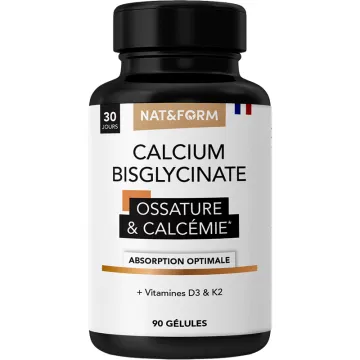
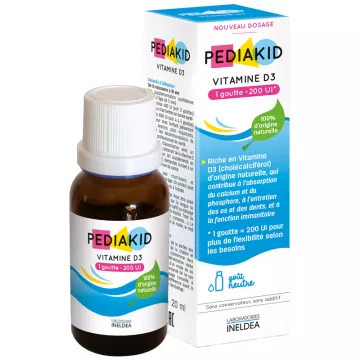
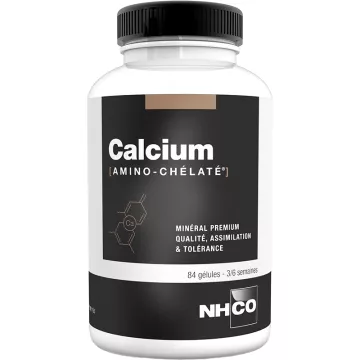
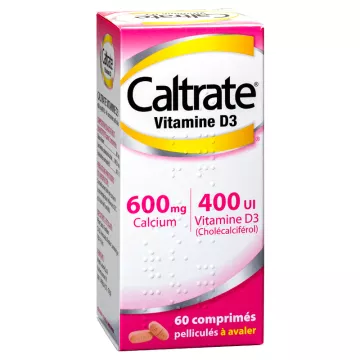
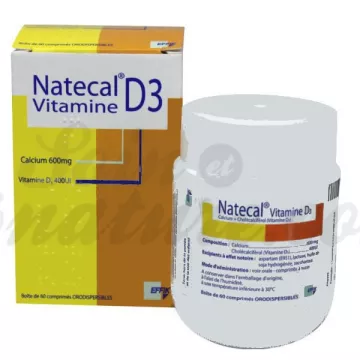
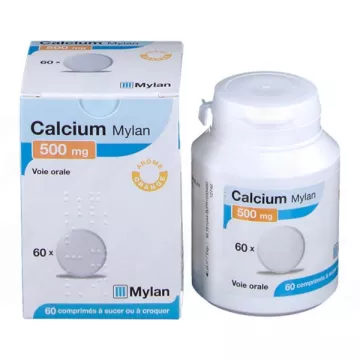
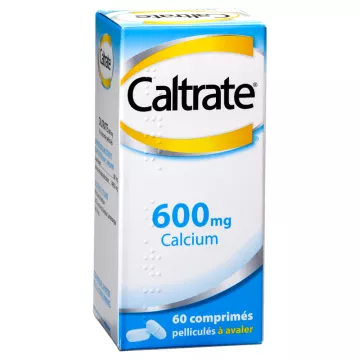
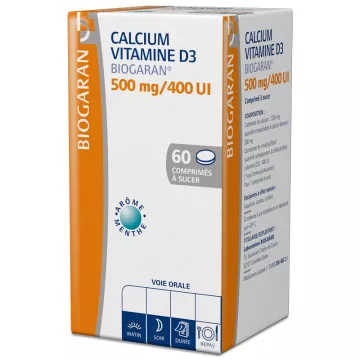
Calcium absorption occurs mainly in the upper part of the small intestine. There are two pathways: an active pathway (which requires vitamin D3 and works best when intake is low) and a passive pathway (which works by simple diffusion when a large amount of calcium is consumed at once). In short, if your body is low on calcium, it absorbs it more efficiently—and conversely, taking 1,000 mg all at once is much less effective than spreading it out over two or three doses throughout the day. Calcium supplements are available in the store, as is vitamin D3, which is essential for its absorption.
- Vitamin D3 enhances absorption: without sufficient D3, only 10 to 15% of ingested calcium is absorbed—with adequate D3 levels, that figure rises to 30–40%—D3 activates “entry points” in intestinal cells (calbindin, TRPV6) that allow calcium to pass through—80% of French people are deficient in D3 during the winter
- Stomach acidity matters: calcium carbonate (the cheapest form) must dissolve in stomach acid to be absorbed—people taking heartburn medications (PPIs such as omeprazole) absorb calcium carbonate less effectively — calcium citrate, on the other hand, dissolves without requiring stomach acid
- Divide doses: at doses exceeding 500 mg per dose, the absorption pathway becomes saturated and the excess is excreted in the stool—two 400-mg doses are always better than one 800-mg dose
- Age reduces absorption: children absorb 60 to 70% of the calcium they consume (the body is actively building bone mass) — adults absorb around 30% — after age 70, absorption can drop to 15% because the skin’s production of vitamin D3 decreases and stomach acidity weakens
- Menopause accelerates this process: the drop in estrogen directly reduces the intestine’s ability to absorb calcium—this is one of the reasons why daily requirements increase to 1,200 mg after menopause
Vitamin D3, K2, and magnesium: why do these three always go together?
- Vitamin D3 helps calcium enter the bloodstream: without it, calcium from food remains in the intestines and is eventually excreted—even with a perfect diet, if you’re deficient in vitamin D3, your calcium won’t cross the intestinal barrier
- K2 directs calcium toward the bones (rather than the arteries): once in the bloodstream, calcium must go to the bones—vitamin K2 activates two proteins that handle this: osteocalcin (which binds calcium to the bone) and MGP (which prevents calcium from depositing in the arteries)—taking D3 or calcium without K2 risks the calcium ending up in the arteries rather than in the bones
- Magnesium activates D3: the D3 you take (or that your skin produces) is in an inactive form—the liver and kidneys must convert it into its active form, and these conversions require magnesium—without enough magnesium, even 2,000 IU of vitamin D3 per day remains partially ineffective—the ideal calcium-to-magnesium ratio is 2 to 1
- Vitamin C is often overlooked: it’s used to produce collagen—the bone matrix onto which calcium is deposited is made of collagen—without this matrix, calcium has nowhere to bind properly
- Excess phosphorus is a problem: sodas, processed meats, and processed foods are very high in phosphorus—excess phosphorus stimulates a hormone (PTH) that releases calcium from the bones to maintain balance in the blood—in other words, eating too many ultra-processed foods depletes bone reserves
What actually blocks calcium absorption?
- Oxalates: found in spinach, rhubarb, cocoa, and beets—they “capture” calcium in the intestine and form a non-absorbable complex that is excreted in the stool—spinach contains 99 mg of calcium per 100 g, but we only absorb 5% of it—so there’s no point in counting it as a source of calcium
- Phytates: found in wheat bran, legumes, and unprocessed whole grains—they reduce absorption by 50 to 80 percent—a simple solution: soak legumes for 12 hours before cooking; choose sourdough bread (fermentation breaks down phytates)
- Excess salt: Every extra gram of salt causes the kidneys to excrete more calcium in the urine—so a high-salt diet causes calcium to be lost through the kidneys, even if you eat plenty of it
- Medications that interfere: PPIs (medications for stomach acid, such as omeprazole) reduce the absorption of calcium carbonate — long-term use of corticosteroids directly weakens the bones — loop diuretics (furosemide) cause calcium loss in the urine — in all these cases, medical monitoring and adjustments to the form or dosage of the medication are recommended
- Vegans are not necessarily at risk of deficiency: kale, broccoli, and bok choy have a calcium bioavailability of 40 to 60%—higher than milk—calcium-fortified plant-based beverages work well as long as they are shaken well before drinking—mineral water (Hépar, Contrex, Rozana) is a source that is often underestimated
How can you supplement wisely and prevent osteoporosis?
- Which form of calcium should you choose? Calcium carbonate—the most concentrated (40% pure calcium), the least expensive, and must be taken with a meal—avoid if you’re taking PPIs—calcium citrate—less concentrated (21%) but better absorbed on an empty stomach and in people taking PPIs or after bariatric surgery—malate and gluconate—well tolerated by the digestive system, intermediate forms
- Always combine vitamin D3 and K2 with any calcium supplement: this is non-negotiable—studies have shown that calcium supplementation alone can increase the risk of calcium deposits in the arteries—vitamin K2 (MK-7 form, long half-life) redirects this calcium to the bones
- Physical activity is more beneficial than supplements: walking, running, and light weight training—these bodyweight exercises stimulate the cells that build bone (osteoblasts)—they are more effective than calcium alone at reducing the risk of fracture
- Monitor your status: a simple blood test (calcium + vitamin D3 + PTH) lets you know where you stand—bone density testing (DXA) is recommended starting at age 60 for women and age 70 for men —Osteoporosis is much more effectively prevented before it sets in
- Do not exceed 500 mg per dose and 1,500 mg per day in supplements: beyond that, the excess is not absorbed and may contribute to kidney stones — excess calcium in the blood (hypercalcemia) causes nausea, constipation, fatigue, and, in severe cases, heart rhythm disorders — calcium and vitamin D supplements are available at the online store