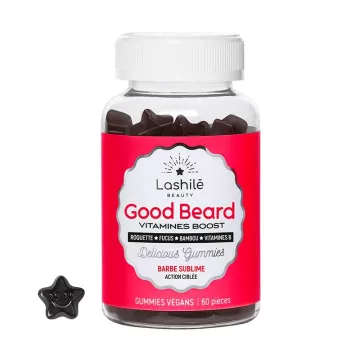
What nutrients are essential for beard growth?
Beard growth depends directly on the intake of micronutrients essential for keratin synthesis, hair follicle cell renewal, and androgenic hormonal regulation. The most common deficiencies are:
- Iron: a cofactor for ribonucleotide reductase, an enzyme essential for DNA synthesis in follicular keratinocytes. It is the leading cause of reversible hair loss in young men, athletes, and vegetarians.
- Vitamin D3: Its VDR receptors are present in the cells of the inner epithelial sheath of hair follicles—they regulate the genes involved in the hair growth cycle.
- Zinc: a cofactor for follicular 5α-reductase and RNA polymerase. A deficiency slows growth and weakens the hair shaft.
- Biotin (vitamin B8): a cofactor for keratin synthesis.
- Sulfur-containing amino acids (methionine, cysteine): direct precursors of keratin (15% sulfur).
Is iron the first deficiency to address for a thick beard?
A key trace element for cell proliferation, iron is the nutrient whose subclinical deficiency (ferritin < 40 µg/L without anemia) is most frequently associated with a sparse beard. As a cofactor for ribonucleotide reductase, it is essential for DNA synthesis in keratinocytes, which divide every 24 hours in the hair bulb. A deficiency reduces oxygenation of the follicle’s germ cells, slowing down the anagen phase. Assessment: Measure serum ferritin (target value ≥ 70 µg/L for optimal growth, according to trichologists). Supplementation should be discussed with a doctor.
Do vitamin D3 and omega-3s support the hair growth cycle?
Two active ingredients with well-documented effects on the hair follicle:
- Vitamin D3: Its VDR receptors in follicular keratinocytes regulate the expression of genes involved in the hair growth cycle, particularly the catagen-to-telogen transition. Epidemiological studies link low levels (< 20 ng/mL) to reduced hair density. Recommended intake: 2,000 to 4,000 IU/day depending on sun exposure.
- omega-3 DHA and EPA reduce perifollicular inflammation—the primary mechanism of follicular miniaturization in androgenetic alopecia. Studies show an improvement in hair density after 6 months of supplementation.
Do magnesium and vitamin B12 optimize beard growth?
Two micronutrients whose subclinical deficiencies insidiously affect hair growth:
- Magnesium improves follicular microcirculation and reduces chronic cortisol—elevated levels of which inhibit the anagen phase and accelerate the transition to the catagen phase. According to dietary surveys, 60% of French adults are deficient in magnesium.
- Vitamin B12 (methylcobalamin) is a cofactor in DNA synthesis within the rapidly dividing keratinocytes of the hair bulb. A deficiency—common among vegans, people over 60, and metformin users—causes diffuse alopecia that is reversible with supplementation.
Does selenium protect hair follicles from oxidative stress?
An essential antioxidant trace element, selenium acts as a cofactor for glutathione peroxidase (GPx) and thioredoxin reductase—enzymes that neutralize lipid peroxides in follicular keratinocytes. The hair bulb, an area of intense cell proliferation, is particularly vulnerable to oxidative stress. Studies link low serum levels to more severe androgenetic alopecia. Recommended intake: 55 to 70 µg/day. Caution: toxic in excess (> 400 µg/day)—never exceed the recommended doses.
How can you relieve itching and dry skin under the beard?
Itching under the beard results from an imbalance in the skin’s microbiome and a weakened lipid barrier. Effective solutions:
- Gentle cleansing 2 to 3 times a week (sulfate- and alcohol-free shampoo)—standard shampoos strip the sensitive skin on the face.
- Daily nourishing oil (jojoba, argan, sweet almond) massaged into the skin under the beard — restores the hydrolipidic film and reduces reactive sebum production.
- In cases of confirmed seborrheic dermatitis: zinc pyrithione (2%) or ketoconazole (2%) in a targeted beard shampoo—antifungals against Malassezia globosa. Medical consultation recommended.
- Gently exfoliate (0.5–1% salicylic acid) 1–2 times a week to remove dead skin cells and unclog follicles.