What is an ankle sprain, and which ligaments are affected?
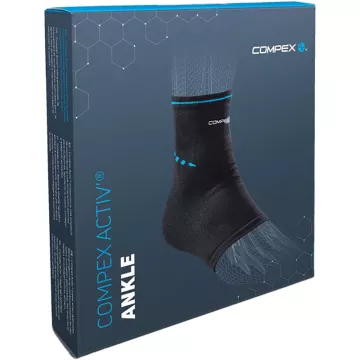
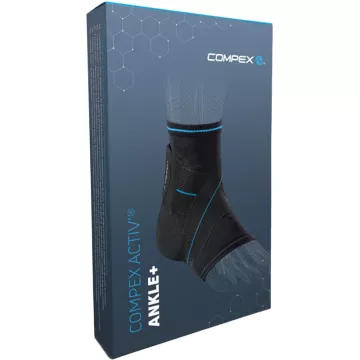
An ankle sprain is the most common ligament injury in sports—6,000 cases per day in France. In 85% of cases, it affects the lateral ankle ligament complex (LAC), which consists of three bundles; of these, the anterior talofibular ligament (ATFL) is most commonly injured. Our line of sports supports offers ankle braces and wraps tailored to each severity level.
- Main mechanism: equinus varus (the foot twists inward during a poor landing or a misstep)—the AFLT is injured first, followed by the calcaneofibular ligament (CFL)
- Grade 1: AATF strain—moderate pain, walking possible, slight swelling—healing takes 1–2 weeks
- Grade 2: partial tear of the LTFA ± LCF — moderate instability, bruising, pain when bearing weight — healing time: 3–6 weeks
- Grade 3: Complete rupture — positive anterior drawer sign, major instability — may require a Broström ligamentoplasty if chronic instability persists
- Internal sprain (deltaid ligament): less common, more severe — valgus mechanism — always rule out an associated fracture of the 5th metatarsal
Management and Ottawa Criteria for Ankle Sprains
The decision to perform an X-ray is based on the Ottawa criteria—validated with 100% sensitivity for associated fractures.
- Ottawa Criteria (X-ray required): pain on palpation of the distal fibula (6 cm proximal) OR the navicular bone OR the fifth metatarsal — OR inability to take 4 steps unassisted — if none of these criteria are met: fracture is highly unlikely
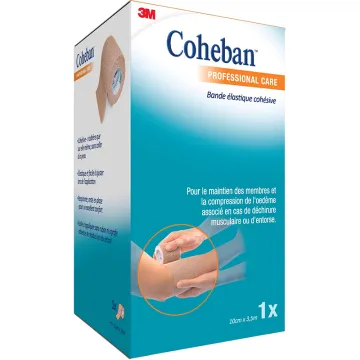
- POLICE Protocol (first 48 hours): Protection + Optimal Loading (gentle weight-bearing starting on Day 1–Day 2 if tolerated) + Ice (15–20 min every 2–3 hours, never applied directly) + Compression (figure-8 bandage) + Elevation
- Do not massage during the first 48 hours—risk of spreading the hematoma
- No heat for the first 48 hours—heat worsens edema in the acute phase
- Semi-rigid ankle brace: recommended starting on Day 3 for Grade 2–3 sprains — allows for early weight-bearing while protecting healing ligaments — shown to be superior to a cast in studies
What supplements support ankle ligament healing?
Ankle ligaments heal slowly due to their poor blood supply—targeted supplementation can significantly shorten the time to return to sports. Find these active ingredients in our joint collagen line.
- Hydrolyzed marine collagen + vitamin C: take 30–60 minutes before rehabilitation—increases type I collagen synthesis (the main component of ligaments) by up to 2x
- Omega-3: helps regulate the resolution of the inflammatory phase—resulting in more flexible and resilient scar tissue in the ligaments—avoid NSAIDs for the first 72 hours
- Magnesium: reduces spasms in the periarticular muscles (peroneal, tibialis anterior) that protect the ankle — 300–400 mg/day
- Zinc (10–15 mg/day) + vitamin E: cofactors for ligament remodeling and cellular antioxidants
- Glucosamine: provides structural support for the tibiotarsal cartilage — helps prevent long-term post-sprain osteoarthritis
Rehabilitation and prevention of recurrent ankle sprains
- Ankle strengthening exercises: heel raises, eversion against resistance (elastic band), walking on the outer and inner edges of the foot — strengthen the peroneal muscles (primary stabilizers) and the tibialis anterior
- Proprioception: Freeman’s platform, single-leg standing with eyes closed, proprioception discs — 50–70% reduction in the risk of recurrence — to begin as soon as weight-bearing is pain-free
- Gradual return to sports: walking → jogging in a straight line → changes of direction → full sports activity — wear a sports ankle brace for 3–6 months upon resumption
- Complications of an untreated sprain: chronic instability (limping on uneven terrain), early tibiotarsal osteoarthritis, tarsal sinus syndrome (persistent lateral pain)—always follow a comprehensive rehabilitation program even for “mild” sprains
- Ankle MRI if pain persists for > 6 weeks despite proper rehabilitation — to rule out an osteochondral lesion of the talus or an underestimated ligament tear