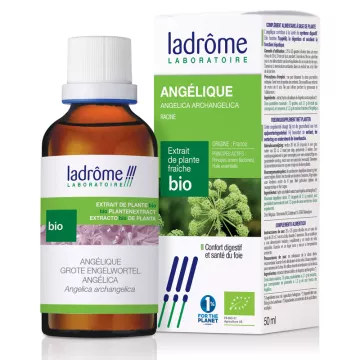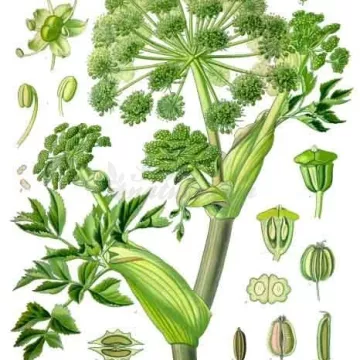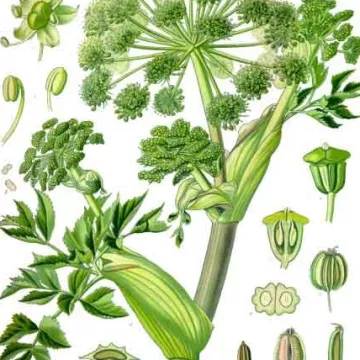
Angelica (Angelica archangelica) is a herbaceous plant native to Northern Europe that has been used for centuries in traditional herbal medicine. Its roots, leaves, and seeds contain a rich blend of coumarins, monoterpenes, and volatile compounds. Available as an herbal tea, mother tincture, essential oil, or capsules, angelica is incorporated into routines for general well-being and digestive support according to herbal medicine traditions.
Angelica is used in European herbal medicine traditions primarily for its carminative and antispasmodic properties. These characteristics stem from its composition of volatile monoterpenes, notably angelicin and other coumarins. According to documented traditional uses, angelica is consumed to aid intestinal transit and support gentle digestion. Since no formal health claims for angelica have been validated by regulatory authorities, its benefits are considered part of traditional herbal medicine.
The primary traditional use of angelica is for mild digestive support. The volatile monoterpenes it contains provide a moderate carminative effect recognized in European herbal medicine, promoting the elimination of intestinal gas and easier digestion. Angelica is particularly suited for users seeking herbal digestive support, especially to aid digestion after a heavy meal or in cases of temporary digestive discomfort.
Its traditional antispasmodic properties suggest it may help alleviate occasional digestive discomfort. This use is primarily based on traditional and empirical knowledge, without robust clinical validation in humans. Angelica should never replace a medical consultation in cases of persistent or severe digestive disorders.
Angelica is easy to prepare according to personal preferences and traditional methods. To makea root infusion, pour 250 ml of boiling water (90–95°C) over 1 teaspoon of crushed dried angelica roots; let it steep for 5–10 minutes. This preparation yields a light herbal beverage that can be consumed 1–2 times a day after meals. Fresh leaves can be added to blended herbal teas for a more delicate and less intense flavor.
Mother tinctures or liquid extracts offer maximum concentration; consult the product label for the recommended dosage (usually 20–30 drops diluted in water, 1–3 times a day). Standardized angelica powder capsules provide a convenient, measured dose, particularly suited for a regular daily routine. Angelica essential oils (highly concentrated in coumarins) must be handled with extreme caution: never use undiluted, never ingest orally without professional supervision, and strictly adhere to the minimum dosages (1–2 drops diluted in vegetable oil for external massage only).
Angelica contains furanocoumarins and bergapten, scientifically documented photosensitizing compounds. These compounds can increase the skin’s sensitivity to UV rays, potentially causing a phototoxic reaction (erythema, hyperpigmentation, or even severe sunburn) in the event of prolonged sun exposure following ingestion or topical application. Avoid direct and prolonged UV exposure (at least 12–24 hours) after ingestion, application of essential oil, or a massage containing angelica. This precaution is particularly important in Mediterranean climates or at high altitudes. People with sensitive skin, a history of photosensitivity, or those using photosensitizing agents (retinoids, certain medications) should exercise extreme caution or avoid angelica.
Traditional moderate consumption is limited to 1–2 cups of herbal tea per day (or the equivalent in diluted tincture), taken after meals to maximize digestive support. For mild digestive wellness routines, a 2–4-week course is recommended to assess tolerance and personal benefits. Angelica can be consumed occasionally or as an occasional course of treatment; prolonged, indefinite use has not been documented as safe. It is prudent to take a 1–2-week break after each 4-week course.
Angelica is traditionally combined with other digestive herbs (fennel, anise, mint, ginger) without any documented problematic interactions, creating a recognized carminative synergy. In blended herbal teas, it enriches the aromatic profiles while providing mild digestive support. There is no need to wait 1–2 hours between consuming angelica and certain minerals (iron, calcium)—the coumarins in angelica do not significantly affect their absorption.
Angelica requires several strict precautions due to its coumarin content. Pregnant and breastfeeding women should avoid angelica entirely, as coumarins pose a theoretical risk of uterine stimulation and effects on the newborn via breast milk. People taking anticoagulants (warfarin, new anticoagulants) should consult a doctor before use, as angelica coumarins could theoretically potentiate the anticoagulant effects and increase the risk of bleeding.
People allergic to the Apiaceae family (carrot, celery, fennel, parsley, dill) may experience cross-sensitivity to angelica, although documented cases are rare. People with a history of photosensitivity, melanoma, or other photosensitive conditions should avoid angelica or consult a dermatologist. Excessive consumption may occasionally cause minor digestive discomfort, nausea, or mild dizziness due to the concentration of volatile monoterpenes; reduce the dose or space out treatment cycles if these symptoms occur.