What causes acne scars?
Acne marks encompass several distinct conditions: post-inflammatory hyperpigmentation (brown or gray marks in skin types IV through VI), post-inflammatory erythema (residual redness), and true scars (structural changes in the dermis). They result from the inflammatory response to acne lesions:
- obstruction of the pilosebaceous follicle (sebum, keratinized cells), proliferation of *Cutibacterium acnes*, and inflammation.
- When inflammation reaches the deep layers of the dermis, the tissue can be damaged, leading to lasting scars.
- Aggravating factors: severity and duration ofacne, picking and self-extraction of lesions, unprotected sun exposure (which further exacerbates hyperpigmentation).
- Individual predispositions: genetics, skin type, tendency toward hypertrophic or keloid scars.
The main types of scars: atrophic (depressed) scars—includingice-pick, rolling (wavy), or boxcar (craters with sharp edges); hypertrophic (raised) or, more rarely, keloid scars, which are more common on the back and chest.
How can acne scars be prevented?
Prevention is based on a few key principles:
- Treat acne at the first signs with an approach tailored to its severity (SFD/HAS recommendations).
- Do not pick at pimples: do not squeeze or scratch them. Picking increases the risk of permanent scarring.
- Strict sun protection year-round (SPF 30 to 50, lightweight, non-comedogenic formula) to limit post-inflammatory hyperpigmentation, which is particularly pronounced in skin types IV through VI. See sun protection.
- A gentle, non-comedogenic skincare routine without a buildup of irritating active ingredients.
- Consult a dermatologist early on in cases of moderate to severe acne or a tendency toward lasting marks.
What are effective treatments for acne scars?
Treatment options are organized into several levels, depending on the nature of the marks:
- Post-inflammatory hyperpigmentation:
- Topicalvitamin C (stabilized ascorbic acid): an antioxidant that helps even out skin tone.
- 5–10% niacinamide, cosmetic-grade azelaic acid (up to 10%), topical tranexamic acid.
- Exfoliating acids (glycolic acid, mandelic acid, lactic acid, salicylic acid—max 2% in cosmetics according to EC Regulation 1223/2009)—photosensitizing: SPF is essential.
- Cosmetic retinol as part of a routine, or prescription-only topical medical retinoids (adapalene, tretinoin)—more potent, photosensitizing, and contraindicated during pregnancy for some. Hydroquinone is prohibited in depigmenting cosmetics in the European Union (Annex II of Regulation (EC) No. 1223/2009).
- Atrophic scars:
- Superficial to medium chemical peels (glycolic, salicylic, low-concentration TCA) performed in a medical office.
- Microneedling (dermaroller, dermapen) in a medical office under strictly aseptic conditions.
- Non-ablative or ablative fractional lasers (CO₂, Erbium).
- Subcision for retracted depressed scars.
- Hyaluronic acid fillers for certain round depressed scars.
- Hypertrophic or keloid scars:
- Intraläsional corticosteroid therapy (triamcinolone injections), silicone sheets, targeted cryotherapy, and vascular laser treatment as indicated.
All of these medical procedures require a dermatological or medical-aesthetic consultation to assess the risk-benefit balance based on the patient’s profile, the type of scars, and their skin type. Active acne must be brought under control before treating the scars.
How can natural treatments help reduce acne scars?
Several complementary approaches can be used alongside medical treatments:
- Purealoe vera gel: soothing and well-tolerated.
- Rosehip oil: rich in essential fatty acids and carotenoids, traditionally used for its emollient and nourishing effects; clinical data on scars remains limited.
- Topical niacinamide in a cosmetic serum: good tolerance profile.
- Cosmetic azelaic acid for hyperpigmentation.
These approaches are suitable as a complement to a well-managed skincare routine, but should not replace medical treatments for structural scars. Test any new product on the inner elbow for 24 to 48 hours before regular use. Avoid internet remedies with no proven effectiveness (undiluted lemon juice—photosensitization due to furocoumarins; toothpaste; repeated application of baking soda to the face).
When should you see a dermatologist for acne scars?
A dermatology consultation is recommended if:
- The marks are widespread, deep, or structural (depressed or raised scars).
- Active acne is not under control or remains severe.
- Hyperpigmentation persists despite following an appropriate skincare routine for 3 to 6 months.
- The psychological, social, or professional impact is significant.
- Professional advice is sought to determine the appropriate procedure (chemical peel, microneedling, laser treatment, dermal filler).
- Hypertrophic scars or keloids (require specialized treatment).
The dermatologist assesses the type of marks, the phototype, and the overall context, and proposes an appropriate treatment strategy.
What impact do hormones have on acne and its scars?
Hormones play a recognized role in the development of acne through androgens, which stimulate sebum production. Hormonal fluctuations (puberty, menstrual cycle, pregnancy, postpartum, menopause, polycystic ovary syndrome—PCOS) can intensify breakouts and, as a result, increase the risk of residual scars. A medical consultation allows for the evaluation of:
- Whether a hormonal workup (androgens, ovarian function) is warranted for adult women with persistent acne, especially if it is associated with irregular periods, hirsutism, or androgenetic alopecia.
- The benefits of hormone-regulating therapy (by prescription, after evaluating contraindications and risks).
- The management of any potential side effects and the expected benefit for the skin.
How does nutrition affect acne scars?
Diet primarily affects active acne and, indirectly, the risk of acne scars:
- High glycemic index (added sugars, ultra-processed foods): may worsen flare-ups in some people.
- Dairy products (especially skim milk): associated with a possible worsening in several studies; effects vary depending on individual profiles.
- Omega-3s, fruits and vegetables, antioxidants (vitamins A, C, E; polyphenols): generally have a beneficial effect on systemic inflammation and skin health.
- Zinc: helpful in cases of confirmed deficiency.
- Regular hydration.
Empirical elimination of foods is not recommended. Consulting a doctor or dietitian allows for a personalized approach.
What are the risks of aggressive acne treatments?
Powerful medical treatments are highly effective but require strict precautions:
- Oral isotretinoin: teratogenic (absolute contraindication during pregnancy). Pregnancy prevention program (ANSM) requiring continuous effective contraception, regular pregnancy tests, and prior consent for women of childbearing age. Strict laboratory monitoring (liver and lipid panel), monitoring for adverse effects (marked dryness of the skin and mucous membranes, psychological disturbances—mood changes, depressive thoughts—to be reported immediately), photosensitizing.
- Topical retinoids (adapalene, tretinoin, topical isotretinoin): photosensitizing, initially irritating; some are contraindicated during pregnancy.
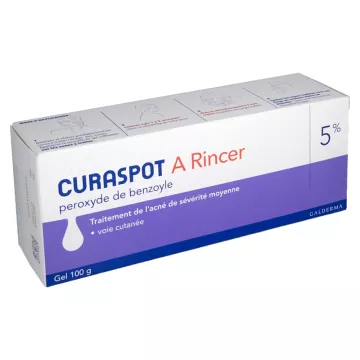
- Benzoyl peroxide: photosensitizing, bleaches textiles and bedding, irritating at the start of use.
- Oral cyclines (doxycycline, lymecycline): photosensitizing; contraindicated during pregnancy and in children under 8 years of age; should be avoided in cases of allergy.
- Lasers, medium- to deep chemical peels: risks of post-inflammatory hyperpigmentation (skin types IV–VI), burns, and infections if the protocol is inappropriate. Should be performed by experienced practitioners.
Medical follow-up significantly reduces these risks by overseeing each step.
Why is regular dermatological follow-up important?
Regular dermatological follow-up is particularly valuable for moderate to severe acne:
- Adjustment of treatments based on the skin’s response.
- Early detection of adverse effects and rapid adjustment.
- Minimizing the risk of permanent scarring.
- Stepwise management of residual marks once the acne is under control.
- Support for coping with the psychological impact, particularly during adolescence.
- Adaptation to hormonal changes (puberty, pregnancy, menopause).
What are some recent innovations for treating acne scars?
Recent innovations in cosmetic dermatology open up several avenues:
- Non-ablative fractional lasers (1540, 1550, 1565 nm) or ablative lasers (CO₂, fractional erbium) with treatment protocols tailored to skin type.
- Combined energy treatments (fractional radiofrequency micro-needling), radiofrequency microneedling.
- Assisted subcision for retracted depressed scars.
- Hyaluronic acid fillers for certain round scars.
- New topical active ingredients (peptides, amino acids, niacinamide, tranexamic acid) in stabilized formulations.
- Research on biotherapies (anti-IL for severe or resistant inflammatory forms), still evolving.
Each procedure is discussed during the consultation to assess the patient’s profile, expectations, and the benefit-risk balance, particularly in patients with dark skin types, where post-inflammatory hyperpigmentation can complicate certain treatment protocols.