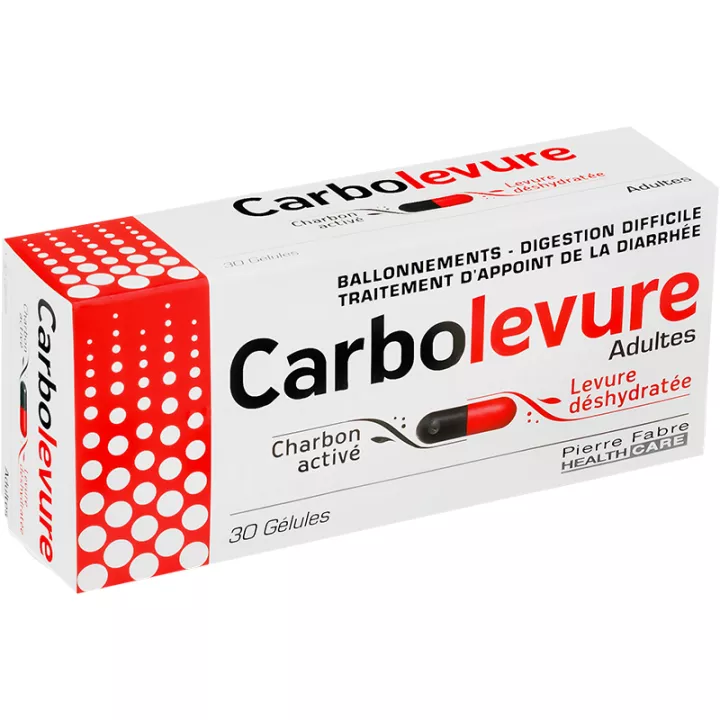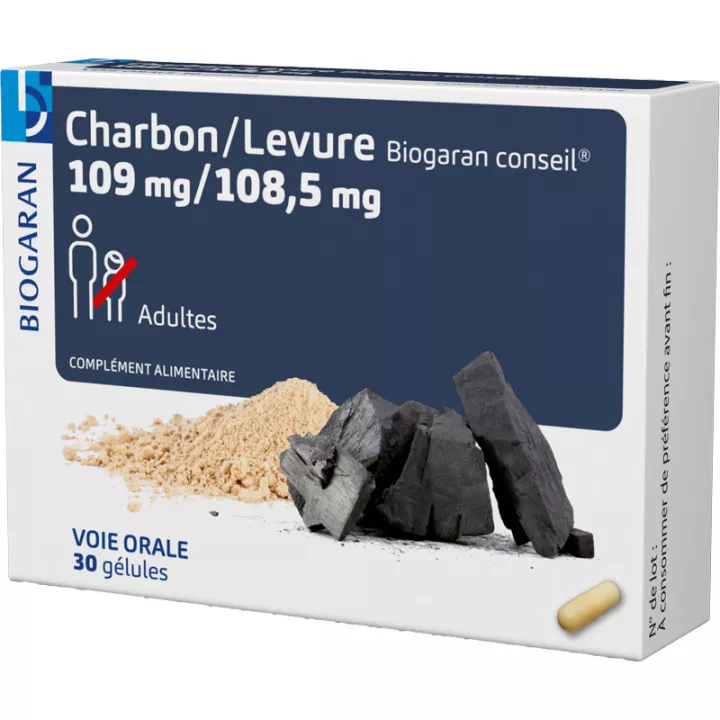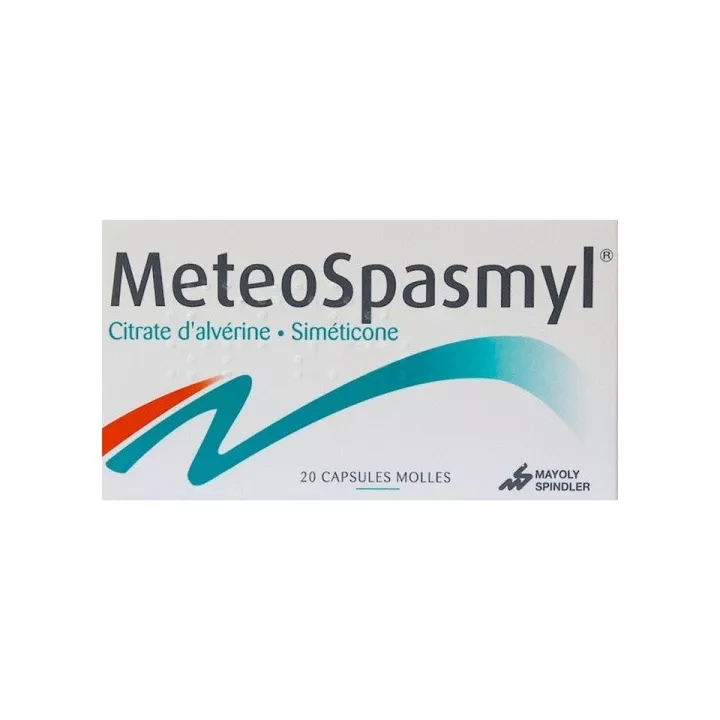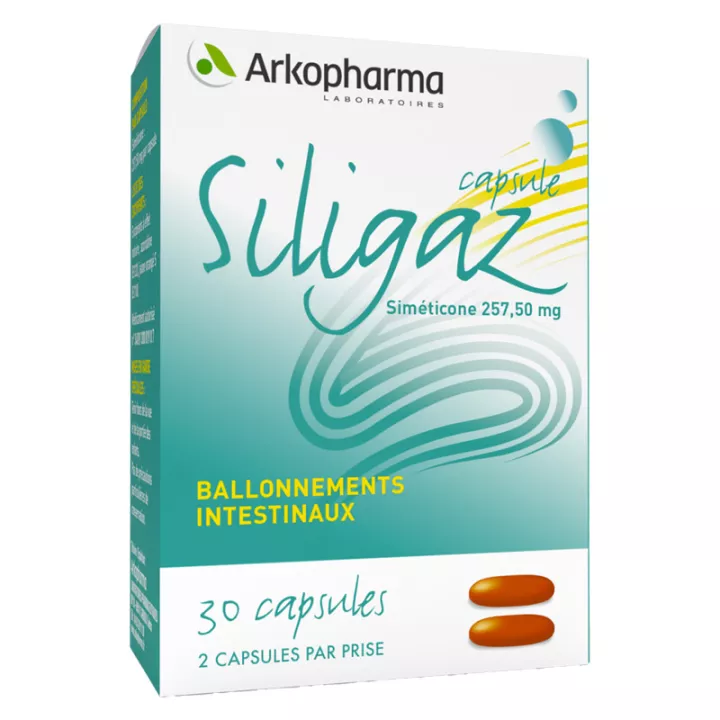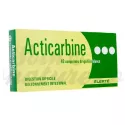
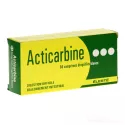
Acticarbine is an antispasmodic over-the-counter medication that combines papaverine and an intestinal adsorbent, activated charcoal. It is indicated in the treatment of difficult digestions, in particular with intestinal bloating and intestinal transit disorders.

For warnings, precautions for use and contraindications, please consult the instructions for use of ACTICARBINE.
Acticarbine is a drug containing an antispasmodic, papaverine and an intestinal adsorbent, activated charcoal. Acticarbine will calm bowel spasms and absorb intestinal gas. Acticarbine is indicated in adults for the treatment of difficult digestions, in particular with intestinal bloating and intestinal transit disorders.
Packaging: 42 or 84 tablets
For one coated Acticarbine tablet, there is:
The other ingredients are alginic acid, sucrose, corn starch, liquid glucose, polyethylene glycol 6000, magnesium stearate, bleached shellac, talc, sucrose, gum arabic, titanium dioxide, carnauba wax.
Reserved for adults, the dosage of Acticarbine is 1 to 2 tablets before the 3 meals, to be swallowed as is with a glass of water.
Acticarbine contraindications
Pregnancy is a contraindication to taking Acticarbine.
In the event of flatulence, a diet must be associated with the treatment such as the exclusion of pulses (lentils, flageolet beans, peas, etc.) and certain green vegetables (cabbage, Brussels sprouts, Swiss chard, etc.). In the event of associated diarrhoea, it is also recommended to drink abundant drinks, salty or sweet, in order to compensate for the losses of liquid due to the diarrhea (the average daily ration of water for an adult is 2 litres) and to exclude including raw vegetables, fruits, green vegetables, spicy dishes, as well as frozen foods or drinks and favoring grilled meats and rice.
Due to the presence of charcoal, Acticarbine can reduce the absorption of other drugs, which is why they are administered at a distance from this drug. Ask your doctor or pharmacist for advice if you are taking other medicines.
In case of pregnancy and breastfeeding, it is not recommended to use Acticarbine. However, during pregnancy or breastfeeding, always seek the advice of your doctor or pharmacist before using any medication.
Attention is drawn, particularly among vehicle drivers and machine users, to the risks of drowsiness due to the presence of papaverine.
Warnings on drugs for digestive problems
Attention, the drug is not a product like the others. Read the medication leaflet carefully before ordering it. Do not leave medicines within the reach of children. If symptoms persist, seek the advice of your doctor or pharmacist. Beware of incompatibilities on your current products.
Please inform your online pharmacist of the treatments in progress in order to identify any incompatibilities. The order validation form contains a personalized message field provided for this purpose.
To find the instructions for this drug ACTICARBINE on the ANSM website.
Pharmacovigilance: Declare one or more adverse effect(s) related to the use of an ACTICARBINE drug
Pharmacovigilance Report an adverse drug reaction(s)
ANSM - Updated on : 20/09/2013
Activated charcoal / papaverine (chlorhydrate)
Please read this leaflet carefully before taking this medicine. It contains important information for your treatment.
If you have any further questions or doubts, please ask your doctor or pharmacist for more information.
- Keep this leaflet as you may need to read it again.
- If you need further information or advice, ask your pharmacist.
- If symptoms worsen or persist, consult a doctor.
- If you notice any side effects not mentioned in this leaflet, or if you experience any of the effects mentioned as serious, please tell your doctor or pharmacist.
In this leaflet :
1. WHAT IS ACTICARBINE, coated tablet AND WHAT IS IT USED FOR?
2. WHAT DO YOU NEED TO KNOW BEFORE TAKING ACTICARBINE, coated tablet?
3. HOW DO I TAKE ACTICARBINE, Coated tablet?
4. WHAT ARE THE POSSIBLE SIDE EFFECTS?
5. HOW CAN I USE ACTICARBINE, coated tablet?
6. ADDITIONAL INFORMATION
1. WHAT IS ACTICARBINE, coated tablet AND WHAT IS IT USED FOR?
ANTISPASMODIC
(A: digestive system and metabolism)
Indicated in adults for the treatment of difficult digestion, particularly with intestinal bloating.
2. WHAT DO I HAVE TO KNOW BEFORE TAKING ACTICARBINE, coated tablet?
List of information required before taking the medicine
Never take ACTICARBINE, coated tablet in the following cases:
- known allergy to any of the ingredients.
Unless otherwise advised by your doctor, this drug MUST NOT be used during pregnancy.
IF IN DOUBT, ASK YOUR DOCTOR OR PHARMACIST FOR ADVICE.
Precautions for use; special warnings
Take special care with ACTICARBINE, coated tablet:
Precautions for use
- In case of bloating or flatulence, avoid pulses (lentils, flageolet, peas, etc.) and certain green vegetables (cabbage, Brussels sprouts, chard, etc.).
- In the event of associated diarrhea, it is necessary to :
o rehydrate with plenty of salty or sweet drinks, to compensate for fluid losses due to diarrhea (the average daily water intake for adults is 2 liters)
o eat during diarrhea,
§ by excluding certain foods, particularly raw vegetables, fruit, green vegetables, spicy dishes and iced foods or drinks.
§ with a preference for grilled meats and rice.
IF IN DOUBT, ASK YOUR DOCTOR OR PHARMACIST FOR ADVICE.
As this drug may reduce the absorption of other drugs, they should be administered at a distance from it (more than 2 hours, if possible).
TO AVOID POSSIBLE HARMFUL INTERACTIONS BETWEEN SEVERAL DRUGS, INFORM YOUR DOCTOR OR PHARMACIST OF ANY TREATMENT IN PROGRESS.
Interactions with food and drink
Not applicable.
Interactions with herbal products or alternative therapies
Use during pregnancy and breast-feeding
Unless otherwise advised by your doctor, this product should not be used during pregnancy.
If you discover that you are pregnant during treatment, consult your doctor immediately: only he/she will be able to adapt the treatment to your condition.
Breast-feeding
This drug should not be taken during breast-feeding.
As a general rule, always seek the advice of your doctor or pharmacist before taking any medication during pregnancy or while breast-feeding.
Effects on ability to drive and use machines
Driving vehicles and using machines:
Particular attention is drawn to the risk of drowsiness due to the presence of papaverine, especially for drivers and users of machines.
3. HOW DO I TAKE ACTICARBINE, coated tablet?
For adults only
1 to 2 tablets before 3 meals, to be swallowed whole with a glass of water.
Method and route of administration
Take by mouth.
Symptoms and instructions in case of overdose
If you have taken more ACTICARBINE, coated tablet than you should have :
No cases of overdose have been reported with this drug.
Papaverine, one of the active ingredients in this medicine, may cause nausea, vomiting, weakness, central nervous system depression, double vision, profuse sweating, facial flushing, dry mouth, dizziness and sinus tachycardia in very large doses.
Instructions in case of missed dose(s)
4. WHAT ARE THE POSSIBLE SIDE EFFECTS?
Like all medicines, ACTICARBINE, coated tablet may have undesirable effects, although not everyone is subject to them:
- dark stools may appear.
If you notice any side effects not listed in this leaflet, or if any side effects become serious, please tell your doctor or pharmacist.
5. HOW CAN I USE ACTICARBINE, coated tablet?
Keep out of the reach and sight of children.
Do not use ACTICARBINE, coated tablet after the expiration date stated on the outer packaging.
No special storage conditions.
If necessary, warnings against certain visible signs of deterioration
Medicines must not be disposed of in the mains or with household waste. Ask your pharmacist what to do with unused medicines. These measures will help protect the environment.
Complete list of active ingredients and excipients
What does ACTICARBINE, coated tablet contain?
The active ingredients are:
Activated charcoal ............................................................................................................................. 70,000 mg
Papaverine hydrochloride ........................................................................................................... 14,000 mg
For one coated tablet
The other components are:
Alginic acid, sucrose, corn starch, liquid glucose, polyethylene glycol 6000, magnesium stearate, bleached shellac, talc, gum arabic, titanium dioxide, carnauba wax.
Pharmaceutical form and contents
What is ACTICARBINE, coated tablet and what does it contain?
This medicine comes in coated tablet form.
Boxes of 40, 42, 80 or 84 coated tablets.
Laboratoire des Réalisations Thérapeutiques ELERTE
181 - 183, rue André Karman
BP 101
93303 Aubervilliers Cedex
Laboratoire des Réalisations Thérapeutiques ELERTE
181 - 183, rue André Karman
BP 101
93303 Aubervilliers Cedex
Laboratoire des Réalisations Thérapeutiques ELERTE
181 - 183, rue André Karman
BP 101
93303 Aubervilliers Cedex
Product names in member states of the European Economic Area
Date of approval of the package leaflet
This leaflet was last approved on {date}.
MA under exceptional circumstances
Detailed information on this product is available on the INSM (France) website.
Information reserved for healthcare professionals
Not applicable.
Not applicable.
Ce médicament contient du charbon activé et de la papavérine. Le charbon absorbe les gaz présents dans le tube digestif. La papavérine calme les spasmes de l'intestin.
Il est utilisé dans le traitement symptomatique des troubles du transit intestinal, notamment avec ballonnements.
Les prix mentionnés ne tiennent pas compte des « honoraires de dispensation » du pharmacien.
| p cp | |
| Charbon activé | 70 mg |
| Papavérine chlorhydrate | 14 mg |
| Saccharose | 364 mg |
N'utilisez pas ce médicament de façon prolongée sans l'avis de votre médecin : des examens peuvent être nécessaires si les symptômes persistent.
En cas de diarrhée associée aux troubles du transit, le traitement consiste à compenser la perte d'eau par des boissons abondantes pour éviter la déshydratation. Un avis médical peut être nécessaire si la diarrhée est importante ou durable.
 Si vous devez conduire ou utiliser une machine dangereuse, assurez-vous préalablement que ce médicament n'altère pas votre vigilance.
Ce médicament peut diminuer l'absorption d'autres médicaments, en particulier ceux qui contiennent de la digitoxine ou de la digoxine (digitaliques). Un délai d'au moins 2 heures doit être respecté entre la prise de ce médicament et celle des autres traitements. Demandez conseil à votre médecin ou à votre pharmacien.
L'effet de ce médicament pendant la grossesse ou l'allaitement est mal connu. L'évaluation du risque éventuel lié à son utilisation est individuelle : demandez conseil à votre pharmacien ou à votre médecin.
Les comprimés doivent être avalés tels quels avec un peu d'eau, avant les repas.
Une alimentation riche en fibres, si elle facilite le transit, peut également augmenter les fermentations intestinales et favoriser les ballonnements. Demandez conseil à votre médecin pour équilibrer votre alimentation.
A forte dose, selles de coloration noire.
Médicament qui lutte contre les spasmes. Les antispasmodiques agissent généralement en empêchant la contraction de fibres musculaires présentes dans la paroi de l'intestin ou des voies urinaires.
Accumulation d'air ou de gaz dans l'intestin.
Consultez l'article : Ballonnement, flatulence et aérophagie
Déficit de l'organisme en eau, dû à des pertes anormales de liquides (diarrhée, vomissements, transpiration abondante).
Le sens médical strict de diarrhée est « émission de selles trop fréquentes et trop abondantes ». En fait, le sens commun assimile la diarrhée à la notion de selles liquides et fréquentes. Normalement, les selles sont pâteuses, mais l'émission de selles liquides ou à peine formées, sans douleur ou trouble particulier associé, n'est pas pathologique. On peut parler de diarrhée lorsque les émissions de selles liquides se répètent dans la journée, et que les besoins sont impérieux ou douloureux.
Beaucoup de médicaments peuvent accélérer le transit intestinal et rendre les selles plus liquides, sans que cet effet indésirable soit réellement préoccupant.
Les antibiotiques peuvent altérer la flore digestive, indispensable à la digestion, et provoquer des diarrhées plus ou moins gênantes mais bénignes. L'effet apparaît immédiatement ou après quelques jours de traitement. Une forme de diarrhée grave et exceptionnelle, la colite pseudomembraneuse, peut être observée après un traitement antibiotique ; cette affection se traduit par l'émission de glaires et de fausses membranes (ressemblant à des lambeaux de peau) associées à des douleurs abdominales ; une constipation peut remplacer la diarrhée initiale. La colite pseudomembraneuse peut survenir plusieurs jours après l'arrêt du traitement antibiotique et nécessite un avis médical urgent.
Consultez l'article : Diarrhée et gastro-entérite de l’adulte ou Diarrhée et gastro-entérite de l’enfant
Le saccharose est la substance qui compose le sucre de cuisine et le sucre industriel que l'on retrouve dans les biscuits, les gâteaux, les sucreries et les boissons sucrées (une bouteille d'un litre et demi de soda contient l'équivalent de trente morceaux de sucre). Certaines personnes sont intolérantes au fructose issu de la digestion du saccharose et souffrent alors de ballonnements et de diarrhée. Certains médicaments contiennent du saccharose comme excipient (composant sans activité thérapeutique).
Consultez l'article : Tous les glucides sont-ils équivalents ?
Traitement qui supprime ou atténue les symptômes d'une maladie sans s'attaquer à sa cause.
Parcours des aliments depuis l'estomac jusqu'à leur élimination sous forme de selles.