NOTICE
ANSM - Updated on : 17/10/2024
ATTENTION
IBUPROFENE BIOGARAN CONSEIL 400 mg, film-coated tablet WHICH IS A NON-STEROIDIC ANTI-INFLAMMATORY (NSAID) MAY RESULT IN FTAL DEATH IF TAKEN FROM THE 6TH MONTH OF PREGNANCY (24 weeks of amenorrhea) EVEN AFTER A SINGLE TAKE.
Do not use if you are 6 months or more pregnant (24 weeks or more).
Before the 6th month or if you are planning a pregnancy, you should not take this medicine unless absolutely necessary, as determined by your doctor.
Product name
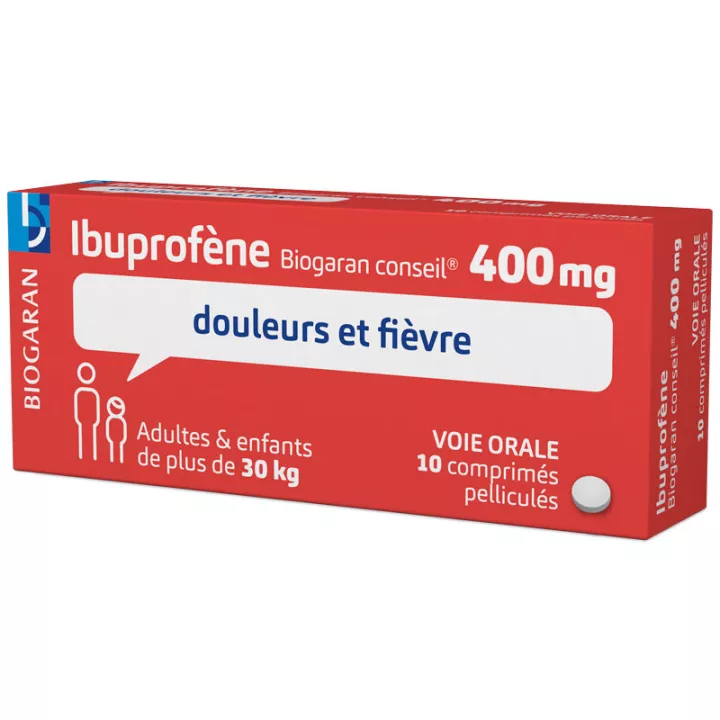
IBUPROFENE BIOGARAN CONSEIL 400 mg, film-coated tablet
Ibuprofen
Box
Please read this leaflet carefully before taking this medicine, as it contains important information for you.
Always take this medicine exactly as it is prescribed by your doctor, pharmacist or nurse.
- Keep this leaflet. You may need to read it again.
- Ask your pharmacist for advice and information.
- If you experience any side effects, talk to your doctor, pharmacist or nurse. This also applies to any side effects not mentioned in this leaflet. See section 4.
- You should contact your doctor if you do not feel any improvement or if you feel less well after :
o 3 days in teenagers;
o 3 days in case of fever or migraine and 5 days in case of pain in adults.
What does this leaflet contain?
1. What is IBUPROFENE BIOGARAN CONSEIL 400 mg, film-coated tablet and what is it used for?
2. What do I need to know before taking IBUPROFENE BIOGARAN CONSEIL 400 mg, film-coated tablet?
3. How do I take IBUPROFENE BIOGARAN CONSEIL 400 mg, film-coated tablet?
4. What are the possible side effects?
5. How do I keep IBUPROFENE BIOGARAN CONSEIL 400 mg, film-coated tablet?
6. Package contents and other information.
1. WHAT IS IBUPROFENE BIOGARAN CONSEIL 400 mg, film-coated tablet AND WHAT IS IT USED FOR?
Pharmacotherapeutic class: ANTI-INFLAMMATORY AND ANTIRHUMATIC PRODUCTS, NON-STEROIDIC; propionic acid derivatives - ATC code: M01AE01.
This medicine contains a non-steroidal anti-inflammatory agent: ibuprofen. It is indicated for adults and children weighing 30 kg or more (approx. 11-12 years), for the short-term treatment of fever and/or pain such as headaches, flu-like symptoms, dental pain, aches and painful menstruation.
It is indicated in adults, after at least one medical opinion, for the treatment of mild to moderate migraine attacks, with or without aura.
2. WHAT DO I HAVE TO KNOW BEFORE TAKING IBUPROFENE BIOGARAN CONSEIL 400 mg, film-coated tablet?
Never take IBUPROFENE BIOGARAN CONSEIL 400 mg, film-coated tablet if you are 24 weeks or more pregnant (6 months or more of pregnancy) (see "Pregnancy, breast-feeding and fertility" below).
During the first 5 months of pregnancy, you should not take IBUPROFENE BIOGARAN CONSEIL 400 mg, film-coated tablet, unless absolutely necessary, as determined by your doctor.
If you are planning a pregnancy and are taking an NSAID, talk to your healthcare professional.
Never take IBUPROFENE BIOGARAN CONSEIL 400 mg, film-coated tablet
- if you are allergic to libuprofen or to any of the other ingredients listed in section 6;
- if you have a history of allergy or asthma triggered by this or related medicines, in particular other non-steroidal anti-inflammatory drugs, acetylsalicylic acid (aspirin);
- if you are pregnant, from the beginning of the6th month of pregnancy (beyond 24 weeks of amenorrhea);
- if you have a history of gastrointestinal bleeding or ulcers associated with previous treatment with NSAIDs;
- if you have an evolving or recurrent stomach or intestinal ulcer or bleeding;
- if you have gastrointestinal haemorrhage or a history of gastrointestinal haemorrhage, cerebral haemorrhage or other ongoing haemorrhage;
- if you have severe liver disease;
- if you have severe kidney disease;
- if you have severe heart disease;
- if you have systemic lupus erythematosus;
- if you are taking mifamurtide: high doses of NSAIDs may reduce the effectiveness of mifamurtide.
IF IN DOUBT, ASK YOUR DOCTOR OR PHARMACIST FOR ADVICE.
Warnings and precautions
Ask your doctor, pharmacist or nurse before taking IBUPROFENE BIOGARAN CONSEIL.
Special precautions with IBUPROFENE BIOGARAN CONSEIL
At high doses, in excess of 1200 mg/day, this medicine has anti-inflammatory properties and may cause the sometimes serious side-effects seen with non-steroidal anti-inflammatory drugs.
Drugs such as IBUPROFENE BIOGARAN CONSEIL may increase the risk of heart attack ("myocardial infarction") or stroke. The higher the dose, the greater the risk.
Do not exceed recommended doses or duration of treatment.
If you have heart problems including heart failure, angina pectoris (chest pain) or if you have had a heart attack, bypass surgery, arteriopathy of the lower limbs (poor circulation due to narrowing or blockage of the arteries), or any type of cerebrovascular accident (including minor stroke or transient ischemic attack "TIA"), or if you have risk factors for these conditions (e.g. high blood pressure, diabetes, high cholesterol, family history of heart disease or stroke, or if you smoke), please talk to your doctor or pharmacist before taking IBUPROFENE BIOGARAN CONSEIL.
Special warnings
If you are a woman, IBUPROFENE BIOGARAN CONSEIL may impair your fertility. Its use is not recommended in women who wish to conceive a child. In women who have difficulty conceiving or who are undergoing reproductive function tests, please talk to your doctor or pharmacist before taking IBUPROFENE BIOGARAN CONSEIL.
This medicine should be used with caution in elderly patients.
Elderly subjects are at greater risk of adverse reactions, particularly gastrointestinal bleeding, ulcers and perforations. Renal, hepatic and cardiac functions must be closely monitored. Dosage should be kept as low as possible for the shortest period necessary to relieve symptoms.
BEFORE TAKING THIS MEDICATION, CONSULT YOUR DOCTOR IF :
- a history of asthma associated with chronic rhinitis, chronic sinusitis or nasal polyps. Administration of this product may lead to an asthma attack, particularly in certain patients allergic to acetylsalicylic acid (aspirin) or non-steroidal anti-inflammatory drugs (see "Never take IBUPROFENE BIOGARAN CONSEIL 400 mg, film-coated tablet");
- coagulation disorders or anticoagulant treatment. This drug may cause serious gastrointestinal symptoms;
- digestive history (hiatal hernia, digestive hemorrhage, old stomach or duodenal ulcer);
- heart, liver (especially cirrhosis of the liver) or kidney disease;
- chickenpox. This drug is not recommended due to exceptional severe skin infections;
- concomitant treatment with other drugs which increase the risk of peptic ulcer or bleeding, e.g. oral corticosteroids, antidepressants (such as SSRIs, i.e. Selective Serotonin Reuptake Inhibitors), drugs which prevent the formation of blood clots such as aspirin, or anticoagulants such as warfarin. If you have any of these conditions, consult your doctor before taking IBUPROFENE BIOGARAN CONSEIL (see "Other medicines and IBUPROFENE BIOGARAN CONSEIL 400 mg, film-coated tablet");
- taking non-steroidal anti-inflammatory drugs (NSAIDs);
-
- concomitant treatment with methotrexate in doses exceeding 20 mg per week or with pemetrexed (see "Other drugs and IBUPROFENE BIOGARAN CONSEIL 400 mg, film-coated tablet");
- of infection, please consult your doctor or pharmacist. See "Infections" below.
Infections
Libuprofen may mask signs of infection such as fever and pain. It is therefore possible that libuprofen may delay adequate treatment of the infection, which may increase the risk of complications. This has been observed in bacterial pneumonia and bacterial skin infections associated with chickenpox. If you are taking this medicine while you have an infection and the symptoms of this infection persist or worsen, consult a doctor immediately.
- dehydrated children and adolescents are at risk of kidney failure. Ask your doctor's advice before taking IBUPROFENE BIOGARAN CONSEIL if the teenager has not drunk any fluids or has lost fluids as a result of continuous vomiting or diarrhoea.
DURING TREATMENT, IN THE EVENT OF :
- visual disturbances, PREVENT YOUR PHYSICIAN;
- gastrointestinal haemorrhage (discharge of blood from the mouth or stools, or presence of blood in vomit, black stools), STOP THE TREATMENT AND CONTACT A PHYSICIAN OR EMERGENCY MEDICAL SERVICE IMMEDIATELY;
- signs of an allergic reaction to this drug, including breathing problems (including asthma attack), sudden swelling of the face and neck (angioedema), chest pain have been reported with libuprofen (see "What are the possible side effects?"). "STOP TAKING IBUPROFEN BIOGARAN CONSEIL IMMEDIATELY AND CONTACT YOUR DOCTOR OR THE NEAREST HOSPITAL EMERGENCY DEPARTMENT IF YOU NOTICE ANY OF THESE SIGNS.
- of skin reactions.
Serious skin reactions have been reported in association with treatment with dibuprofen. Stop taking IBUPROFENE BIOGARAN CONSEIL and consult a doctor immediately if you develop a skin rash, mucous membrane lesions, blisters, skin or mucous membrane signs resembling a burn (redness with bubbles or blisters, ulcerations), redness of the skin, rash or any other sign of allergy, as these may be the first signs of a very serious skin reaction. See section 4.
Take particular care with IBUPROFENE BIOGARAN CONSEIL : Serious skin reactions, including exfoliative dermatitis, erythema multiforme, Stevens-Johnson syndrome (SJS), toxic epidermal necrolysis (TEN or Lyell syndrome), drug hypersensitivity reaction with eosinophilia and systemic symptoms (DRESS or hypersensitivity syndrome), acute generalized exanthematous pustulosis (AGEP) have been reported in association with libuprofen treatment. Stop taking IBUPROFENE BIOGARAN CONSEIL and seek medical advice immediately if you experience any of the symptoms associated with the serious skin reactions described in section 4.
|
This medicine contains a non-steroidal anti-inflammatory drug: ibuprofen.
Do not take other medicines containing non-steroidal anti-inflammatory drugs (including selective cyclooxygenase 2 inhibitors) and/or acetylsalicylic acid (aspirin) at the same time as this medicine.
Carefully read the package inserts of any other medicines you are taking to ensure that they do not contain non-steroidal anti-inflammatory drugs and/or acetylsalicylic acid (aspirin).
|
Ask your doctor or pharmacist before taking IBUPROFENE BIOGARAN CONSEIL.
Children and adolescents
Not applicable.
Other medicines and IBUPROFENE BIOGARAN CONSEIL 400 mg, film-coated tablet
Tell your doctor or pharmacist if you are taking, have recently taken or may take any other medicines.
Always tell your doctor, dentist or pharmacist if you are taking any of the following medicines in addition to IBUPROFENE BIOGARAN CONSEIL:
- aspirin (acetylsalicylic acid) or other non-steroidal anti-inflammatory drugs;
- corticosteroids;
- anticoagulants (such as anticoagulants/platelet antiaggregants like laspirin (acetylsalicylic acid), warfarin, ticlopidine, injectable heparin);
- lithium;
- methotrexate;
- drugs that reduce blood pressure (angiotensin-converting enzyme inhibitors such as captopril, diuretics, beta-blockers such as latenolol-containing drugs and angiotensin II antagonists such as losartan);
- certain antidepressants (selective serotonin reuptake inhibitors (increased risk of digestive bleeding));
- pemetrexed;
- ciclosporin, tacrolimus;
- tenofovir disoproxil;
- cobimetinib;
- mifamurtide.
IBUPROFENE BIOGARAN CONSEIL 400 mg, film-coated tablet with food and drink
Not applicable.
Pregnancy, breast-feeding and fertility
If you are pregnant or breastfeeding, think you may be pregnant or are planning to become pregnant, ask your doctor or pharmacist for advice before taking this medicine.
Pregnancy
From the beginning of the 6th month (24th week of amenorrhea) until the end of pregnancy, IBUPROFENE BIOGARAN CONSEIL 400 mg, film-coated tablet is contraindicated. Under NO CIRCUMSTANCES should you take this medicine during this period, as its effects on your unborn child may be serious or even fatal. In particular, toxicity to the heart, lungs and/or kidneys has been observed, even with a single dose. It can also affect you and your baby, promoting bleeding and leading to a later or longer-than-expected delivery.
Before the start of the 6th month (up to the 24th week of amenorrhea) or if you are planning a pregnancy, you should not take this medicine unless absolutely necessary. This will be determined by your doctor. In such cases, the dose should be as low as possible and the duration of treatment as short as possible.
NSAIDs, including IBUPROFENE BIOGARAN CONSEIL 400 mg, film-coated tablet, can cause miscarriage and, in some cases, malformations after exposure in early pregnancy.
From 2 and a half months of pregnancy (12 weeks of amenorrhea), IBUPROFENE BIOGARAN CONSEIL 400 mg, film-coated tablet may cause kidney problems in your baby, if taken for several days, which may result in a low level of amniotic fluid in your baby (oligohydramnios).
From the beginning of the 5th month of pregnancy (20 weeks of amenorrhea), a narrowing of the blood vessels in your baby's heart (constriction of the ductus arteriosus) may be observed. If treatment lasting several days is required during the 5th month of pregnancy (between 20 and 24 weeks' gestation), your doctor may recommend additional monitoring.
If you have taken this medicine while pregnant, tell your doctor immediately, so that you can be offered appropriate monitoring if necessary.
Breast-feeding
As this drug passes into breast milk, it is not recommended to take it while breast-feeding.
Fertility
This drug, like all non-steroidal anti-inflammatory drugs (NSAIDs), may impair fertility in women, leading to difficulties in becoming pregnant, which may be reversible on discontinuation of treatment. Inform your doctor if you are planning a pregnancy or have difficulty conceiving.
Driving vehicles and using machines
In rare cases, this medicine may cause dizziness and blurred vision.
IBUPROFENE BIOGARAN CONSEIL 400 mg, film-coated tablet contains sodium
This medicine contains less than 1 mmol (23 mg) of sodium per dose, i.e. it is essentially "sodium-free".
3. HOW DO I TAKE IBUPROFENE BIOGARAN CONSEIL 400 mg, film-coated tablet?
Always take this medicine exactly as instructed in this leaflet or as directed by your doctor, pharmacist or nurse. Check with your doctor, pharmacist or nurse if in doubt.
To alleviate symptoms, the lowest effective dose should be used for the shortest possible time. If you have an infection and symptoms (such as fever and pain) persist or worsen, seek medical advice immediately (see section 2).
The occurrence of undesirable effects can be minimized by using the lowest possible dose for the shortest duration necessary to relieve symptoms.
Dosage
Painful and/or febrile conditions
Suitable for adults and children weighing over 30 kg (11-12 years).
The usual dosage is 1 400 mg tablet per dose, repeated if necessary every 6 to 8 hours, up to a maximum of 3 400 mg tablets per day (i.e. 1200 mg per day).
The 400 mg tablet is reserved for pain or fever that is more intense or not relieved by a 200 mg ibuprofen tablet.
Elderly patients are at greater risk of adverse effects, so use the lowest possible dose for the shortest duration necessary to relieve symptoms.
Do not exceed recommended doses or treatment duration (3 days for fever, 5 days for pain).
The maximum dosage is 3 tablets a day (1200 mg).
In the event of a migraine attack
FOR ADULTS ONLY.
1 tablet at 400 mg as soon as possible, as soon as the attack begins.
If a patient is not relieved after the first dose, a second dose should not be taken during the same attack. However, the attack can be treated with another non-steroidal anti-inflammatory drug or laspirin.
If the pain recurs, a second dose may be taken, provided there is an 8-hour interval between the 2 doses.
If in doubt, ask your doctor or pharmacist for advice.
Method of administration
Take by mouth.
Swallow the tablet, without chewing, with a large glass of water.
Tablets are best taken with a meal.
Frequency of administration
Systematic administration avoids oscillations in pain or fever.
They should be taken at least 6 hours apart.
Duration of treatment
In adolescents, if this medication is required for more than 3 days, or if symptoms worsen, it is advisable to consult your doctor.
|
In adults, the duration of use is limited to :
- 3 days in case of fever;
- 3 days in case of migraine;
- 5 days in case of pain.
|
In adults, inform your doctor if pain persists for more than 5 days or fever for more than 3 days, or if they worsen, or if a new condition develops.
In the event of a migraine attack, the duration of treatment should not exceed 3 days.
If symptoms persist or worsen, or if new symptoms appear, ask your pharmacist or doctor for advice.
If you feel that the effect of IBUPROFENE BIOGARAN CONSEIL is too strong or too weak, consult your doctor or pharmacist.
If you have taken more IBUPROFENE BIOGARAN CONSEIL 400 mg, film-coated tablet than you should have
If you have taken more IBUPROFENE BIOGARAN CONSEIL than you should have, or if children have accidentally taken the medicine, always contact a doctor or the nearest hospital for advice on the risk and what action to take.
Symptoms of overdose may include nausea, abdominal pain, vomiting (which may contain traces of blood), headache, ringing in the ears, confusion and unsteady eye movements.
At high doses, the following symptoms have been reported: drowsiness, chest pain, palpitations, loss of consciousness, convulsions (mainly in children), weakness and dizziness, blood in the urine, low potassium levels in the blood, sensation of body cold and breathing problems.
If you forget to take IBUPROFENE BIOGARAN CONSEIL 400 mg, film-coated tablet
Do not take a double dose to make up for the one you forgot to take.
If you stop taking IBUPROFENE BIOGARAN CONSEIL 400 mg, film-coated tablet
Not applicable.
If you have any further questions about the use of this medicine, please ask your doctor, pharmacist or nurse.
4. WHAT ARE THE POSSIBLE SIDE EFFECTS?
Like all medicines, IBUPROF® may cause undesirable effects, but these do not always occur in everyone.
Medicines such as IBUPROFENE BIOGARAN CONSEIL may increase the risk of heart attack (myocardial infarction), chest pain or stroke.
Stop using libuprofen and consult a doctor immediately if you experience any of the following symptoms:
- Reddish, non-elevated, target- or circle-shaped patches on the trunk, often accompanied by central blisters, peeling skin, ulcers of the mouth, throat, nose, genitals and eyes. These severe skin rashes may be preceded by fever and flu-like symptoms (exfoliative dermatitis, erythema multiforme, Stevens-Johnson syndrome, toxic epidermal necrolysis).
- Generalized rash, elevated body temperature, swollen lymph nodes and increased eosinophils, a type of white blood cell (DRESS or hypersensitivity syndrome).
- Red, scaly generalized rash with bumps and blisters under the skin, accompanied by fever. Symptoms usually appear on initiation of treatment (acute generalized exanthematous pustulosis).
Other allergic reactions may occur:
- respiratory, such as asthma attacks, respiratory discomfort ("bronchospasm"), wheezing or difficulty breathing ("dyspnea");
- generalized: sudden swelling of the face and neck with difficulty breathing (angioedema), anaphylactic reaction, hypersensitivity reaction;
- chest pain, which may be a sign of a potentially serious allergic reaction known as Kounis syndrome.
In rare cases, bleeding, gastrointestinal perforation or digestive ulcermay occur (abdominal pain, upper abdominal pain, discharge of blood through the mouth ("hematemesis") or in the stools, black stools ("melaena")), exacerbation of inflammation of the intestine ("colitis") or Crohn's disease (see "Taking special precautions with IBUPROFENE BIOGARAN CONSEIL"). The higher the dosage used, the more frequently these occur.
In exceptional cases, headaches accompanied by nausea, vomiting and stiff neck may be observed: symptoms of meningitis.
Very exceptionally, bullous skin or mucous membrane manifestations may occur (burning sensation accompanied by redness with bullae, blisters, ulcerations ("Lyell syndrome" and "Stevens-Johnson syndrome")).
In exceptional cases, severe skin infections have been observed with chickenpox.
In all such cases, discontinue treatment immediately and inform your doctor.
During treatment, the following may occur:
- digestive disorders: stomach upset, vomiting, nausea, diarrhea, constipation, flatulence, difficult digestion ("dyspepsia"), abdominal distension, gastritis;
- exceptionally, dizziness, lightheadedness, headaches, rare visual disturbances, significant decrease in urine output, abnormal blood in urine ("hematuria") and protein in urine ("proteinuria"), kidney failure and other kidney diseases ("interstitial nephritis", "nephrotic syndrome", "papillary necrosis");
- skin sensitivity to light: frequency undetermined.
In all such cases, you should inform your doctor.
Exceptionally, changes in liver function or blood count (abnormal drop in blood cell count: white blood cells ("agranulocytosis", "leukopenia") or red blood cells ("anemia", "aplastic anemia", "hemolytic anemia", decrease in hematocrit and hemoglobin) or platelets ("thrombocytopenia")) may be serious.
Other very rare side effects:
- nervousness, ringing in the ears;
- mouth ulcers;
- abnormally high blood pressure ("hypertension");
- heart failure;
- liver problems: symptoms may include yellowing of the skin and whites of the eyes ("jaundice"), hepatitis;
- peripheral edema, swelling.
Reporting side effects
If you experience any side effects, please tell your doctor, pharmacist or nurse. This also applies to any side effects not mentioned in this leaflet. You can also report adverse reactions directly via the national reporting system: Agence Nationale de Sécurité du Médicament et des Produits de Santé (ANSM) and the network of Centres Régionaux de Pharmacovigilance - Website: https: //signalement.social-sante.gouv.fr/
By reporting adverse reactions, you contribute to providing more information on drug safety.
5. HOW TO CONSERVE IBUPROFENE BIOGARAN CONSEIL 400 mg, film-coated tablet?
Keep out of sight and reach of children.
Do not use this medicine after the expiration date indicated on the packaging. The expiration date refers to the last day of that month.
Store at a temperature not exceeding 30°C.
Do not dispose of any medicine down the drain or in the household waste. Ask your pharmacist to dispose of any medicines you no longer use. These measures will help protect the environment.
6. CONTENTS AND OTHER INFORMATION
What IBUPROFENE BIOGARAN CONSEIL 400 mg, film-coated tablet contains
- The active substance is :
Ibuprofen........................................................................................................................... 400 mg
For one film-coated tablet.
- The other components are :
Pregelatinized starch, sodium carboxymethyl starch (type A), stearic acid, povidone K90, colloidal anhydrous silica.
Film coating :
hypromellose (E464), microcrystalline cellulose, macrogol 40 stearate (type I), titanium dioxide (E171).
What IBUPROFENE BIOGARAN CONSEIL 400 mg, film-coated tablet is and what it contains
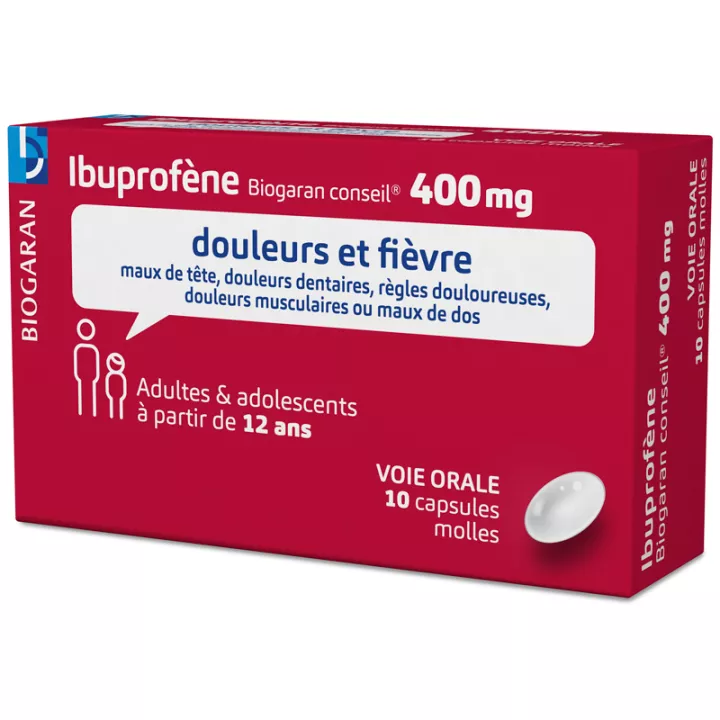
This medicine takes the form of a film-coated tablet.
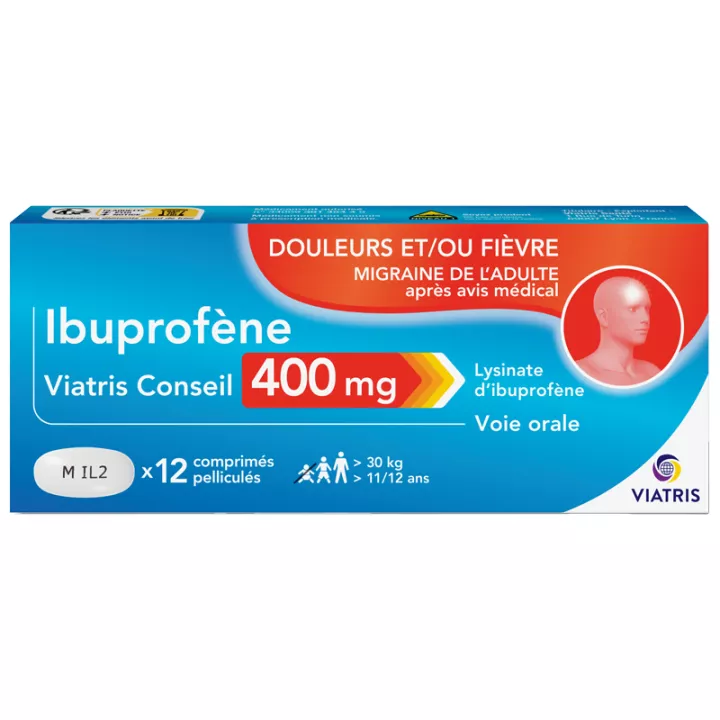
Box of 10, 12 or 15 tablets.
Marketing authorization holder
BIOGARAN
15, BOULEVARD CHARLES DE GAULLE
92700 COLOMBES
Marketing authorization holder
BIOGARAN
15, BOULEVARD CHARLES DE GAULLE
92700 COLOMBES
Manufacturer
INPHARMASCI
ZI N°2 DE PROUVY-ROUVIGNIES
1 RUE DE NUNGESSER
59121 PROUVY
or
DELPHARM BRETIGNY
USINE DU PETIT PARIS
91220 BRETIGNY SUR ORGE
Drug names in member states of the European Economic Area
Not applicable.
The last date on which this leaflet was revised was :
[to be completed subsequently by the holder].
Other
Detailed information on this drug is available on the ANSM (France) website.
HEALTH DEDUCATION ADVICE
"WHAT TO DO IN CASE OF FEVER":
Normal body temperature varies from one individual to another, and lies between 36.5°C and 37.5°C. A rise of more than 0.8°C is considered a fever.
Adults and children weighing over 30 kg (approx. 11-12 years): if the symptoms are too distressing, you can take a medicine containing ibuprofen at the recommended dosage.
With this medication, fever should drop rapidly. Nevertheless :
- if other signs appear (such as a rash);
- if fever persists for more than 3 days or worsens;
- if headaches become severe, or if vomiting occurs;
CONSULT YOUR DOCTOR IMMEDIATELY.
"WHAT TO DO IN CASE OF PAIN":
- if no improvement after 5 days of treatment;
- if pain recurs regularly;
- if accompanied by fever;
- if it wakes you up at night;
CONSULT YOUR DOCTOR IMMEDIATELY.
MIGRAINE OR HEADACHE?
- Headache lasting from a few hours to 3 days (without pain between attacks);
- at least 5 attacks in your lifetime;
- headache with at least 2 of the following characteristics:
o on one side of the head only;
o pulsatile (tapping in the head);
o moderate or strong pain intensity;
o pain aggravated by physical activity (climbing or descending stairs, for example).
- the headache is accompanied by at least one of the following signs:
o nausea and/or vomiting;
o discomfort with light (photophobia) and/or noise (phonophobia).
A positive answer to 3 or 4 of these questions means that you probably or certainly suffer from migraine.
IS YOUR TREATMENT EFFECTIVE?
- Do you feel significant relief 2 hours after taking your medication?
- Is this medication well tolerated?
- Do you take only one dose?
- Can you resume your usual activities 2 hours after taking this medication?





 Conducteur : ce médicament peut être responsable, dans de rares cas, de vertiges ou de troubles de la vue.