0
Menu
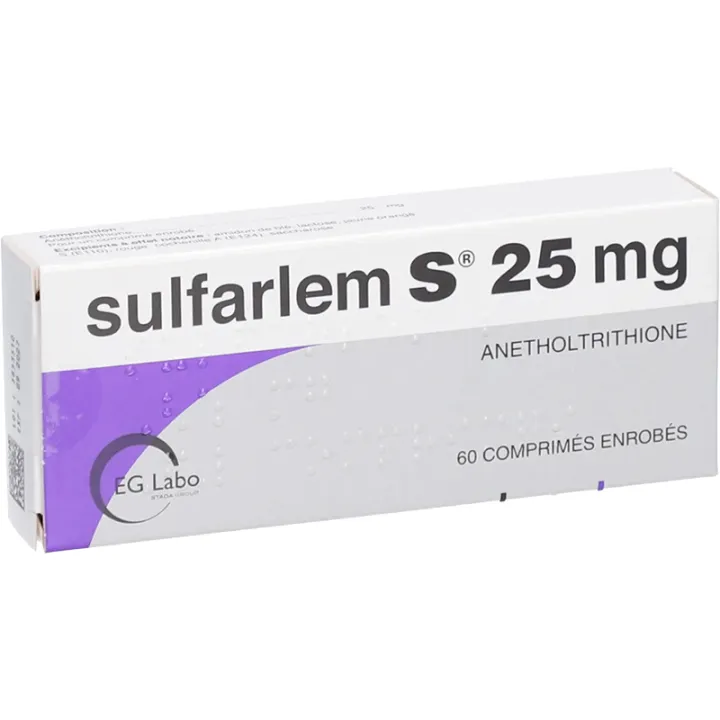
Sulfarlem S 25 mg 90 Coated tablets
Over-the-counter medication

Sulfarlem S 25 mg 90 Coated tablets

Sulfarlem S 25 mg is indicated for dry mouth and eyes due to reduced saliva or tear production. It naturally stimulates secretions and forms part of a comprehensive approach to mucosal comfort.

€5.41 EXCL. VAT €5.95 INCL. VAT
Replenishment in progress Pre-order Secure payment
Reference : 3400930270295
You must be logged in to add this product to a list. Customer login
See delivery conditions

Our doctors of pharmacy advise you

Aqualarm U.P. Intensive Dry and Tired Eyes 10 ml Aqualarm U.P. Intensive Dry and Tired Eyes 10 ml
€8.70
Shipped within 24h
Aqualarm Yeux Secs Lubrifiant Oculaire 30 unidoses Aqualarm Yeux Secs Lubrifiant Oculaire 30 unidoses
€6.99
Shipped within 24h
Lacrifluid 0.13% eye drops 60 single doses Lacrifluid 0.13% eye drops 60 single doses
€7.43
Shipped within 24h
Celluvisc Dry Eye Drops 30 single-dose Celluvisc Dry Eye Drops 30 single-dose
€4.93
Add to cart
Shipped within 24h
Refresh Eye drops Dry eyes in single doses Refresh Eye drops Dry eyes in single doses
€4.93
Add to cart
Shipped within 24h

When should Sulfarlem S be used for dry mouth and eyes?

When the mouth or eyes lack moisture, even the simplest gestures can quickly become painful. A dry mouth can feel like absorbent cotton on the tongue, making swallowing more difficult and altering the taste of food. Speech becomes less fluid, chewing more laborious, and irritation can appear. In the eyes, the sensation of sandiness, stinging or burning becomes more pronounced, especially at the end of the day or in front of screens. The tear film, normally responsible for protecting and lubricating the ocular surface, no longer plays its full role.

This occurs when the salivary or lacrimal glands produce less secretion than necessary. This can occur after certain medical treatments, such as radiotherapy, which can temporarily or permanently alter their function. Other situations, such as certain medications or disorders in the natural regulation of secretions, can also slow down this production. The result is the same: a less protected, more fragile mucosa, and discomfort that gradually sets in on a daily basis.

Sulfarlem S acts as an internal support for these secretions. Its active substance, anetholtrithione, stimulates the glands responsible for producing saliva and tears. Its action can be compared to a "boost" given to the body's natural faucets to restore a more regular and comfortable flow.

By encouraging this gradual recovery, the medication helps to soothe dryness, promote comfort in the mouth and eyes, and support the balance of the mucous membranes. A better-moistened mouth also helps limit the appearance of cavities, chewing difficulties and irritations, while a more stable tear film better protects the surface of the eye.

The effect is not felt immediately, as the body needs a few days to respond to the stimulation. This gentle, gradual action is part of a comprehensive approach to xerostomia and dry eyes, complementing hygiene and moisturizing measures.

To reinforce this approach, the use of salivary substitutes or artificial tears can be combined to rapidly relieve symptoms, while Sulfarlem S acts in depth to boost natural secretions.

How to use Sulfarlem S

The generally recommended dose is 1 tablet, 3 times a day, to be taken with meals.
The duration of treatment is determined by the doctor. As the effect is felt after a few days, the dosage can be adjusted according to the benefit felt.
In the event of overdose, consult your doctor or pharmacist immediately.

Give your opinion on the advice for use and dosage of Sulfarlem S with our partner Avis Vérifiés after your purchase.

Precautions

  • Do not use in case of allergy or hypersensitivity to wheat.
  • Do not use in children under 6 years of age.
  • Contraindicated in cases of biliary tract obstruction or gallstones.
  • Not recommended in cases of galactose intolerance, glucose-galactose malabsorption syndrome or Lapp lactase deficiency.
  • Avoid in cases of fructose intolerance or sucrase/isomaltase deficiency.
  • Can be used in people with celiac disease, as wheat starch contains only traces of gluten.
  • Tell your doctor or pharmacist about any other treatment you are taking.
  • Avoid during pregnancy and breastfeeding; seek medical advice.
  • Darker coloration of urine may occur.
  • Contains azo dyes (E110, E124) which may cause allergic reactions.

What is the composition of this medicine for dry mucous membranes?

Anétholtrithione 25 Mg, Lactose Monohydraté, Gomme Arabique, Amidon De Blé, Saccharose, Gomme Guar, Silice Colloïdale Hydratée, Stéarate De Magnésium, Gelatine, Talc, Dioxyde De Titane (E171), Jaune Orangé S (E110), Rouge De Cochenille A (E124), Cire De Carnauba.

Excipients à effet notoire : Amidon De Blé, Lactose, Jaune Orangé S (E110), Rouge De Cochenille A (E124), Saccharose.

Presentation :

Box of 90 coated tablets. Available at the best price from our online pharmacy.

Our expert advice on Sulfarlem S

To optimize results, remember to maintain regular hydration throughout the day, chew sugar-free chewing gum to mechanically stimulate salivation, and avoid highly salty or acidic foods. Combination with salivary substitutes or artificial tears provides rapid relief, while Sulfarlem S acts on the natural stimulation of secretions.

FAQ

How long does it take to feel the effects?
The first effects generally appear after a few days of treatment, the time it takes for the glands to respond to stimulation.

Can I use it for a long time?
The duration of treatment is set by the doctor according to the evolution of symptoms and response to treatment.

Does this medication replace artificial tears?
No. It works in a complementary way by stimulating natural tear production, whereas artificial tears provide immediate relief.

Pharmacovigilance Report an adverse drug reaction(s)

Download PDF leaflet

NOTICE

ANSM - Updated on : 29/01/2024

Product name

SULFARLEM S 25 mg, coated tablet

Anetholtrithione

Sidebar

Please read this leaflet carefully before taking this medicine, as it contains important information for you.

You must always take this medicine exactly as instructed in this leaflet or by your doctor or pharmacist.

- Keep this leaflet. You may need to read it again.

- Ask your pharmacist for any advice or information you may need.

- If you experience any side effects, talk to your doctor or pharmacist. This also applies to any side effects not mentioned in this leaflet. See section 4.

- You should contact your doctor if you do not feel any improvement.

What does this leaflet contain?

1. What is SULFARLEM S 25 mg, coated tablet and what is it used for?

2. What do I need to know before taking SULFARLEM S 25 mg, coated tablet?

3. How do I take SULFARLEM S 25 mg, coated tablet?

4. What are the possible side effects?

5. How do I keep SULFARLEM S 25 mg, coated tablet?

6. Package contents and other information.

1. WHAT IS SULFARLEM S 25 mg AND WHAT IS IT USED FOR?

Pharmacotherapeutic class: SALIVARY AND LACRYMAL SUBSTITUTE, ATC code: A: digestive system and metabolism/stomatology, S: sense organs/ophthalmology.

Recommended for dry mouth and eyes.

2. WHAT DO I HAVE TO KNOW BEFORE TAKING SULFARLEM S 25 mg, coated tablet?

Never take SULFARLEM S 25 mg, coated tablet

- if the patient is a child under 6 years of age

- in case ofbiliary tract obstruction(notably gallstones).

- if you are allergic (hypersensitive) to wheat, due to the presence of wheat starch.

Warnings and precautions

Talk to your doctor or pharmacist before taking SULFARLEM S 25 mg, coated tablet.

Darker coloration of urine is normal during treatment.

This medicine contains azoic colouring agents (orange yellow S (E110) and cochineal red A (E124)) and may cause allergic reactions.

This medicine may be administered in the event of clique disease. Wheat starch may contain gluten, but only in trace amounts, and is therefore considered safe for people with celiac disease.

This medicine is not recommended for patients with galactose intolerance, Lapp lactase deficiency or glucose or galactose malabsorption syndrome (rare hereditary diseases).

In case of gall-bladder stones, consult your doctor.

This medicine is not recommended for patients with fructose intolerance, glucose-galactose malabsorption syndrome or sucrase/isomaltase deficiency (rare hereditary diseases).

Children and adolescents

Not applicable.

Other medicinal products and SULFARLEM S 25 mg, coated tablet

Tell your doctor or pharmacist if you are taking, have recently taken or may take any other medicines.

SULFARLEM S 25 mg, coated tablet with food and alcohol

Not applicable.

Pregnancy and breast-feeding

The use of this drug should generally be avoided during pregnancy.

If you are pregnant or breast-feeding, think you may be pregnant or are planning to become pregnant, ask your doctor or pharmacist for advice before taking this medicine.

This drug should not be used during breast-feeding.

As a general rule, always ask your doctor or pharmacist before taking any medication during pregnancy or while breast-feeding.

Driving and use of machinery

Not applicable.

SULFARLEM S 25 mg, coated tablet contains wheat starch, lactose, orange yellow S (E110), cochineal red A (E124) and sucrose.

This medicine contains azo colouring agents (orange yellow S (E110) and cochineal red A (E124)) and may cause allergic reactions.

This medicine contains a very low level of gluten (from wheat starch) and is therefore unlikely to cause problems in the case of celiac disease. If you have an allergy to wheat (other than cliquish disease), you should not take this medicine.

If your doctor has informed you that you are intolerant to certain sugars, contact him/her before taking this medicine.

3. HOW DO I TAKE SULFARLEM S 25 mg, coated tablet?

The recommended dose is 1 tablet 3 times a day with meals.

Always take this medicine exactly as instructed in this leaflet or as directed by your doctor or pharmacist. Check with your doctor or pharmacist if in doubt.

Oral administration.

If you have taken more SULFARLEM S 25 mg, coated tablet than you should have

Consult your doctor or pharmacist immediately.

If you forget to take SULFARLEM S 25 mg, coated tablet

Not applicable.

If you stop taking SULFARLEM S 25 mg, coated tablet

Not applicable.

If you have any further questions about the use of this medicine, please ask your pharmacist.

4. WHAT ARE THE POSSIBLE SIDE EFFECTS?

Like all medicines, this drug may cause undesirable effects, but they do not occur systematically in everyone:

- mild digestive disorders (diarrhoea, flatulence, meteorism), which subside with reduced doses.

- SULFARLEM may darken the color of urine.

Reporting side effects

If you experience any side effects, please tell your doctor or pharmacist. This also applies to any side effect not mentioned in this leaflet. You can also report adverse reactions directly via the national reporting system: Agence nationale de sécurité du médicament et des produits de santé (ANSM) and the network of Centres Régionaux de Pharmacovigilance - Website: https://signalement.social-sante.gouv.fr/.

By reporting adverse reactions, you contribute to providing more information on drug safety.

5. HOW TO CONSERVE SULFARLEM S 25 mg, coated tablet?

Keep out of sight and reach of children.

Do not use this medicine after the expiration date indicated on the packaging after EXP. The expiration date refers to the last day of that month.

Do not dispose of any medicine down the drain or in the household waste. Ask your pharmacist to dispose of any medicines you no longer use. These measures will help protect the environment.

6. CONTENTS AND OTHER INFORMATION

What SULFARLEM S 25 mg coated tablet contains

- The active substance is :

Anetholtrithione .......................................................................................................... 25.00 mg

For one coated tablet.

- Other excipients include:

Lactose monohydrate, gum arabic, wheat starch, sucrose, guar gum, colloidal silica hydrate, magnesium stearate, gelatin, talc, titanium dioxide (E171), orange yellow S (E110), cochineal red A (E 124), carnauba wax.

What is SULFARLEM S 25 mg, coated tablet and what does it contain?

This medicine comes in coated tablet form. Each box contains 60 or 90 coated tablets.

Not all presentations may be marketed.

Marketing authorization holder

EXOD

6 PARC DE MONTRETOUT

92210 SAINT-CLOUD

Marketing authorization holder

EG LABO - LABORATOIRES EUROGENERICS

CENTRAL PARK

9-15 RUE MAURICE MALLET

92130 ISSY-LES-MOULINEAUX

Manufacturer

inPHARMAsci

ZI N° 2 DE PROUVY - ROUVIGNIES

1 RUE DE NUNGESSER

59121 PROUVY

Product names in member states of the European Economic Area

Not applicable.

The last date on which this leaflet was revised was :

< {MM/YYYY}>.

Other

Not applicable.

Detailed information on this drug is available on theANSM (France) website.

VIDAL DE LA FAMILLE

SULFARLEM S 25

File revised on June 27, 2024
Drug family: Corrector of salivary and lacrimal insufficiencies

Indications

This drug increases saliva and tear secretion.

It is used in the adjunctive treatment of dry mouth and dry eyes.

Presentations

SULFARLEM S 25 : tablet (orange); box of 60
Optional prescription - Reimbursable at 15% - Price: €2.05
SULFARLEM S 25 : tablet (orange); box of 90
Optional prescription - Non-reimbursable - Free price

Prices do not include dispensing fees.

Composition

p cp
Anetholtrithione25 mg
Wheat starch+
Orange yellow S+
Cochineal red A+
Lactose+
Sucrose+

Contraindications

This medicine must not be used in the following cases:
  • wheat allergy (other than celiac disease),
  • obstruction of the bile ducts,
  • children under 6 years of age.

Fertility, pregnancy and breast-feeding

The effect of this drug during pregnancy and lactation is not well known. The risk associated with its use must be assessed on an individual basis: ask your pharmacist or doctor for advice.

Directions for use and dosage

Tablets should be swallowed with a little water at mealtimes.

Usual dosage :

1 tablet, 3 times a day.

Advice

The effect of the drug only becomes apparent after a few days' treatment.

Darker coloration of urine is normal during treatment.

Possible side effects

Diarrhea, flatulence, bloating, which may require dosage adjustment.

Allergic reaction (presence of dyes: orange yellow S and cochineal red A).

LEXICON

allergy

Skin reaction (itching, pimples, swelling) or general discomfort following contact with a particular substance, use of a medicine or ingestion of a food. The main forms of allergy are eczema, urticaria, asthma, angioedema and allergic shock (anaphylactic shock). Food allergy can also lead to digestive problems.

WHEAT STARCH

Starch is a long chain of glucose (sugar) molecules. Found in cereals, potatoes and other starchy foods, starch is one of the basic building blocks of our diet. Starch extracted from wheat is used as an ingredient in many industrial foods, and also as an excipient (a component with no therapeutic activity) in many medicines. Some people are allergic to wheat-derived products (gluten allergy or celiac disease) and cannot tolerate foods or medicines containing wheat starch.

bloating

Accumulation of air or gas in the intestine.

See article: Bloating, flatulence and aerophagia

diarrhea

The strict medical meaning of diarrhea is "the emission of stools that are too frequent and too abundant". In fact, common sense equates diarrhea with the notion of frequent, liquid stools. Normally, stools are pasty, but the emission of liquid or barely-formed stools, with no associated pain or particular disorder, is not pathological. Diarrhea occurs when liquid stools are passed repeatedly throughout the day, and the need for them is urgent or painful.

Many drugs can accelerate intestinal transit and make stools more liquid, without this undesirable effect being a real cause for concern.

Antibiotics can alter the digestive flora, essential for digestion, and cause diarrhoea, which is more or less uncomfortable but benign. The effect may appear immediately or after a few days' treatment. A serious and exceptional form of diarrhea, pseudomembranous colitis, may be observed after antibiotic treatment; this condition is characterized by the emission of mucus and false membranes (resembling flaps of skin) associated with abdominal pain; constipation may replace the initial diarrhea. Pseudomembranous colitis may occur several days after antibiotic treatment has stopped, and requires urgent medical advice.

See article: Diarrhea and gastroenteritis in adults or Diarrhea and gastroenteritis in children

lactose

Lactose is a sugar found in milk and certain milk derivatives. To digest it, the intestine must be able to secrete an enzyme called lactase. Many people lose the ability to produce lactase in adulthood. Lactose then passes into the intestine undigested, and its presence causes intestinal problems such as diarrhoea, bloating and gas. Some medicines contain lactose as an excipient (a component with no therapeutic activity). People who do not digest lactose may suffer adverse intestinal effects when taking this type of medication.

dosage

Quantity and distribution of a drug dose according to the patient's age, weight and general condition.

allergic reaction

Reaction caused by the body's hypersensitivity to a drug. Allergic reactions can take a variety of forms: urticaria, angioedema, eczema, measles-like rash and so on. Anaphylactic shock is a generalized allergic reaction that causes a sudden drop in blood pressure.

See article: Can you be allergic to medicines?

sucrose

Sucrose is the substance that makes up cooking sugar and the industrial sugar found in cookies, cakes, sweets and sweetened drinks (a liter-and-a-half bottle of soda contains the equivalent of thirty lumps of sugar). Some people are intolerant to the fructose produced by the digestion of sucrose, and suffer from bloating and diarrhoea. Some medicines contain sucrose as an excipient (a component with no therapeutic activity).

See article: Are all carbohydrates the same?

bile ducts

Excretory pathway leading bile from the liver to the duodenum. They include the bile duct and the gallbladder, the reservoir that stores excess bile between meals.

Advice from our naturopaths

How to choose your mouthwash? How to choose your mouthwash?

We are all , one day, subject to minor oral discomforts such as a canker sore , irritated gums , tooth sensitivity or bad breath . You will understand that a bright smile and fresh breath go through healthy teeth . To achieve this, strict oral hygiene is essential. What if mouthwash was the solution ?! Under no circumstances can mouthwash replace tooth brushing . However, it effectively complements the action of brushing . We find them everywhere, in pharmacies and drugstores or in supermarkets . Of all brands , in all formats , we have a large catalog available . Lost between these possibilities,…

Read the article on the blog
How can I get rid of dry eyes? How can I get rid of dry eyes?

Dry eye syndrome affects an increasing number of people. This is mainly due to the amount of time spent in front of screens, pollution and ageing. This condition often causes a burning sensation , a feeling of grit in the eyes or fluctuating vision. In the long term, it can affect quality of life, as it causes constant discomfort and…

Read the article on the blog
Dry eyes: understanding dry eye syndrome to better prevent it Dry eyes: understanding dry eye syndrome to better prevent it

Dry eye syndrome is a common condition. It affects a growing number of people, particularly those who spend a lot of time in front of screens. This disorder, which is linked to a change in the tear film, causes persistent discomfort, including stinging, redness, tightness and blurred vision. Although these symptoms may seem minor, they often indicate a real fragility…

Read the article on the blog
Natural Health Advice