0
Menu
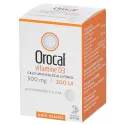
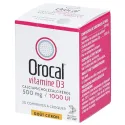
Orocal Calcium Vitamin D3 Orocal Calcium Vitamin D3 Orocal Calcium Vitamin D3
Over-the-counter medication

Orocal Calcium Vitamin D3

Brand : OCP OCP
product contains :

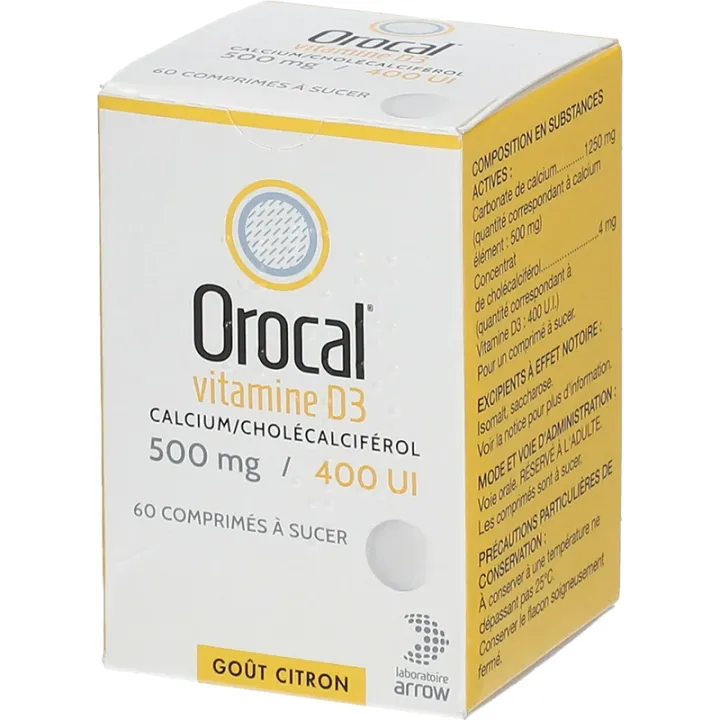
Orocal Calcium Vitamin D3 is an essential supplement in cases of bone deficiency or fragility. Its chewable format provides a daily intake of calcium and vitamin D3, ideal for supporting bone metabolism, strengthening the skeleton and accompanying osteoporosis treatments in adults and the elderly.

€7.83 EXCL. VAT €7.99 INCL. VAT
This product is an over-the-counter medication. Please consult the package insert before ordering online.
In stock Shipped within 24h Secure payment
Reference : 3400934428043
You must be logged in to add this product to a list. Customer login
See delivery conditions

Our doctors of pharmacy advise you

NHCO Amino-Calcium 84 capsules NHCO Amino-Calcium 84 capsules
€23.90
Shipped within 24h
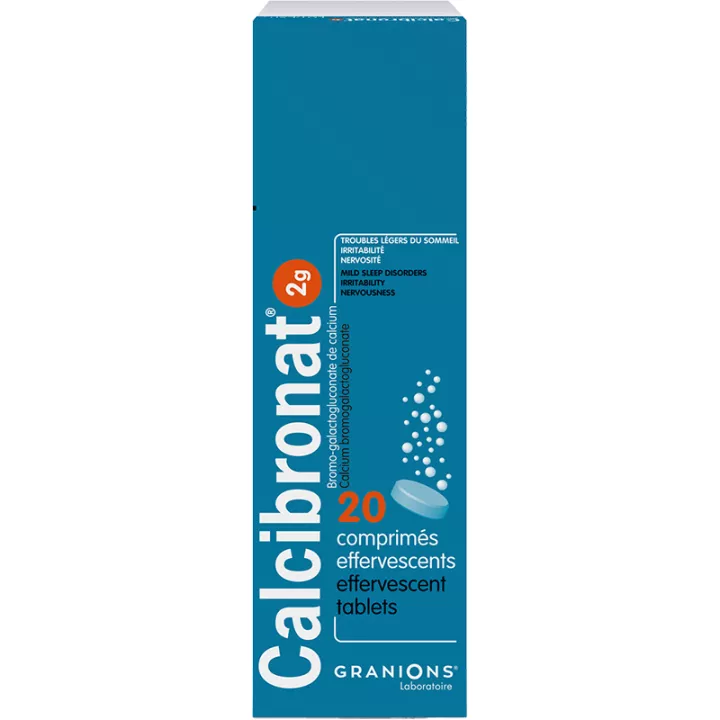
Calcibronat Granions 2g Calcium 20 Effervescent Tablets Calcibronat Granions 2g Calcium 20 Effervescent Tablets
€9.99
Shipped within 24h
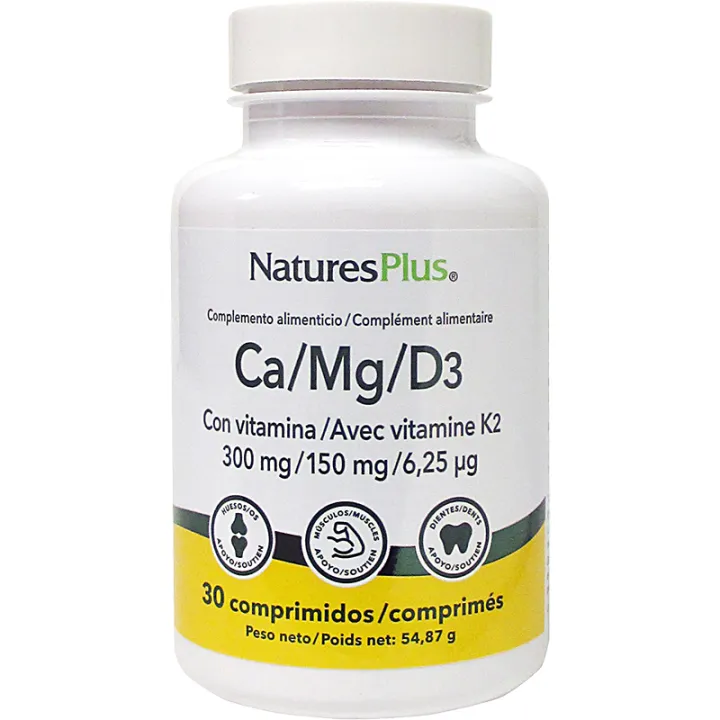
Natures Plus Calcium Magnesium Vitamins D3 and K2 30 tablets Natures Plus Calcium Magnesium Vitamins D3 and K2 30 tablets
€10.90
Shipped within 24h
Inovance Magnesium LP Bisglycinate 90 tablets Inovance Magnesium LP Bisglycinate 90 tablets
€23.90
Shipped within 24h
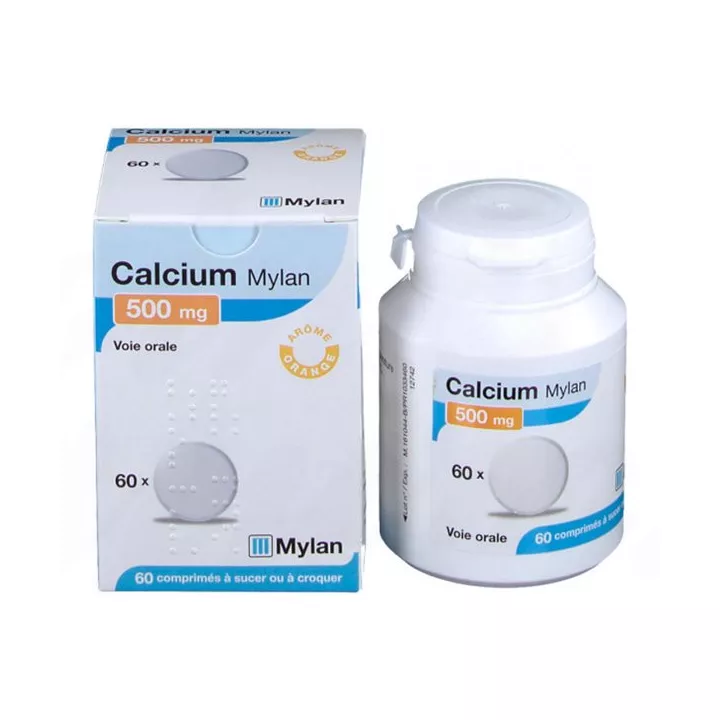
Calcium Mylan 500 mg 60 Tablets Calcium Mylan 500 mg 60 Tablets
€6.97
Shipped within 24h
Solgar Calcium Magnesium with Vitamin D3 150 tablets Solgar Calcium Magnesium with Vitamin D3 150 tablets
€33.60
Shipped within 24h

What is Orocal Calcium Vitamin D3 used for?

Are you concerned about loss of bone density or calcium and vitamin D deficiency? Orocal Calcium Vitamin D3 is a chewable tablet specifically formulated to compensate for nutritional deficiencies essential to bone strength and overall skeletal health. Thanks to its winning duo - calcium + vitamin D3 - it actively contributes to mineral balance, particularly in adults and the elderly.

This dietary supplement targets the increased need for calcium and vitamin D3, often encountered in the context of a sedentary lifestyle, ageing or osteoporosis treatment. Vitamin D3, also known as cholecalciferol, facilitates intestinal calcium absorption, while calcium carbonate directly fills the gaps in calcium intake. Together, they form an effective bulwark against the risk of demineralization.

In cases of osteoporosis, Orocal plays a supportive therapeutic role, complementing specific medical treatments. It is thus recommended when diet alone is no longer sufficient to provide the necessary intake of these two fundamental nutrients. It helps preserve bone density, reduce the risk of fractures and maintain strong bones, particularly after the menopause.

But this product goes even further. It is also very useful in cases of convalescence, immobilization or long periods of physical inactivity, all situations where calcium reserves can melt away like snow in the sun. By restoring mineral balance, it contributes to improved recovery and lasting joint comfort.

Another major advantage is its practical, chewable format, making it easy to use on a daily basis, particularly for senior citizens or patients with swallowing difficulties. The lemony taste improves compliance with treatment, while offering a pleasant sensory experience.

Finally, whether to prevent or accompany bone fragility, Orocal Calcium Vitamin D3 is an indispensable ally for your bone capital. It acts like an invisible mason, rebuilding the structure of your bones brick by brick, while restoring the vital energy of essential minerals.

For optimal bone strengthening, consider combining it with a product rich in magnesium, a complementary trace element essential to calcium metabolism.

How to use these tablets to preserve your bone mass?

Directions for use:

  • The recommended dosage is 2 oral tablets per day, for adults only.
  • It's advisable to take the tablets at intervals if you're taking other drugs which may interact with this treatment (fluoride, bisphosphonates, cyclins, etc.).
  • To maximize effects, avoid taking it close to meals rich in oxalic or phytic acid (spinach, wholegrain cereals).
  • This intake method promotes a balanced daily intake of calcium and vitamin D3, essential for maintaining bone mass.

Give your opinion on the recommendations for use and dosage of Orocal Calcium Vitamin D3 with our partner Avis Vérifiés after your purchase.

Precautions for use:

  • Do not use if allergic to calcium, vitamin D3 or any of the excipients.
  • Avoid association with excessive calcium or vitamin D supplementation without medical advice.
  • Contraindicated in cases of hypercalcemia, hypercalciuria or kidney stones.
  • Do not use in people with hypervitaminosis D.
  • Monitor renal function during prolonged treatment.
  • Use with caution in sarcoidosis or chronic renal failure.
  • Calcium absorption may be impaired by certain foods or medications. Observe intervals between doses.

Contains sugar: not recommended in cases of fructose intolerance or sucrase-isomaltase deficiency.

What is the composition?

Ingredients:

Carbonate De Calcium, Concentrat De Cholécalciférol, Xylitol, Povidone, Stéarate De Magnésium, Sucralose, Arôme Citron Granulé, Isomalt, Arôme Citron, Mono Et Diglycérides D'acides Gras

Presentation:

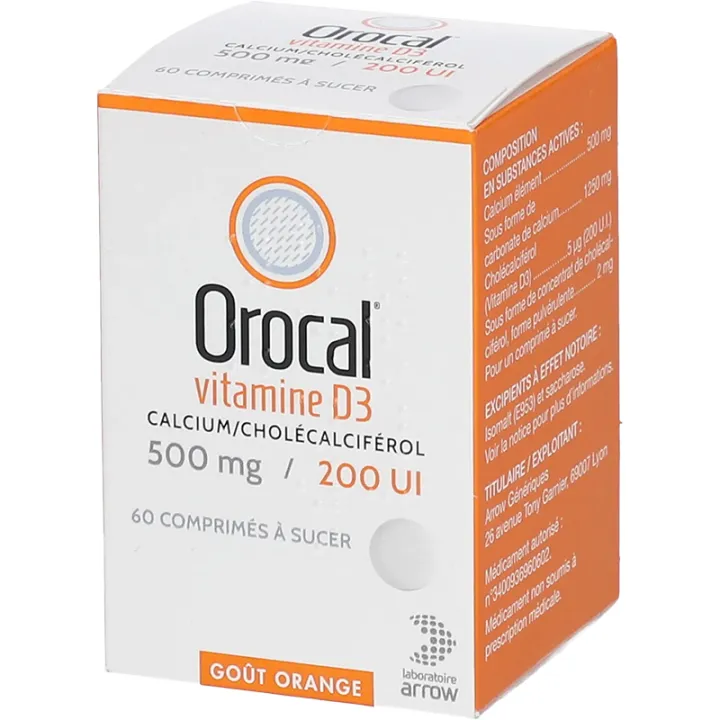
Orocal Calcium Vitamin D3 is available as suckable tablets in boxes of 20 to 180 units. Its practical, on-the-go format enables flexible use, ideal for a bone supplement tailored to the daily needs of adults and the elderly.

Pharmacovigilance Report an adverse drug reaction(s)

Download PDF leaflet

NOTICE

ANSM - Updated on: April 17, 2023

Drug Name

OROCAL VITAMIN D3 500 mg/400 IU, lozenge

Calcium/Cholecalciferol

Box

Please read this package insert carefully before taking this medication, as it contains important information for you.

You should always take this medicine exactly as described in this leaflet or as directed by your doctor or pharmacist.

· Keep this leaflet. You may need to read it again.

· Ask your pharmacist for advice or information.

· If you experience any side effects, tell your doctor or pharmacist. This also applies to any side effects not listed in this leaflet. See Section 4.

· You should contact your doctor if you do not feel any improvement or if you feel worse.

Keep this medicine out of the reach of children.

What is in this package insert?

1. What is OROCAL VITAMIN D3 500 mg/400 IU, lozenge, and what is it used for?

2. What should you know before taking OROCAL VITAMIN D3 500 mg/400 IU, lozenge?

3. How should you take OROCAL VITAMIN D3 500 mg/400 IU, lozenge?

4. What are the possible side effects?

5. How should OROCAL VITAMIN D3 500 mg/400 IU, lozenge be stored?

6. Package contents and other information.

1. WHAT IS OROCAL VITAMIN D3 500 mg/400 IU, lozenge, AND WHAT IS IT USED FOR?

Pharmacotherapeutic class - ATC code: vitamin D and calcium supplementation

(Medication affecting calcium balance. A: Digestive system and Metabolism).

This medication is indicated for adults in the following situations:

· in the elderly, in cases of calcium and vitamin D deficiency,

· in combination with osteoporosis treatments when calcium and vitamin D intake is insufficient.

2. WHAT INFORMATION SHOULD YOU KNOW BEFORE TAKING OROCAL VITAMIN D3 500 mg/400 IU, lozenge?

Never take OROCAL VITAMIN D3 500 mg/400 IU, lozenge:

· if you are allergic to calcium carbonate, cholecalciferol (vitamin D), or any of the other ingredients in this medication listed in Section 6;

· if you are immobilized for a prolonged period;

· if you have abnormally high levels of calcium in your blood (hypercalcemia);

· in cases of excessive calcium excretion in the urine (hypercalciuria);

· if you have too much vitamin D in your body (hypervitaminosis D);

· if you have kidney stones (calcium lithiasis).

IF IN DOUBT, IT IS ESSENTIAL TO CONSULT YOUR DOCTOR OR PHARMACIST.

Warnings and Precautions

Consult your doctor or pharmacist before taking OROCAL VITAMIN D3 500 mg/400 IU, lozenge:

Use this medication WITH CAUTION in the following cases:

· of long-term treatment, it is necessary to regularly monitor the amount of calcium excreted in the urine (calciuria), the amount of calcium in your blood (calcemia), and your kidney function. Depending on the results, your doctor may need to reduce or even discontinue your treatment;

· of additional high-dose calcium and vitamin D supplementation, which must be administered under strict medical supervision;

· of concomitant treatment with sodium fluoride or bisphosphonates; it is recommended to wait at least three hours between taking these medications and OROCAL VITAMIN D3;

· with concomitant treatment involving destramustine, thyroid hormones, strontium, or zinc; it is recommended to wait at least two hours between taking these medications and OROCAL VITAMIN D3;

· and in cases of treatment with a cycline-class antibiotic, it is recommended to take the antibiotic at least two hours before taking OROCAL VITAMIN D3 or 4 to 6 hours after taking OROCAL VITAMIN D3;

· of sarcoidosis or kidney failure;

· of immobility if you have osteoporosis.

IF IN DOUBT, DO NOT HESITATE TO ASK YOUR DOCTOR OR PHARMACIST FOR ADVICE.

Other Medications and OROCAL VITAMIN D3 500 mg/400 IU, lozenge

Tell your doctor or pharmacist if you are taking, have recently taken, or might take any other medications, especially digitalis, cyclines, bisphosphonates, estramustine, iron salts, thyroid hormones, strontium, zinc, thiazide diuretics, or lorlistat.

OROCAL VITAMIN D3 500 mg/400 IU, lozenge to be taken with food

The absorption of the calcium in this medication may be reduced by oxalic acid (found in spinach and rhubarb) and phytic acid (found in whole grains). Do not take this medication within two hours of eating foods high in oxalic acid and phytic acid.

Pregnancy and Breastfeeding

If you are pregnant, do not exceed 1,500 mg of calcium and 600 IU of vitamin D3 per day: that is, one tablet per day.

If you are pregnant or breastfeeding, if you think you might be pregnant, or if you are planning a pregnancy, consult your doctor or pharmacist before taking this medication.

Driving and operating machinery

No specific effects.

OROCAL VITAMIN D3 500 mg/400 IU, chewable tablet contains isomalt and sucrose

This medication contains isomalt. Its use is not recommended in patients with fructose intolerance (a rare hereditary disorder).

This medication contains sucrose. Its use is not recommended in patients with fructose intolerance, glucose-galactose malabsorption syndrome, or sucrase/isomaltase deficiency (rare hereditary disorders).

If your doctor has told you that you have an intolerance to certain sugars, contact them before taking this medication.

3. HOW TO TAKE OROCAL VITAMIN D3 500 mg/400 IU, lozenge?

Always take this medication exactly as described in this leaflet or as directed by your doctor or pharmacist. Check with your doctor or pharmacist if you have any questions.

Dosage

The dosage is 2 tablets per day.

IN ALL CASES, STRICTLY FOLLOW YOUR DOCTOR’S PRESCRIPTION.

Administration

FOR ADULTS ONLY.

Oral use.

The tablets are meant to be sucked.

Dosage Frequency

IN ALL CASES, STRICTLY FOLLOW YOUR DOCTOR’S PRESCRIPTION.

Duration of treatment

IN ALL CASES, STRICTLY FOLLOW YOUR DOCTOR’S PRESCRIPTION.

If you have taken more OROCAL VITAMIN D3 500 mg/400 IU, lozenge than you should have

If you take an excessive dose of OROCAL VITAMIN D3 500 mg/400 IU, lozenge, the following symptoms may occur: loss of appetite (anorexia), nausea, vomiting, intense thirst, increased urine output, constipation, abdominal pain, muscle weakness, fatigue, mental disturbances, bone pain, kidney stones, and, in severe cases, heart rhythm disturbances. An extreme increase in blood calcium levels can lead to coma or death.

If such effects occur, notify your doctor immediately so that he or she can take the necessary measures.

In the event of prolonged overdose, the kidneys may be irreversibly damaged, and calcifications may develop in the blood vessels or tissues.

If you forget to take OROCAL VITAMIN D3 500 mg/400 IU, lozenge

Do not take a double dose to make up for the dose you missed.

If you stop taking OROCAL VITAMIN D3 500 mg/400 IU, lozenge

Not applicable.

If you have any other questions about the use of this medication, ask your doctor or pharmacist for more information.

4. WHAT ARE THE POSSIBLE SIDE EFFECTS?

Like all medicines, this medicine can cause side effects, although not everyone gets them.

Uncommon (occurring in at least 1 in 1,000 and fewer than 1 in 100 treated patients)

· constipation,

· diarrhea,

· abdominal pain,

· bloating,

· nausea,

· skin rash,

· itching,

· hives.

Rare (occurring in at least 1 in 10,000 and in fewer than 1 in 1,000 treated patients)

· excessive increase in calcium levels in the blood or urine, in cases of prolonged treatment.

Very rare (occurring in fewer than 1 in 10,000 treated patients)

· allergic reactions, such as rapid swelling of the face and neck that may cause breathing difficulties (angioedema or laryngeal edema).

In patients with renal insufficiency, there is a risk of increased phosphate levels in the blood, the formation of kidney stones, or calcium deposits in the kidneys.

Reporting Side Effects

If you experience any side effects, talk to your doctor or pharmacist. This also applies to any side effects not listed in this package insert. You can also report side effects directly through the national reporting system: the French National Agency for Medicines and Health Products Safety (ANSM) and the network of Regional Pharmacovigilance Centers—Website: https://signalement.social-sante.gouv.fr/.

By reporting side effects, you help provide more information on the safety of this medication.

5. HOW SHOULD OROCAL VITAMIN D3 500 mg/400 IU, lozenge, BE STORED?

Keep this medication out of the sight and reach of children.

Do not use this medicine after the expiration date printed on the package. The expiration date refers to the last day of that month.

This medicine should be stored at a temperature not exceeding 25°C.

Keep the bottle tightly closed.

Do not dispose of any medication down the drain or with household trash. Ask your pharmacist how to dispose of medications you no longer use. These measures will help protect the environment.

6. PACKAGE CONTENTS AND OTHER INFORMATION

What OROCAL VITAMIN D3 500 mg/400 IU, lozenge contains

· The active ingredients are:

Calcium carbonate......................................................................................................... 1250 mg

Amount corresponding to elemental calcium ............................................................................ 500 mg

Cholecalciferol concentrate* ................................................................................................. 4 mg

Amount corresponding to VitaminD3................................................................................... 400 IU

For one chewable tablet.

*Composition of the cholecalciferol concentrate: cholecalciferol, DL-α-tocopherol, sucrose, modified food-grade starch, medium-chain triglycerides, sodium ascorbate, silicon dioxide.

· Other ingredients are: xylitol, povidone, magnesium stearate, sucralose, granulated lemon flavoring (isomalt (E 953), lemon flavoring, mono- and diglycerides of fatty acids).

What is OROCAL VITAMIN D3 500 mg/400 IU, lozenge, and outer packaging contents

This medication comes in the form of a lozenge. Box of 20, 30, 50, 60, 90, 100, 120, or 180.

Marketing Authorization Holder

ARROW GENERICS

26 Avenue Tony Garnier

69007 LYON

Marketing Authorization Holder

ARROW GENERIQUES

26 Avenue Tony Garnier

69007 LYON

Manufacturer

ASKER CONTRACT MANUFACTURING AS

DRAMMENSVEIEN 852

1383 ASKER

NORWAY

OR

TJOAPACK NETHERLANDS B.V.

Nieuwe Donk 9

4879 AC ETTEN-LEUR

NETHERLANDS

Drug names in the Member States of the European Economic Area

Not applicable.

The date this package insert was last revised is

[to be completed later by the marketing authorization holder]

Other

Detailed information about this medication is available on the ANSM (France) website.

VIDAL FOR THE FAMILY

OROCAL VITAMIN D3

Information updated on January 5, 2024
Drug class: Vitamin D with calcium

Indications

This medication contains calcium and vitamin D, which helps the intestines absorb calcium and facilitates its incorporation into the bones.

It is used for:
  • the treatment of vitamin D and calcium deficiencies in the elderly (500 mg/400 IU tablet),
  • the prevention and treatment of vitamin D and calcium deficiencies (500 mg/200 IU tablet and 500 mg/1000 IU tablet),
  • the adjunctive treatment of osteoporosis when combined calcium and vitamin D supplementation is necessary.

Forms

OROCAL VITAMIN D3 500 mg/200 IU: chewable tablet (white; orange flavor); box of 60
Prescription optional—65% reimbursable —Price: €5.29
OROCAL VITAMIN D3 500 mg/200 IU: lozenge (white; orange-flavored); box of 180
Prescription optional—65% reimbursable —Price: €14.98
OROCAL VITAMIN D3 500 mg/400 IU: lozenge (white; lemon-flavored); box of 60
Prescription optional—65% reimbursable —Price: €5.29
OROCAL VITAMIN D3 500 mg/400 IU: lozenge (white; lemon-flavored); box of 180
Prescription not required65% reimbursable —Price: €14.98
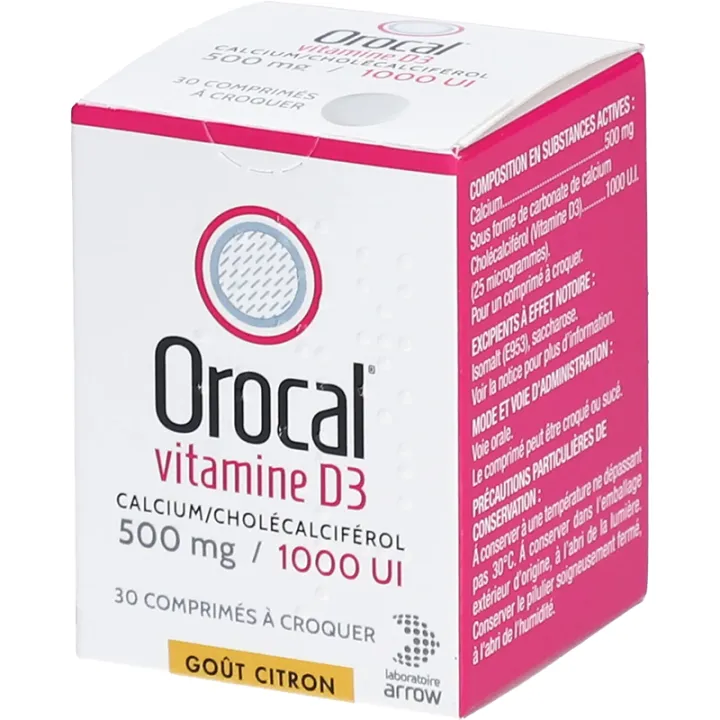
OROCAL VITAMIN D3 500 mg/1000 IU: chewable tablet (white; lemon-flavored); box of 30
Prescription optional—65% reimbursable —Price: €5.29

The prices listed do not include the pharmacist’s “dispensing fee.”

Composition

per tabletper tabletper tablet
Calcium500 mg500 mg500 mg
Cholecalciferol (vitamin D3)200 IU400 IU1,000 IU
Isomalt+++
Sucrose+++

Contraindications

This medication should not be used in the following cases:
  • excess calcium in the blood or urine,
  • calcium-containing urinary tract stones,
  • prolonged immobilization (wait until the patient is able to walk again before starting treatment),
  • severe renal insufficiency (500 mg/200 IU and 500 mg/1000 IU tablets).

Warning

This medication contains vitamin D: an overdose can lead to serious side effects. Vitamin D is present in many medications, some of which are available over the counter: avoid combining them without medical advice.

Precautions are necessary in cases of sarcoidosis or renal insufficiency.

Do not continue treatment beyond the prescribed duration: a blood test may be necessary to ensure there is no abnormal accumulation of calcium in the body.

When this medication is used to treat decalcification caused by prolonged bed rest, treatment should not be started until the patient has resumed walking.

Drug Interactions

Due to the presence of calcium, allow at least a 2-hour interval between taking this medication and taking cyclines, bisphosphonates, thyroid hormones, or medications containing ciprofloxacin, norfloxacin, sodium fluoride, iron, zinc, strontium, or estramustine.

Also, inform your pharmacist or doctor if you are taking a digitalis, a diuretic, or orlistat.

There are also food interactions: foods known to be high in oxalic acid (spinach, rhubarb, sorrel, cocoa, tea) or phytic acid (chocolate, whole grains, legumes) may reduce calcium absorption. It is therefore recommended to take this medication away from meals containing these foods.

Fertility, Pregnancy, and Breastfeeding

This medication can be used by pregnant or breastfeeding women, but the dosage prescribed by the doctor must not be exceeded.

Hypercalcemia during pregnancy could be harmful to the unborn child. Be sure not to take multiple medications containing vitamin D during pregnancy.

Directions for Use and Dosage

This medication should be taken away from certain foods (see Interactions).

The 500 mg/200 IU and 500 mg/1000 IU tablets can be chewed or sucked.

The 500 mg/400 IU tablets are meant to be sucked.

Usual dosage:

  • Adults: 1 500 mg/200 IU tablet, 1 to 3 times a day; or 1 500 mg/400 IU tablet, morning and evening; or 1 500 mg/200 IU tablet, once a day.
  • Children: 1 tablet containing 500 mg/200 IU, 1 or 2 times a day.

Tips

Taking this medication does not replace the need for regular consumption of dairy products, which are naturally rich in calcium.

Possible side effects

Uncommon: hypercalcemia, hypercalciuria (excess calcium in the urine, which may contribute to kidney stones).

Rare: constipation, nausea, bloating, diarrhea, stomach pain, skin rash, itching, hives.

Frequency unknown: angioedema.

GLOSSARY

bloating

Accumulation of air or gas in the intestine.

See the article: Bloating, Flatulence, and Aerophagia

stone

A concretion (stone) that forms in the excretory ducts of certain organs: urinary, biliary, or salivary tracts.

Synonym: lithiasis.

Deficiency

A deficiency usually involving nutrients, vitamins, minerals, etc. A varied diet is the best way to prevent deficiencies.

constipation

A slowing of intestinal transit resulting in less frequent bowel movements.

See the article: Constipation in Adults or Constipation in Infants and Children

cyclines

A class of antibiotics used primarily to treat acne and certain genital infections.

diarrhea

The strict medical definition of diarrhea is “excessively frequent and voluminous bowel movements.” In common parlance, however, diarrhea is equated with frequent, loose stools. Normally, stools are soft and paste-like, but the passage of loose or barely formed stools—without pain or any specific associated symptoms—is not considered pathological. Diarrhea is diagnosed when liquid bowel movements occur repeatedly throughout the day, and the urge to defecate is urgent or painful.

Many medications can speed up intestinal transit and make stools more liquid, without this side effect being a cause for serious concern.

Antibiotics can alter the gut flora, which is essential for digestion, and cause diarrhea that is more or less bothersome but benign. The effect appears immediately or after a few days of treatment. A severe and rare form of diarrhea, pseudomembranous colitis, can occur after antibiotic treatment; this condition is characterized by the passage of mucus and pseudomembranes (resembling shreds of skin) accompanied by abdominal pain; constipation may replace the initial diarrhea. Pseudomembranous colitis can occur several days after stopping antibiotic treatment and requires urgent medical attention.

See the article: Diarrhea and Gastroenteritis in Adults or Diarrhea and Gastroenteritis in Children

digitalis

A class of drugs related to digitalin, a substance derived from purple foxglove (a common plant). Digitalis preparations, used in cardiology, slow the heart rate and strengthen heart contractions.

diuretic

A medication that increases the excretion of water by the kidneys. Most often, this loss of water follows the loss of salts caused by the medication (salidiuretic).

Diuretics are primarily used to treat high blood pressure, although their mechanism of action in this condition is not well understood. They are also prescribed for acute or chronic heart failure, edema, and other rarer conditions.

These medications cause a loss of sodium and potassium (except for certain types known as “potassium-sparing” diuretics). Long-term use therefore requires regular monitoring of blood potassium levels to prevent cardiac complications that could result from hypokalemia (low potassium levels in the blood). Low sodium levels are another possible—though rarer at standard dosages—consequence of long-term diuretic use; this can also be detected through a blood test.

skin rash

The appearance of pimples or patches on the skin. These lesions may be caused by a food or a medication and may indicate an allergy or a toxic reaction. Many viruses can also cause rashes: those associated with rubella, roseola, and measles are the best known.

frequency unknown

The frequency of an adverse reaction is described in official documents as follows:

  • Very common: observed in more than 1 in 10 patients
  • Common: occurs in fewer than 1 in 10 patients but more than 1 in 100 patients
  • Uncommon: occurs in fewer than 1 in 100 patients but more than 1 in 1,000 patients
  • Rare: occurs in fewer than 1 in 1,000 patients but more than 1 in 10,000
  • Very rare: occurs in fewer than 1 in 10,000 patients
  • Frequency unknown: an adverse reaction that is too rare to specify its frequency, or involving a very old medication for which no studies are available to quantify its frequency of occurrence.

The current trend in official documents is to report all bothersome symptoms observed—even exceptionally—in people who have used the drug. Some of these symptoms are actually attributable to the drug, while others may occur during treatment purely by coincidence, even though the drug is likely not responsible.

For the sake of completeness, we have chosen to list all the symptoms enumerated in official documents, although we are aware of the risk of causing unnecessary concern. Providing accurate information to the public remains our top priority, however. Please be aware that these symptoms are not necessarily caused by the medication.

thyroid hormone

A family of hormones that accelerate metabolism, secreted by the thyroid gland. They can be measured in the blood and are called T3 and T4.

hypercalcemia

Excess calcium in the blood, resulting from a medical condition or the use of certain medications (excess vitamin D).

hypercalciuria

An abnormal increase in calcium levels in the urine.

kidney failure

The kidneys’ inability to eliminate waste products or medications. Advanced kidney failure does not necessarily result in a decrease in urine output. Only a blood test and measurement of creatinine levels can detect this condition.

Osteoporosis

Weakening of the bones, which become porous and brittle.

See the article: Osteoporosis.

Quincke’s edema

An allergic reaction that typically affects the face. Quincke’s edema causes swelling that can sometimes be dramatic. The eyelids are often the first to be affected. In rare cases where the edema affects the throat, breathing difficulties may occur, and urgent treatment is necessary.

sucrose

Sucrose is the substance that makes up table sugar and industrial sugar found in cookies, cakes, candies, and sugary drinks (a 1.5-liter bottle of soda contains the equivalent of thirty sugar cubes). Some people are intolerant to fructose, which is produced during the digestion of sucrose, and consequently suffer from bloating and diarrhea. Some medications contain sucrose as an excipient (a component with no therapeutic activity).

See the article: Are All Carbohydrates the Same?

Sarcoidosis

A disease of unknown cause that primarily affects young adults and most often manifests as simple fatigue.

It causes enlarged lymph nodes and inflammation of the lungs or other organs.

sodium

A mineral that can form salts, particularly with chlorine (sodium chloride, or table salt).

IU

Abbreviation for International Unit. A standardized unit of measurement that indicates the activity of a substance.

hives

A rash of hives on the skin, most often caused by an allergic reaction. The hives resemble stings from stinging nettles and range in color from pale pink to red. Hives can appear or disappear within a few minutes and cause intense itching; it can be localized or spread across the entire skin surface. When hives occur daily and no cause can be identified, the condition is referred to as chronic spontaneous urticaria.

vitamin

A substance essential for the growth and proper functioning of the body. Vitamin requirements are normally met through a varied diet. In developed countries, only vitamin D deficiency—in young children or the elderly who have little exposure to sunlight—warrants systematic supplementation. An intake exceeding the body’s needs—particularly through medications—can lead to an overdose and various health problems (primarily vitamins A and D).

See the article: Vitamins.

Route
  • Route (route of administration) used to administer medications: oral, sublingual, subcutaneous, intramuscular, intravenous, intradermal, transdermal.
  • A system of hollow organs through which air (respiratory tract), food (digestive tract), urine (urinary tract), bile (biliary tract), etc., pass.
product contains :

Advice from our naturopaths

Magnesium, calcium, chromium, copper, iron and potassium orotates: bio-available mineral salts Magnesium, calcium, chromium, copper, iron and potassium orotates: bio-available mineral salts

Orotates, bioavailable mineral salts? It was the researcher Hans Nieper who discovered the particular properties of orotates at the end of the 1980s. These mineral salts of orotic acid indeed allow optimal mineralization . Orotatesse are found naturally in animal and plant cells. But how do orotates deposit minerals (magnesium, calcium, chromium, iron, lithium, zinc, etc.) at the heart of the cell, directly in the cell nucleus…

Read the article on the blog
Optimise your bone health naturally with Shilajit Optimise your bone health naturally with Shilajit

Bone health is crucial to maintaining optimal mobility and quality of life, particularly as we age. Among the emerging natural solutions, shilajit stands out as a traditional and scientifically validated remedy offering remarkable benefits for strengthening and protecting bones. This article explores the mechanisms and benefits of shilajit in the context of osteoporosis prevention and bone regeneration. What are the…

Read the article on the blog
Micronutrition, the basis of recommendations to combat osteoporosis Micronutrition, the basis of recommendations to combat osteoporosis

Osteoporosis, a skeletal disease that weakens the bones, affects around 5.5% of the French population, according to Inserm. Particularly prevalent in women after the menopause, it increases the risk of fractures, with a considerable impact on quality of life. Faced with this public health challenge, micronutrition offers a natural and effective approach to strengthening bone structure and preventing fractures. The…

Read the article on the blog
Natural Health Advice

Order a selection of products frequently purchased by our customers