What is Weleda Organic St. John's Wort Herbal Extract used for?
This dietary supplement, made witha hydroalcoholic extract of St. John’s wort fromorganic farming (DE-ÖKO-007 certification, EU organic farming), is offered by Weleda Laboratories (Huningue, France). St. John’s wort is considered the “light-bearing” plant.
St. John’s Wort helps promote emotional balance.
This supplement is intended to be part of a varied and balanced diet and a healthy lifestyle.
We also offer PhytoFrance Organic St. John’s Wort EFG 125 ml.
What are the active ingredients in Weleda Organic St. John’s Wort Herbal Extract?
St. John’s Wort (Hypericum perforatum) is a perennial plant in the Hypericaceae family. The extract is prepared from its flowering aerial parts using hydroalcoholic extraction; this explains the alcohol content listed in the ingredients.
To help you remember your two daily doses, tie them to specific times of day.
How should you use this dietary supplement?
It is recommended to take 2.5 ml of Weleda Organic St. John’s Wort Herbal Extract twice a day. Use the graduated measuring cup to measure the exact amount and dilute it in a glass of water. Follow this routine for 20 days, then take a break before starting again if necessary.
Precautions
- Shake the bottle before use to ensure the extracts are evenly distributed.
Warnings
- Do not exceed the recommended daily dose to avoid complications.
- This product is intended for adults only and must be kept out of the reach of children.
- Tell your doctor or pharmacist if you are taking other medications, including birth control pills, as St. John’s wort may affect their effectiveness.
- Avoid prolonged exposure to the sun while taking this product.
- This dietary supplement is not a substitute for a varied diet.
Pregnancy and Breastfeeding
- The use of St. John’s wort is not recommended for pregnant or breastfeeding women.
Storage
- Store at room temperature.
What is its composition?
Hydroalcoholic extract from the flowering aerial parts of organic St. John’s Wort (Hypericum perforatum L.), Alcohol: 65% vol.
Packaging
100 ml bottle.
Our professional advice and insights from natural health experts
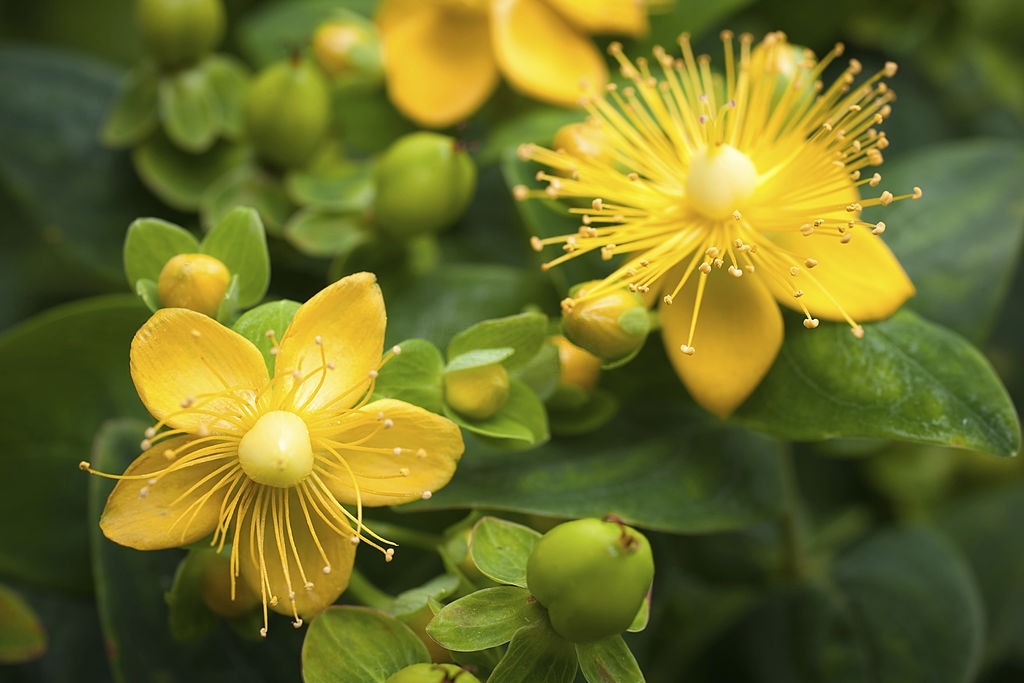
St. John’s Wort, or St. John’s herb, bears small golden-yellow flowers that leave a red stain on your fingers when squeezed and give off a distinctive scent. Its leaves appear to be pierced with “a thousand holes,” hence its name. Hold a leaf up to the light, and you’ll see a multitude of translucent dots: these aren’t actual holes, but tiny pockets filled with essential oil.
Its nickname comes from its flowering season, which peaks around June 24, St. John’s Day. For centuries, people would pick its flowering tops on that day, at the height of summer, and hang bouquets of them on their doorsteps. This connection to the sun also explains its reputation as a “light-bearing plant.”
You’ve probably come across it without even realizing it: it thrives along roadsides, in dry meadows, and on sunny slopes throughout Europe, all the way to our garrigue and the foothills of the Pyrenees. You can recognize it by its upright stems and its five petals dotted with small black spots along the edges.
The red color that stains your fingers comes from hypericin, a natural pigment in the plant. This is one of the reasons why it’s recommended to avoid prolonged sun exposure while taking it.
St. John’s wort is a unique plant: it can interact with many medications, including the birth control pill. Before starting, consult your pharmacist or doctor. This information is not a substitute for medical advice.