NOTICE
ANSM - Updated on : 18/09/2024
ATTENTION
KARDEGIC 300 mg, powder for drinkable solution in sachet WHICH IS A NON-STEROIDIC ANTI-INFLAMMATORY (NSAID) MAY CAUSE FTAL DEATH IF TAKEN FROM THE 6TH MONTH OF PREGNANCY (24 weeks of amenorrhea) EVEN AFTER A SINGLE TAKE.
Do not use if you are 6 months or more pregnant (24 weeks or more).
Before the 6th month or if you are planning a pregnancy, you should not take this medicine unless absolutely necessary, as determined by your doctor.
Product name
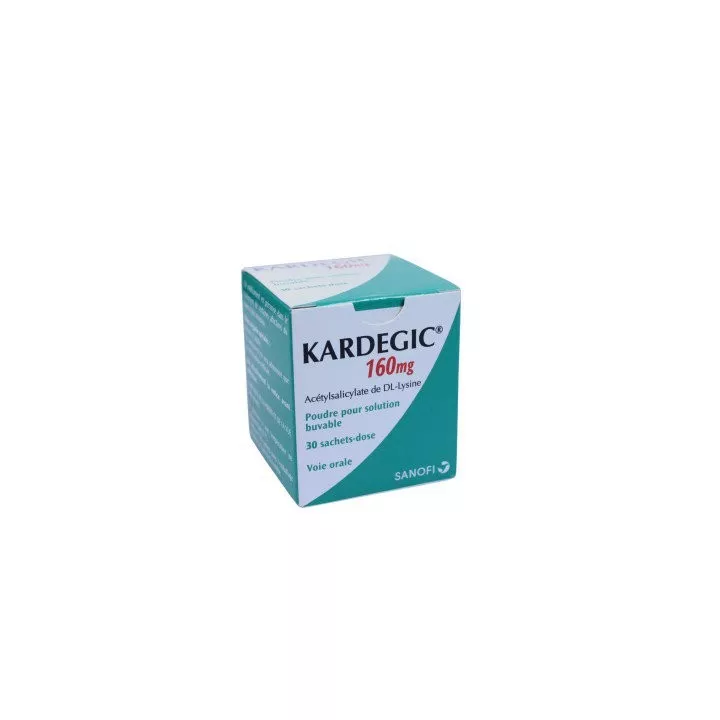
KARDEGIC 300 mg, powder for drinkable solution in sachet
DL-lysine acetylsalicylate
Sidebar
Please read this leaflet carefully before taking this medicine, as it contains important information for you.
- Keep this leaflet. You may need to read it again.
- If you have any further questions, please ask your doctor or pharmacist.
- This medicine has been prescribed for you personally. Do not give it to other people. It could harm them, even if the signs of their illness are the same as yours.
- If you experience any side effects, talk to your doctor or pharmacist. This also applies to any side effects not mentioned in this leaflet. See section 4.
What does this leaflet contain?
1. What is KARDEGIC 300 mg, powder for drinkable solution in sachet, and what is it used for?
2. What do I need to know before taking KARDEGIC 300 mg, powder for drinkable solution in sachet?
3. How do I take KARDEGIC 300 mg, powder for drinkable solution in sachet?
4. What are the possible side effects?
5. How to store KARDEGIC 300 mg, powder for drinkable solution in sachet?
6. Package contents and other information.
1. WHAT IS KARDEGIC 300 mg, powder for drinkable solution in sachet AND WHAT IS IT USED FOR?
Pharmacotherapeutic class :
ANTI-THROMBOTIC/PLATELET AGGREGATION INHIBITOR, EXCLUDING HEPARIN.
This medicine contains laspirin. KARDEGIC 300 mg, powder for drinkable solution in sachet belongs to the family of platelet aggregation inhibitors.
KARDEGIC 300 mg, powder for drinkable solution in sachet acts on platelets present in the blood and helps to thin the blood.
Therapeutic indications :
KARDEGIC 300 mg, powder for drinkable solution in sachet is used to prevent recurrences of strokes or heart attacks caused by clots in the arteries of the brain or heart.
Your doctor may decide to combine this medication with other treatments if necessary.
This medicine is for adults only. Do not start taking KARDEGIC 300 mg, powder for drinkable solution in sachet, without your doctor's permission.
2. WHAT DO I HAVE TO KNOW BEFORE TAKING KARDEGIC 300 mg, powder for drinkable solution in sachet?
Never take KARDEGIC 300 mg, powder for drinkable solution in sachet if you are 24 weeks or more pregnant (6 months or more of pregnancy) (see "Pregnancy, breast-feeding and fertility" below).
During the first 5 months of pregnancy, you should not take KARDEGIC 300 mg, powder for drinkable solution in sachet, unless absolutely necessary, as determined by your doctor.
If you are considering pregnancy and are taking an NSAID, talk to your health care professional.
Never take KARDEGIC 300 mg, powder for drinkable solution in sachet:
- if you are allergic to the active substance (DL-lysine acetylsalicylate) or to any of the other components of this medicine listed in section 6,
- if you are allergic (hypersensitive) to a drug in the same family as laspirin (non-steroidal anti-inflammatory drugs = NSAIDs),
- if you are pregnant, from the beginning of the6th month of pregnancy (beyond 24 weeks of amenorrhea),
- if you have or have had asthma or nasal polyps associated with asthma induced by aspirin or a drug of the same family (NSAIDs),
- if you have suffered or are currently suffering from a lesion on the lining of the stomach or the first part of the intestine (active, chronic or recurrent gastrointestinal ulcer),
- if you have ever had a hemorrhage or perforation in the stomach after taking laspirin or another drug in the same family (non-steroidal anti-inflammatory drugs: drugs used to treat fever and pain),
- if you suffer from bleeding or if your doctor has identified a risk of bleeding,
- if you have serious liver, kidney or heart disease,
- if you suffer from mastocytosis (a disease of the cells involved in allergic reactions), as there is a risk of severe allergic reactions.
Warnings and precautions
Talk to your doctor or pharmacist before taking KARDEGIC 300 mg, powder for drinkable solution in sachet.
Before taking this medicine, tell your doctor:
- if you have a hereditary red blood cell disease called G6PD deficiency, as high doses of daspirine can cause red blood cell destruction,
- if you have ever had an ulcer of the stomach or duodenum, or inflammation of the stomach (gastritis),
- if you have ever experienced digestive bleeding (vomiting blood or blood in the stools),
- if you have kidney or liver disease,
- if you have hypertension (high blood pressure),
- if you have heavy periods.
Reye's syndrome, a very rare but life-threatening condition, has been observed in children with signs of viral infection (particularly chickenpox and flu-like illness) receiving acetylsalicylic acid. KARDEGIC 300 mg, powder for oral solution in sachet, should not be administered to children and adolescents.
Bleeding or abdominal pain may occur during treatment. The risk of these effects increases with the dose, in the elderly, in people of low body weight, in people with a history of stomach ulcers and in combination with certain drugs (see "Other drugs and KARDEGIC 300 mg, powder for drinkable solution in sachet"). Consult your doctor immediately if you experience any of these effects.
If surgery is planned:
Laspirin increases the risk of bleeding, even at very low doses, and even if it has been several days since you last took it.
Tell your doctor, surgeon, anesthetist or dentist if you plan to undergo even minor surgery.
Children and adolescents
See "Before taking this medicine, tell your doctor" above.
KARDEGIC should not be administered to children and adolescents.
Other medicines and KARDEGIC 300 mg, powder for drinkable solution in sachet
|
This medicine contains laspirin. Other medicines contain laspirin. Do not take other medicines containing laspirin or medicines of the same family (NSAIDs such as libuprofen) at the same time as KARDEGIC 300 mg, powder for drinkable solution in sachet, without asking your doctor or pharmacist. Combining these drugs with KARDEGIC 300 mg, powder for drinkable solution in sachet dose could lead to overdosage and increase the risk of side effects, particularly bleeding.
Carefully read the package inserts of any other medicines you are taking to ensure that they do not contain aspirin and/or non-steroidal anti-inflammatory drugs.
|
Unless otherwise advised by your doctor, you should not take KARDEGIC 300 mg, powder for drinkable solution in sachet at the same time as :
- an oral anticoagulant (a drug used to thin the blood) if you have a history of stomach or duodenal ulcer,
- another medication containing ticlopidine or clopidogrel (blood-thinning drugs), except in certain situations where your doctor may prescribe both laspirin and clopidogrel,
- another benzbromarone-based medicine or probenecid (medicines used to treat gout),
- another drug containing agrelide (used to reduce the number of platelets in the blood),
- ticagrelor outside validated indications,
- another defibrotide-based medicine (used to treat a disease in which the blood vessels of the liver are damaged and obstructed by blood clots),
- nicorandil (a drug used to treat angina pectoris): the combination may increase the risk of gastrointestinal ulcers, perforation and bleeding.
- levothyroxine (a drug used to treat inadequate thyroid secretion): the combination may lead to an increase in thyroid hormone levels in the blood. Thyroid hormone levels should be monitored by your doctor,
- pemetrexed (a drug used in the treatment of certain cancers): the combination may increase the risk of pemetrexed toxicity. Your doctor should check your clinical condition.
Inform your doctor if you are taking any medication containing :
- methotrexate in doses greater than 20 mg/week (used to treat certain cancers),
- gastrointestinal topicals, antacids and adsorbents (drugs used to treat digestive pain or digestive ulcers),
- oral anticoagulants, thrombolytics or heparins (drugs used to thin the blood),
- non-steroidal anti-inflammatory drugs (used to treat pain and fever),
- ticagrelor (in validated indications),
- cobimetinib,
- ibrutinib,
- a selective serotonin reuptake inhibitor (drugs used to treat depression or anxiety disorders),
- mixed adrenergic-serotonergic drugs,
- acetazolamide (used to treat high blood pressure): when taken concomitantly with acetylsalicylic acid, there is a risk of vomiting, tachycardia (rapid heartbeat), hyperpnea (rapid, deep breathing), mental confusion, fatigue, lethargy (extreme drowsiness), drowsiness, confusion, hyperchloremic metabolic acidosis (a condition characterized by an increase in the amount of acid in the blood).
- valproic acid (a drug used in the treatment of epilepsy): the combination may lead to an increase in the amount of valproic acid in the blood. Your doctor will monitor your valproate levels,
- tenofovir (a drug used to treat certain infections caused by viruses): combination with acetylsalicylic acid may increase the risk of kidney problems (renal failure). Your doctor will therefore check your kidney function,
- glucocorticoids (except hydrocortisone) used in the treatment of inflammation: combination with acetylsalicylic acid at doses used to treat pain or fever may increase the risk of bleeding,
- insulin and sulfonylureas (a drug used to reduce blood sugar levels): combination increases the risk of hypoglycemia (low blood sugar),
- metamizole (pain medication): combination may reduce the effect of acetylsalicylic acid on platelet aggregation. Your doctor will prescribe metamizole with caution if you are taking low doses of acetylsalicylic acid for cardiovascular prevention.
Tell your doctor or pharmacist if you are taking, have recently taken or may take any other medication.
KARDEGIC 300 mg, powder for drinkable solution in sachet with food, drink and alcohol
Alcohol consumption should be avoided during treatment due to the increased risk of gastrointestinal lesions and changes in blood coagulation tests (prolongation of bleeding time). Therefore, patients treated with acetylsalicylic acid should be cautious about consuming alcoholic beverages for up to 36 hours after treatment.
Pregnancy, breast-feeding and fertility
If you are pregnant or breast-feeding, think you may be pregnant or are planning to become pregnant, ask your doctor or pharmacist for advice before taking any medicine.
Pregnancy
This medicine contains aspirin (acetylsalicylic acid). Do NOT take ANY OTHER medication containing aspirin (including over-the-counter medicines).
- up to 100 mg daily: Throughout pregnancy, if necessary, your specialist doctor may prescribe low doses of laspirin (up to 100 mg per day), in exceptional circumstances requiring specialist supervision. If this is the case, it is very important to follow your doctor's instructions to the letter, without exceeding the prescribed doses.
- between 100 and 500 mg per day: As a precautionary measure, the following recommendations apply unless otherwise prescribed by your specialist.
- 500 mg or more per day:
From the beginning of the 6th month (24th week of amenorrhea) until the end of pregnancy, KARDEGIC 300 mg, powder for drinkable solution in sachet is contraindicated. Under NO CIRCUMSTANCES should you take this medicine during this period, as its effects on your unborn child may be serious or even fatal. In particular, toxicity to the heart, lungs and/or kidneys has been observed, even with a single dose. It can also affect you and your baby, promoting bleeding and leading to a later or longer-than-expected delivery.
Before the beginning of the 6th month (up to the 24th week of amenorrhea) or if you are planning a pregnancy, you should not take this medicine unless absolutely necessary. This will be determined by your doctor. In such cases, the dose should be as low as possible and the duration of treatment as short as possible.
NSAIDs, including KARDEGIC 300 mg, powder for drinkable solution in sachet, can cause miscarriage and, in some cases, malformations after exposure in early pregnancy.
From 2 and a half months of pregnancy (12 weeks of amenorrhea), KARDEGIC 300 mg, powder for drinkable solution in sachet may cause kidney problems in your baby, if taken for several days, leading to a low level of amniotic fluid in the baby (oligohydramnios).
From the beginning of the 5th month of pregnancy (20 weeks of amenorrhea), a narrowing of the blood vessels in your baby's heart (constriction of the ductus arteriosus) may be observed. If treatment lasting several days is required during the 5th month of pregnancy (between 20 and 24 weeks' gestation), your doctor may recommend additional monitoring.
If you have taken this medicine while pregnant, tell your doctor immediately, so that suitable monitoring can be offered if necessary.
Breast-feeding
As Laspirine passes into breast milk, this medicine is not recommended during breastfeeding.
Ask your doctor or pharmacist for advice before taking any medication.
Fertility
Laspirin, like all non-steroidal anti-inflammatory drugs (NSAIDs), may impair fertility in women and cause difficulties in becoming pregnant, reversible on discontinuation of treatment. Inform your doctor if you are planning a pregnancy or have difficulty conceiving.
KARDEGIC 300 mg, powder for drinkable solution in sachet contains sodium and lactose.
This medicine contains less than 1 mmol (23 mg) of sodium per sachet, i.e. it is essentially "sodium-free".
This medicine contains a sugar (lactose) which breaks down into galactose and glucose. Its use is not recommended in patients with galactose intolerance, Lapp lactase deficiency or glucose-galactose malabsorption syndrome (rare hereditary diseases).
If your doctor has already told you that you are intolerant to certain sugars, contact him/her before taking this medicine.
3. HOW TO TAKE KARDEGIC 300 mg, powder for drinkable solution in sachet?
Dosage
This medicine is intended for adults only.
The usual dose is 1 sachet per day.
Your doctor will tell you how many sachets to take each day.
Always follow the dose indicated by your doctor.
If in doubt, consult your doctor or pharmacist.
Method of administration
This medicine is to be taken orally.
Pour contents of sachet into a tall glass. Add water. Wait for the powder to dissolve before drinking.
Frequency of administration
Your doctor will tell you when to take this medicine.
Duration of treatment
Your doctor will tell you how long to take this medicine.
If you have taken more KARDEGIC 300 mg, powder for drinkable solution in sachet than you should have (or if you have accidentally swallowed it):
Tell your doctor immediately, especially if you are a child.
Overdose can be fatal, particularly in children. The main symptoms of overdosage are: ringing in the ears, hearing loss, headache, dizziness, and in more severe cases fever, severe hypoglycemia (low blood sugar), rapid drop in blood pressure, rapid breathing and loss of consciousness (coma).
|
If these signs occur, you must stop treatment immediately and go to hospital for emergency treatment.
|
Life-threatening lung edema unrelated to heart failure (excess fluid in the lungs) may occur in acute and chronic overdose with acetylsalicylic acid (see section 4: "What are the possible side effects?"). This edema may be fatal in the event of overdosage.
If you forget to take KARDEGIC 300 mg, powder for drinkable solution in sachet :
Do not take a double dose to make up for the one you forgot to take.
Continue your treatment as usual and inform your doctor.
4. WHAT ARE THE POSSIBLE SIDE EFFECTS?
Like all medicines, this drug may cause undesirable effects, but they do not occur systematically in everyone.
The following side effects may occur:
- abdominal pain, difficulty digesting, heartburn,
- inflammation of the esophagus, stomach, duodenum or colon,
- ulceration of esophagus, stomach, duodenum, intestine, perforation of digestive ulcer, perforation of intestine,
These reactions may or may not be associated with visible or non-visible gastric or intestinal bleeding (black stools, blood in the stools or vomiting of blood), which may lead to anaemia (reduction in the number of red blood cells in the blood, resulting in fatigue, shortness of breath, paleness and dizziness) at any dose of daspirin, and in patients with or without signs of warning or severe gastrointestinal history.
- Acute inflammation of the pancreas during an allergic reaction (hypersensitivity) to acetylsalicylic acid.
- Life-threatening bleeding.
- Life-threatening cerebral bleeding, particularly in the elderly. In such cases, consult your doctor immediately.
- Decrease in the number of platelets in the blood (thrombocytopenia).
- Abnormally low levels of certain blood cells (pancytopenia, bicytopenia, aplastic anemia).
- Depletion of blood cell production (bone marrow failure).
- Abnormally low levels of certain white blood cells, which can lead to serious infections (leukopenia, neutropenia, agranulocytosis).
- Destruction of red blood cells (hemolytic anemia) in patients withglucose-6-phosphate dehydrogenase deficiency.
- Reye's syndrome (onset of consciousness or behavioural disturbance and vomiting) in children with viral disease receiving aspirin (see section 2 "Warnings and precautions").
- Blood in the urine, bleeding from the genital tract.
- Bruises (hematomas), bleeding (nose, gums), small red spots on the skin (purpura).
- Allergic reaction: pimples and/or redness of the skin, urticaria, sudden swelling of the face and neck which may cause difficulty in breathing (angioedema, or symptoms comparable to an asthma attack), sudden malaise with severe drop in blood pressure (anaphylactic shock).
- Bronchospasm (bronchial muscle contraction) and asthma (bronchial inflammation and contraction).
- edema (swelling due to an accumulation of fluid in the tissues) if you take high doses of KARDEGIC 300 mg, powder for drinkable solution in sachet.
- lung edema unrelated to heart failure in the case of long-term use and in the context of an allergic reaction to aspirin.
- Difficulty breathing.
- Ringing in the ears, sensation of hearing loss, headache, dizziness. Overdose may occur.
- Increased liver enzymes, liver damage (mainly to liver cells), chronic liver disease (chronic hepatitis).
- Decreased elimination of uric acid, which may lead to a gout attack (swollen and painful joints due to excess uric acid).
- Rounded, red, itchy patches of skin with a burning sensation, leaving coloured spots, which may reappear in the same places if the drug is taken again.
- Kidney disease (renal failure).
- Potentially fatal hemorrhage(severe, life-threatening blood loss) and inflammation of the blood vessels, which may be associated with damage to the joints, kidneys, skin and digestive tract (vasculitis, including Schönlein-Henoch purpura).
- Disorders of the arteries of the heart with localized pain in the chest which may radiate to the left shoulder and jaw of allergic origin to acetylsalicylic acid (Kounis syndrome).
- Presence of blood in semen (hematospermia).
In all these cases, seek prompt medical advice.
Reporting side effects
If you experience any side effects, please tell your doctor or pharmacist. This also applies to any side effects not mentioned in this leaflet. You can also report adverse reactions directly via the national reporting system: Agence nationale de sécurité du médicament et des produits de santé (ANSM) and the network of Centres Régionaux de Pharmacovigilance - Website: https://signalement.social-sante.gouv.fr/
By reporting adverse reactions, you contribute to providing more information on drug safety.
5. HOW TO CONSERVE KARDEGIC 300 mg, powder for drinkable solution in sachet?
Keep out of sight and reach of children.
Do not use this medicine after the expiration date indicated on the packaging. The expiration date refers to the last day of that month.
Store at temperatures not exceeding 25°C.
Keep sachets in outer packaging, away from moisture.
Do not dispose of any medicine down the drain or in the household waste. Ask your pharmacist to identify any medicines you no longer use. These measures will help protect the environment.
6. CONTENTS AND OTHER INFORMATION
What KARDEGIC 300 mg, powder for drinkable solution in sachet, contains
- The active substance is :
DL-lysine acetylsalicylate........................................................................................... 540 mg
Corresponding amount of acetylsalicylic acid (also known as aspirin)................ 300 mg
For one sachet.
- The other components are :
Glycine, mandarin flavouring, ammonium glycyrrhizate.
What is KARDEGIC 300 mg, powder for drinkable solution in sachet and what does it contain?
This medicine comes in the form of a powder for oral solution.
Each box contains 30 or 100 sachets.
Not all presentations may be marketed.
Marketing authorization holder
SANOFI WINTHROP INDUSTRIE
82 AVENUE RASPAIL
94250 GENTILLY
Marketing authorization holder
SANOFI WINTHROP INDUSTRIE
82 AVENUE RASPAIL
94250 GENTILLY
Manufacturer
SANOFI WINTHROP INDUSTRIE
196 RUE DU MARECHAL JUIN
45200 AMILLY
Product names in member states of the European Economic Area
Not applicable.
The last date on which this leaflet was revised was
[to be completed subsequently by the holder].
Other
Detailed information on this drug is available on the ANSM (France) website.