What is vitamin B12, and what does it do?
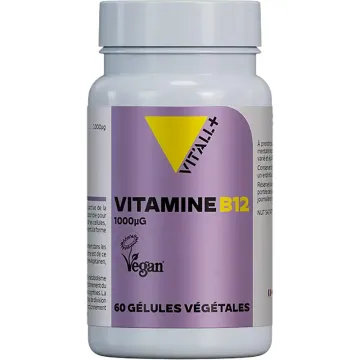
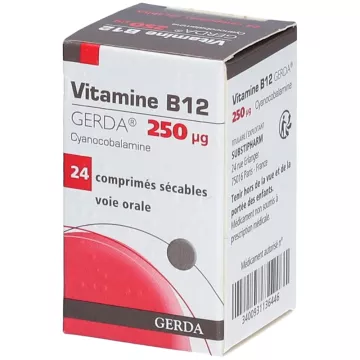
Vitamin B12 (cobalamin) is a one-of-a-kind water-soluble vitamin—the only vitamin that contains a metal (cobalt) and occurs naturally only in foods of animal origin. Essential for red blood cell formation, nerve protection, and energy production, a deficiency can go unnoticed for years before causing irreversible neurological damage. Find our B vitamins at your local pharmacy for the most easily absorbed forms of vitamin B12.
- Red blood cell formation: Vitamin B12 is essential for the normal maturation of red blood cells in the bone marrow—without it, red blood cells become abnormally large and dysfunctional (megaloblastic anemia) → fatigue + shortness of breath + paleness → see our page on anemia
- Nerve protection (myelin): Vitamin B12 is essential for the synthesis of myelin—the protective sheath surrounding nerve fibers—a prolonged deficiency gradually destroys this sheath → peripheral neuropathy (tingling, numbness in the hands and feet) → followed by damage to the spinal cord (combined sclerosis) → walking and balance problems
- Cognitive and mental health: Vitamin B12 regulates the production of serotonin and dopamine (mood) and protects neurons → deficiency → depression, irritability, memory problems, and difficulty concentrating—a documented link between chronic deficiency and cognitive decline in older adults
- Energy and physical performance: B12 plays a role in the Krebs cycle (cellular energy production) + in the synthesis of muscle creatine → deficiency → severe fatigue + muscle weakness + slow recovery after exercise
- Methylation cycle with vitamin B9 and vitamin B6: B12 works in tandem with B9 and B6 to keep homocysteine levels low — high blood homocysteine levels are a risk factor for cardiovascular disease and dementia
At-risk populations and causes of deficiency
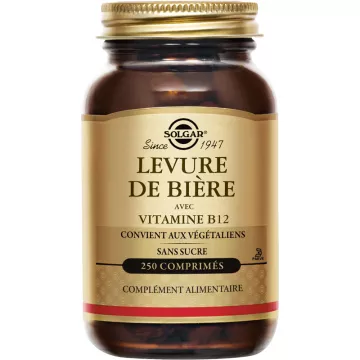
- Vegans and strict vegetarians: Vitamin B12 is absent from all unfortified plant-based foods—deficiency is virtually inevitable in the long term without supplementation—fortified products (plant-based milks, nutritional yeast) do not always meet requirements → supplement systematically
- Older adults (> 60 years): production of intrinsic factor (essential for B12 absorption) decreases with age + frequent atrophic gastritis → reduced absorption → subclinical deficiency is very common in those over 70 — screening recommended
- Biermer’s anemia (autoimmune disease): Antibodies against intrinsic factor or gastric parietal cells → B12 absorption is impossible → lifelong intramuscular B12 injections are mandatory (oral tablets are not absorbed)
- Medications that reduce absorption: PPIs (omeprazole, pantoprazole) and H2 blockers → reduced gastric acidity → B12 is less effectively released from food — metformin (diabetes) → reduces intestinal absorption of B12 by 30% over the long term — supplementation recommended after 2–3 years of metformin
- Bariatric surgery, Crohn’s disease, celiac disease, chronic alcoholism: intestinal malabsorption → rapid deficiency — routine blood testing + appropriate supplementation
Diagnosis, dietary sources, and forms of supplementation
- Clinical warning signs: tingling or numbness in the hands and feet + unexplained fatigue + memory loss + painful, smooth tongue (glossitis) + balance problems → seek medical attention promptly — an untreated deficiency can lead to irreversible neurological sequelae
- Laboratory diagnosis: Serum B12 (normal > 200 pg/mL) — holotranscobalamin (active fraction, more reliable, > 35 pmol/L) — urinary or serum methylmalonic acid (sensitive functional marker) + homocysteine — to be combined with a complete blood count (CBC) + ferritin for a comprehensive evaluation
- Foods highest in B12: cooked clams (84 µg/100 g — world record) — veal liver (70 µg/100 g) — mackerel (19 µg/100 g) — sardines (11 µg/100 g) — beef (2.5 µg/100 g) — eggs (1.1 µg/100 g) — whole-milk yogurt (0.5 µg/100 g)
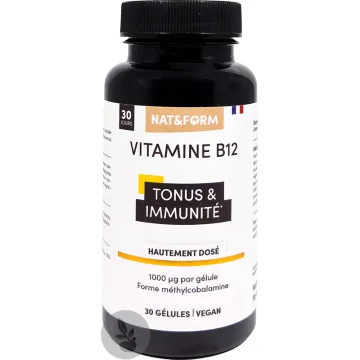
- Methylcobalamin vs. cyanocobalamin: methylcobalamin = naturally active form, directly usable by cells, ideal in sublingual tablets or oral spray — cyanocobalamin = less expensive synthetic form, requires conversion by the liver, well-documented and effective in IM injections — hydroxocobalamin = intermediate form, long-acting, used for IM injections in France
- Routes of administration: high-dose oral tablets (1,000 µg/day—as effective as passive diffusion injections)—sublingual tablets (methylcobalamin, direct oral absorption) — intramuscular injections (required in cases of Biermer’s anemia or severe malabsorption — hydroxocobalamin 1,000 µg)
RDA, pregnancy, athletes, and precautions
- RDA for vitamin B12: adults 4 µg/day — pregnant women 4.5 µg/day — breastfeeding women 5 µg/day — no upper limit set (water-soluble vitamin; excess is excreted) — functionally higher requirements in older adults and vegans (less efficient absorption)
- Pregnancy and breastfeeding: Vitamin B12 is essential for the development of the baby’s brain and nervous system — maternal deficiency → growth retardation + fetal neurological disorders + insufficient B12 intake for the infant through breastfeeding — pregnant vegans → mandatory supplementation under medical supervision
- Athletes: Vitamin B12 supports energy production, recovery, and red blood cell synthesis → optimizes endurance — documented benefits for vegan endurance athletes — frequently included in sports multivitamin formulas along with B9 and B6
- Cognitive decline and prevention: Observational studies link low B12 levels to a higher risk of dementia — supplementation with B12, B9, and B6 slows brain atrophy in clinical trials — routine screening recommended for individuals over 65 with cognitive impairment
- Precautions: Elevated serum B12 levels without supplementation → investigate the cause (liver disease, myeloproliferative syndrome, solid tumor) — never supplement with B9 alone without measuring B12 levels (may mask a B12 deficiency) — folic acid: see our page dedicated to pregnancy