What is folic acid, and why is it prescribed during pregnancy?
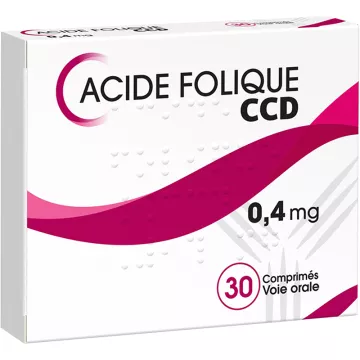
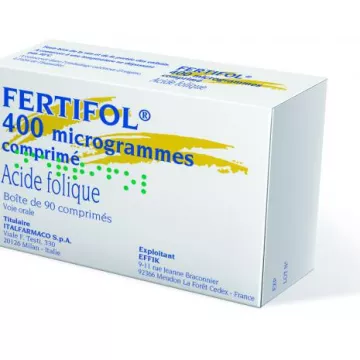
Folic acid is the synthetic form of vitamin B9—it is stable, bioavailable, and used in dietary supplements and food fortification. It is best known for its essential role in preventing neural tube defects in the fetus, particularly spina bifida and anencephaly. To be effective, supplementation must begin at least 4 weeks before conception. Find our B vitamins at pharmacies and our pregnancy supplements containing folic acid at the recommended doses.
- Neural tube closure: The neural tube (the early stage of the brain and spinal cord) closes between the 21st and 28th day after conception—often before a woman knows she is pregnant—which is why supplementation must begin BEFORE pregnancy, as soon as you plan to conceive
- Spina bifida: a malformation involving the closure of the spinal column → motor, sensory, and urinary disorders depending on severity—incidence reduced by 50–70% through preconception folic acid supplementation
- Anencephaly: complete absence of the forebrain → incompatible with life—effectively prevented by 400 µg/day of folic acid starting 4 weeks before conception
- Other malformations reduced: certain congenital heart defects, cleft palate and cleft lip, renal malformations — a less direct but observed link in epidemiological studies
- Difference between folic acid and dietary folate: synthetic folic acid is absorbed at nearly 100% on an empty stomach and 85% with meals, compared to 50% for dietary folate — a more reliable form for achieving protective levels during pregnancy
Dosage during pregnancy and high-risk groups
- Women with no history of complications (standard risk): 400 µg of folic acid per day—to begin 4 weeks before conception—to continue through the end of the first trimester (12 weeks of amenorrhea)—available over the counter at most prenatal clinics
- High-risk women: personal or family history of neural tube defects — antiepileptic treatment (phenytoin, valproate, carbamazepine) — pre-pregnancy diabetes — obesity (BMI > 30) → 4,000–5,000 µg/day of folic acid by prescription (10× the standard dose)
- Folic acid and methotrexate: Methotrexate (used to treat certain autoimmune diseases and cancers) is a folic acid antagonist → gastrointestinal and hematological toxicity — 5,000–10,000 µg/week of folic acid prescribed the day after each MTX injection to minimize side effects
- Folic acid and antiepileptic drugs: these medications accelerate the breakdown of folates → risk of deficiency → folic acid routinely prescribed for long-term treatment — monitor the effectiveness of the antiepileptic treatment if the dose is adjusted
- Folic acid and valproate (Depakine): Valproate is teratogenic regardless of folic acid (B9) levels — folic acid does not offset the teratogenic risk of valproate — women taking valproate should discuss alternatives with their neurologist before attempting to conceive
Folic acid, fertility, and blood formation
- Female fertility: folic acid improves egg quality and promotes embryo implantation in the endometrium — reduces the risk of early miscarriage — recommended as soon as pregnancy is planned, ideally 3 months before conception
- Male fertility: Folic acid reduces chromosomal abnormalities in sperm + improves sperm motility — combine with vitamin B6, vitamin B12, and zinc in male fertility formulas
- Megaloblastic anemia: folic acid deficiency → abnormally large and poorly functioning red blood cells → fatigue + shortness of breath + pallor — blood folate and vitamin B12 levels must be measured before treatment (do not correct B9 without measuring B12)
- Pregnancy and increased folate requirements: pregnancy triples the body’s needs (intense fetal cell division) — diet alone is insufficient → supplementation is mandatory — folic acid and B12 in standard prenatal supplements
- White blood cells and immunity: Folic acid is essential for lymphocyte proliferation → deficiency → decreased cellular immunity → more frequent and severe infections
Food fortification, sources, and precautions
- Food fortification: certain countries (the United States, Canada, Australia) are required to fortify flours and cereals with folic acid → documented 50% reduction in spina bifida cases — in France, voluntary fortification of certain foods (breakfast cereals, meat substitutes, plant-based milks) but not mandatory
- Foods naturally rich in folate: spinach + lentils + chickpeas + veal liver + leafy green vegetables + avocados + whole grains — Cooking destroys 50–80% of folate → eat raw or steamed — Folic acid in fortified foods is more stable than natural folate
- Folic acid alone or in a combination formula: during pregnancy, opt for comprehensive prenatal formulas (folic acid + iodine + B12 + vitamin D3 + iron if needed) — outside of pregnancy, folic acid is naturally included in cardiovascular formulas containing B9, B12, and B6
- Never supplement with folic acid without testing vitamin B12 levels: high-dose B9 supplementation can correct anemia caused by B12 deficiency by masking this deficiency—but B12-deficiency neuropathy continues to progress silently → always perform a complete evaluation
- Oncological precaution: emerging data suggest that an excess of unmetabolized synthetic folic acid may promote the proliferation of pre-existing cancer cells—do not supplement with high doses (>1,000 µg/day) unless there is an established medical indication — Patients undergoing chemotherapy should always seek an oncologist’s advice