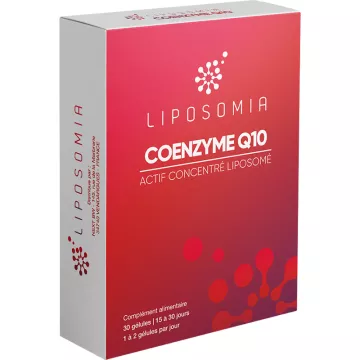
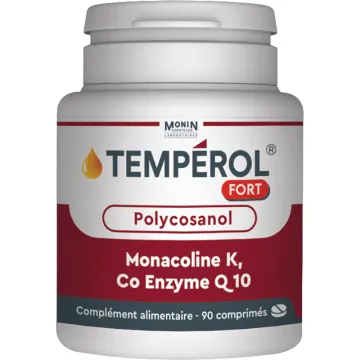
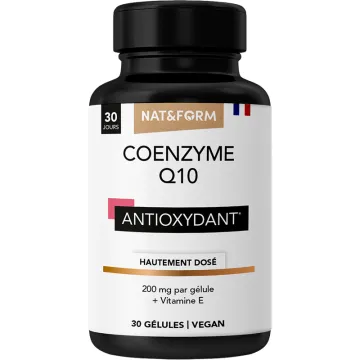
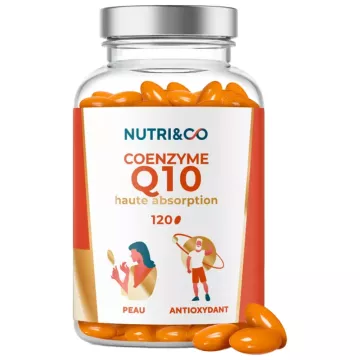
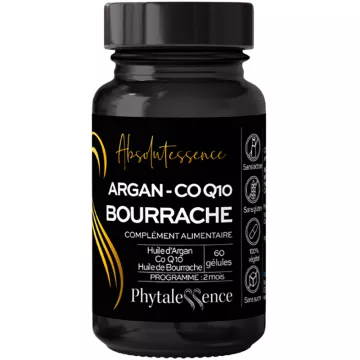
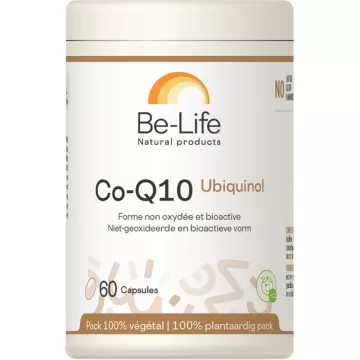
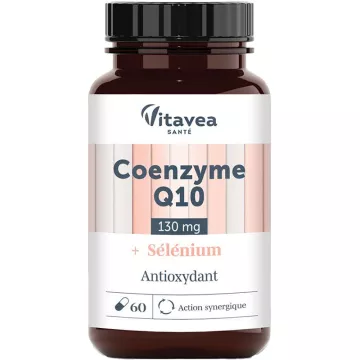
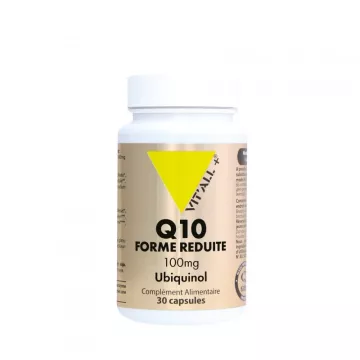
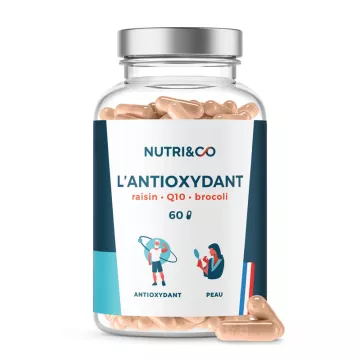
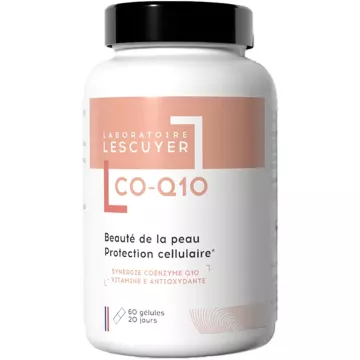
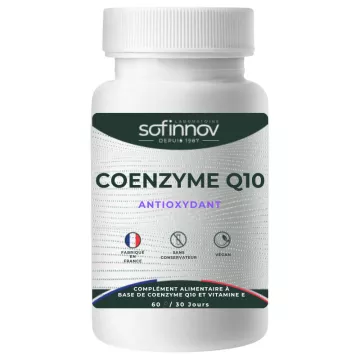
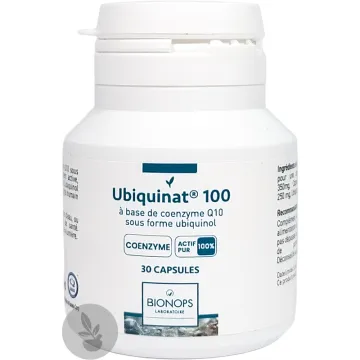
Ubiquinol is the reduced and directly active form of coenzyme Q10 (CoQ10). In the body, CoQ10 constantly fluctuates between its oxidized form (ubiquinone) and its reduced form (ubiquinol), depending on its role in the mitochondrial respiratory chain. Ubiquinol is the predominant form circulating in the blood and the directly antioxidant form—requiring no prior conversion.
What is ubiquinol?
Ubiquinol (CoQ10H₂) is the reduced form of coenzyme Q10—two additional electrons give it its direct antioxidant power on lipid membranes. It is the predominant form in the blood (>90% of total plasma CoQ10) and in most tissues. It is produced in the mitochondria during oxidative phosphorylation. Its bioavailability is higher than that of ubiquinone in people with reduced conversion capacity—such as older adults and those taking statins.
Ubiquinol vs. ubiquinone: what’s the difference?
Both forms are the same molecule in two different oxidation states—each has advantages depending on the user’s profile.
- Ubiquinone (oxidized CoQ10): the active form in the respiratory chain, efficiently converted to ubiquinol in young adults—offering optimal value for money
- Ubiquinol (reduced CoQ10): a direct antioxidant form that is better absorbed by older adults and people taking statins—whose conversion of ubiquinone to ubiquinol is less efficient
- Liposomal or phospholipid formulations of both forms: higher bioavailability than standard formulations
- The clinical difference between the two forms remains modest in young, healthy adults
How does ubiquinol support energy?
Ubiquinol plays a central role in mitochondrial ATP production and cellular protection.
- It is the mobile component of the electron transport chain—transferring electrons from Complex I/II to Complex III
- In its reduced form, it directly neutralizes free radicals generated during oxidative phosphorylation—protecting mitochondrial membranes
- It regenerates vitamin E and other lipid antioxidants that have been depleted
- Its concentration is highest in the heart, kidneys, liver, and muscles—organs with high energy demands
- Helps reduce cellular fatigue during periods of increased energy demand
Ubiquinol and cardiovascular health?
The heart has the highest concentration of CoQ10—its need for ubiquinol to function is particularly high.
- Supports optimal function of the myocardium (heart cells) through ATP production
- Protects blood vessel walls against lipid oxidative stress
- Particularly relevant for people taking statins: these medications inhibit the mevalonate pathway, reducing endogenous CoQ10 synthesis—ubiquinol compensates for this deficiency
- Tell your doctor if you are taking anticoagulant medication—possible interaction
Who benefits most from ubiquinol?
Several groups have increased needs for ubiquinol or reduced conversion capacity.
- People over 40: decline in endogenous production and conversion capacity—ubiquinol compensates more effectively
- People taking statins: documented CoQ10 depletion—ubiquinol supplementation is often recommended in clinical practice
- Athletes with high training volumes: high mitochondrial demand—see our sports recovery line
- Seniors: vitality, cardiovascular well-being, and cognitive support through the protection of nerve cells against oxidative stress
- Healthy young adults: standard ubiquinone is often sufficient and more economical
What are the dosage and precautions for ubiquinol?
The dosage should be tailored to the individual’s goals and profile.
- Prevention and general well-being: 50 to 100 mg/day
- Cardiovascular support or for people taking statins: 100 to 200 mg/day
- Situations with high demand: up to 300 mg/day as directed by a healthcare professional
- Take with a meal containing fat (fat-soluble)—softgels with vegetable oil provide the best absorption
- Anticoagulants (warfarin): possible interaction—inform your doctor
- Mild digestive upset or insomnia may occur at high doses — start with a moderate dose
- Pregnancy and breastfeeding: Avoid as a precaution (insufficient data)