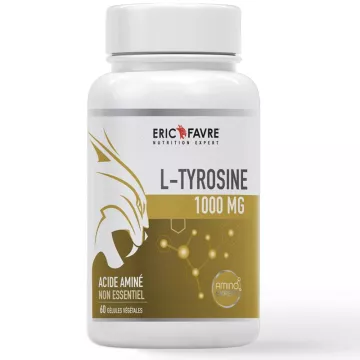
Tyrosine is a nonessential amino acid synthesized by the body from phenylalanine. As a precursor to dopamine, adrenaline, norepinephrine, and thyroid hormones (T3, T4), it plays a role in managing mental stress, thyroid function, and skin pigmentation. Available as L-tyrosine in dietary supplement form to meet increased needs. Explore the full range of amino acids.
What is tyrosine and how is it produced?
Tyrosine is produced in the liver through the hydroxylation of phenylalanine, an essential amino acid obtained from the diet. It is therefore conditionally essential: if phenylalanine intake is insufficient or if the metabolic conversion process is impaired, tyrosine can become a limiting factor. It is then sequentially converted into DOPA, dopamine, norepinephrine, and epinephrine, depending on physiological demand. Its conversion into thyroid hormones requires iodine as a cofactor.
Tyrosine, Dopamine, and Neurotransmitters?
Tyrosine is the starting substrate for the catecholamine cascade —the neuromodulators involved in alertness, motivation, and the stress response.
- Dopamine: motivation, pleasure, learning, and mood regulation
- Norepinephrine: alertness, attention, and adaptive stress response
- Adrenaline: mobilization of resources during physical exertion
- Vitamin B6 and iron are essential cofactors in this conversion
- L-tyrosine supplementation supports concentration and resistance to mental fatigue
Tyrosine and the thyroid: what’s the connection?
The thyroid hormones T3 and T4 are structurally composed of two molecules of iodinated tyrosine. An insufficient intake of tyrosine may contribute to suboptimal thyroid function.
- Tyrosine contributes to the synthesis of the hormones T3 (triiodothyronine) and T4 (thyroxine)
- Combine with iodine and selenium for optimal support of thyroid function
- People with hyperthyroidism should avoid supplementation (risk of additional thyroid stimulation).
- Any supplementation related to thyroid health requires prior medical consultation
Tyrosine and Melanin: What Role Do They Play in the Skin?
Melanin—the pigment in the skin, hair, and eyes—is synthesized from tyrosine through the action of tyrosinase.
- A sufficient intake of tyrosine contributes to the quality of skin pigmentation
- The tyrosine → melanin pathway is the target of certain active ingredients in anti-dark-spot skincare products (tyrosinase inhibitors)
- It contributes to hair pigmentation—a severe deficiency may contribute to hair depigmentation
Dietary sources of tyrosine?
Tyrosine is naturally abundant in protein-rich foods.
- Meats and poultry: chicken, turkey, beef
- Fish: salmon, tuna
- Dairy products: aged cheese, yogurt (Cheddar and Parmesan are particularly rich in tyrosine)
- Eggs and soy
- Legumes and nuts: lentils, walnuts, pumpkin seeds
- A varied, protein-rich diet generally meets your needs without supplementation
Precautions and contraindications for tyrosine?
Tyrosine is well tolerated but has several important contraindications.
- Phenylketonuria (PKU): strict contraindication—the conversion of phenylalanine to tyrosine is blocked; any intake of phenylalanine or tyrosine requires strict medical supervision
- MAOIs (monoamine oxidase inhibitors): severe interaction—risk of hypertensive crisis due to catecholamine accumulation
- SSRIs and antidepressants: Always inform your doctor
- Hyperthyroidism: Avoid supplementation (additional thyroid stimulation)
- High blood pressure: use with caution—inform your doctor (possible noradrenergic effect)