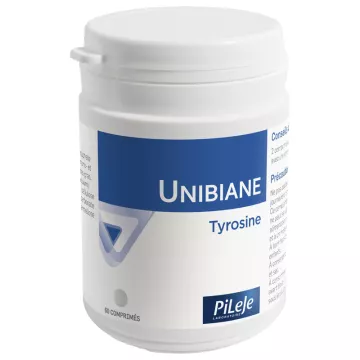
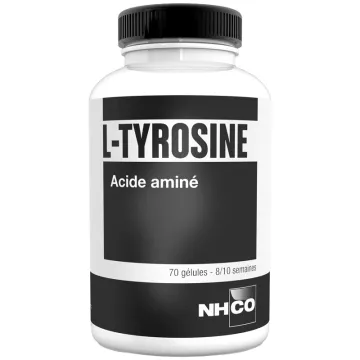
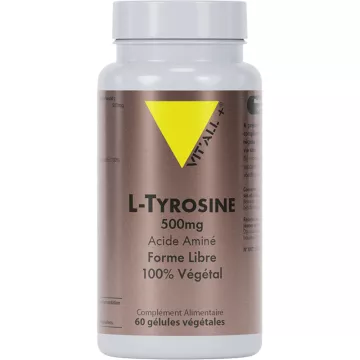
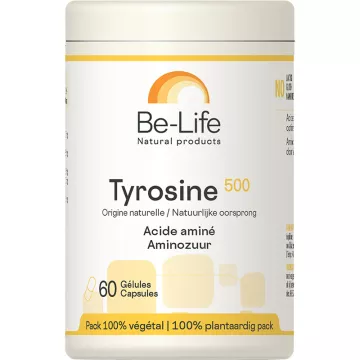
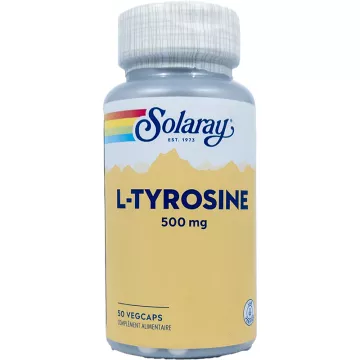
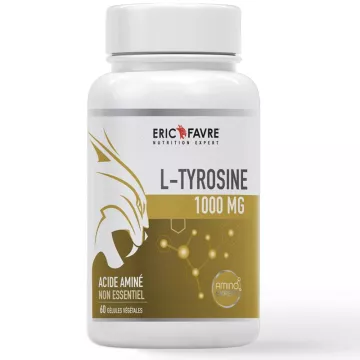
L-tyrosine is a nonessential amino acid—the body synthesizes it from phenylalanine. As a direct precursor to dopamine, adrenaline, and norepinephrine, it plays a central role in concentration, alertness, and managing mental stress. It is commonly used in cognitive support and anti-stress formulas.
What is L-tyrosine and what is it used for?
L-tyrosine is the starting substrate for several neurotransmitters and hormones essential to the body.
- Dopamine: motivation, pleasure, concentration, mood regulation
- Norepinephrine: alertness, stress response, mental energy
- Adrenaline: energy and responsiveness to physical exertion
- Thyroid hormones (T3, T4): Iodine binds to tyrosine to form thyroxine
- Melanin: pigmentation of the skin and hair
- See the full list of available amino acids
L-tyrosine and cognitive function: what are the benefits?
L-tyrosine is the go-to supplement for cognitive support during periods of increased demand.
- It helps maintain concentration and alertness during prolonged mental exertion (exams, heavy workloads)
- It supports motivation and mental alertness through dopamine synthesis
- It differs from L-theanine: tyrosine targets alertness and cognitive performance, while theanine promotes calmness and relaxation
- Combine with vitamin B6 and vitamin C, which are cofactors in the conversion of tyrosine to dopamine
L-tyrosine, stress, and mental fatigue?
During sustained exertion, the body draws on its reserves of catecholamines, leading to a state of exhaustion. L-tyrosine helps replenish these reserves.
- It helps maintain cognitive performance during periods of intense, temporary stress
- It supports mental resilience during periods of increased fatigue
- Complements magnesium in anti-stress and anti-fatigue formulas
- Best taken: in the morning or before a cognitively demanding task
L-tyrosine and the thyroid: what’s the connection?
L-tyrosine is a structural building block of thyroid hormones —iodine binds to it to form thyroxine (T4) and T3.
- Adequate tyrosine intake contributes to normal thyroid function
- In cases of functional hypothyroidism: combine with iodine and selenium—always under medical supervision
- People with hyperthyroidism: avoid L-tyrosine supplementation (additional thyroid stimulation)
How should L-tyrosine be used as a supplement?
Timing and combinations determine the effectiveness of supplementation.
- Usual dosage: 500 to 2,000 mg per day, depending on the goal and individual sensitivity
- Take in the morning or before intense mental or physical exertion, away from meals
- Optimal combinations: vitamin B6 + vitamin C (conversion to dopamine); iodine + selenium (for thyroid function)
- Available forms: 500–1,000 mg capsules, powder, combined nootropic formulas
- Choose pure, GMP-certified L-tyrosine with no artificial additives
Are there any contraindications or precautions for L-tyrosine?
L-tyrosine has several significant drug interactions that you should be aware of.
- MAOIs (monoamine oxidase inhibitors): severe interaction—L-tyrosine may cause a hypertensive crisis. Absolute contraindication without medical advice
- High blood pressure: The norepinephrine produced may increase blood pressure—not recommended without medical advice for people with high blood pressure
- Antidepressants and anxiolytics: Always inform your doctor
- Headaches, agitation, or mild digestive issues may occur with excessive doses
- Pregnant and breastfeeding women: Avoid supplementation without consulting a doctor