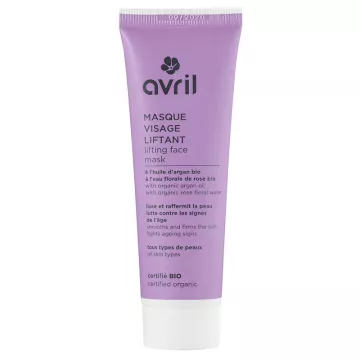
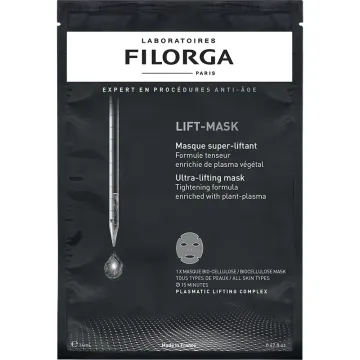
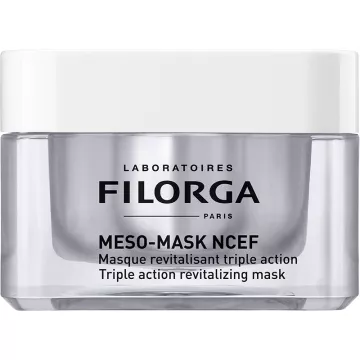
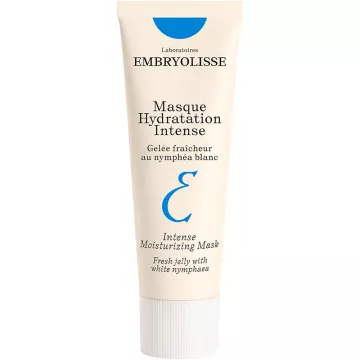
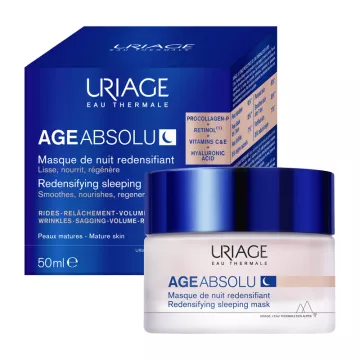
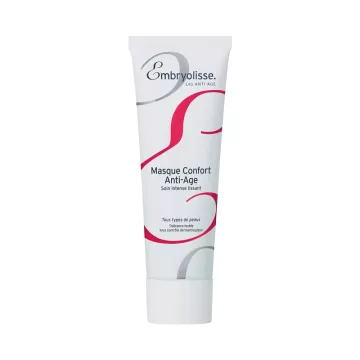
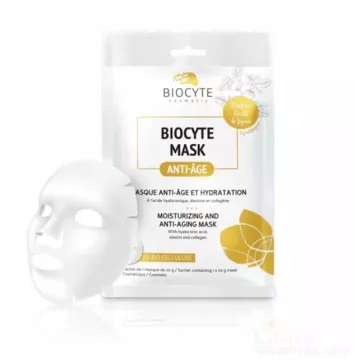
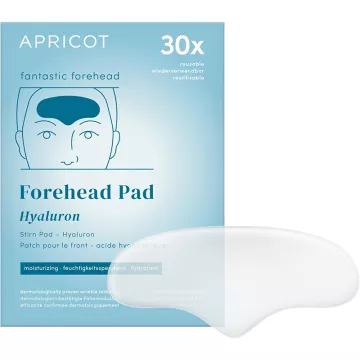
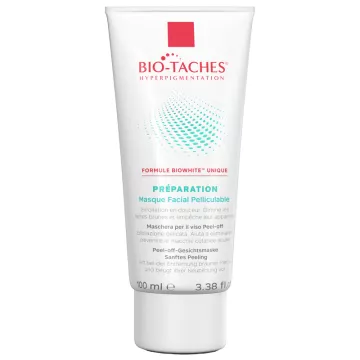
What is a smoothing mask, and how does it work on the skin?
A smoothing mask is a cosmetic treatment formulated to visibly improve skin texture and even out skin tone.
It acts primarily on the skin’s surface by promoting superficial skin renewal. Its key active ingredients include alpha-hydroxy acids (AHAs), cosmetic retinol, clay, hyaluronic acid, and vitamin C.
A smoothing mask acts on the superficial layers of the epidermis by promoting the removal of dead skin cells and providing hydration, resulting in skin that feels softer and smoother and a more radiant complexion.
Regular use (once a week) as part of a consistent skincare routine can visibly improve the skin’s radiance and texture.
What ingredients are in a smoothing mask?
Several active cosmetic ingredients characterize an effective smoothing mask:
- Alpha-hydroxy acids (AHAs): glycolic, lactic, and mandelic acids, which break down the bonds between keratinized cells and support superficial skin renewal. Photosensitizers (minimum SPF 30), apply in the evening; not recommended during pregnancy or while breastfeeding.
- Cosmeticretinol: Visibly supports skin firmness and renewal. Photosensitizing; use only at night; apply SPF 30 or higher the following day; not recommended during pregnancy or while breastfeeding.
- Clay (green, white, pink, rhassoul): recognized for its absorbent properties; captures excess sebum and surface impurities.
- Vitamin C: a major antioxidant; evens out skin tone and visibly supports skin firmness. May cause photosensitivity; store away from light.
- Hyaluronic acid: a major humectant; supports hydration to limit the drying effect of exfoliants.
- Niacinamide, panthenol, allantoin: soothing active ingredients to minimize post-application discomfort.
Prescription retinoids (tretinoin, isotretinoin, adapalene, tazarotene): available by prescription only; teratogenic; contraindicated during pregnancy and breastfeeding.
How and how often should you use a smoothing mask?
For optimal results, apply a smoothing mask once a week to start, gradually increasing to twice a week depending on your skin’s tolerance:
- Gentle cleansing: Use a cleanser suited to your skin type to remove impurities and excess sebum.
- Application: Apply an even layer to the face, avoiding the eye and lip areas.
- Leave on for: as directed on the product (generally 10 to 20 minutes for creamy masks; 5 to 10 minutes for highly active acid-based masks).
- For clay masks: Do not letthe mask dry completely (this can have a drying effect). Moisten by spraying if necessary; mix and apply with a wooden or plastic utensil (never metal).
- Rinse with lukewarm water and gently pat dry with a clean towel.
- Moisturizing and soothing: Apply a hydrating serum and a suitable cream to lock in moisture and minimize post-acid redness.
The next morning: Always use sunscreen with an SPF of at least 30, even on cloudy days.
What are the benefits of a smoothing mask?
Incorporating a smoothing mask into your routine offers several cosmetic benefits:
- Smoother skin texture: skin appears smoother, with a refined pore appearance.
- Hydration and soothing: active ingredients like hyaluronic acid and vitamin E support skin comfort.
- Visible reduction in signs of aging: dehydration lines, lack of radiance.
- A more even complexion: visual reduction of dark spots and pigmentation irregularities.
- Supports skin renewal: brighter, more radiant skin.
- Weekly “treatment” effect that complements your daily routine.
What precautions should you take with an acid-based smoothing mask?
Using a smoothing mask containing acids (AHAs, BHAs) or retinol requires several precautions:
- Performa 48-hour patch test on the inner elbow to check for tolerance.
- Sun protection: acids and retinol are photosensitizing; always use at least SPF 30, even in winter and on cloudy days.
- Always moisturize after application to minimize dryness and tightness.
- Gradual introduction: Start with once a week, increasing frequency based on skin tolerance.
- Do not combine exfoliants on the same day (AHA mask + scrub + AHA serum = irritation).
- Avoid use on damaged skin, open wounds, fresh scars, or skin that is red and irritated after sun exposure.
Contraindications:
- Pregnancy and breastfeeding (retinol, high-concentration AHA).
- Skin prone to eczema, rosacea, or atopic dermatitis: consult a dermatologist first.
- Moderate to severe acne: consult a dermatologist before introducing any exfoliating active ingredient.
- History of contact allergy to acids or retinoids.
In case of severe redness, persistent stinging, or excessive flaking: discontinue use and consult a dermatologist. Swelling of the face, lips, or tongue, or difficulty breathing (angioedema): call 15 or 112 immediately.