Rough skin results from an abnormal buildup of keratin in the stratum corneum—the epidermis produces and retains more dead skin cells than natural shedding can remove. The main causes are:
Glycerin (glycerol) is the primary humectant to restore to rough skin—it attracts and retains water in the stratum corneum, rapidly reducing the dryness that underlies roughness.
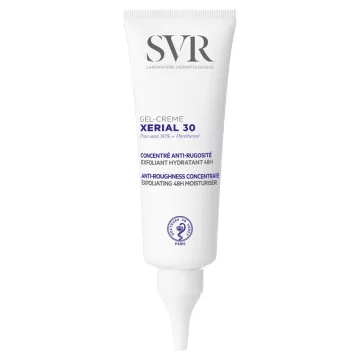
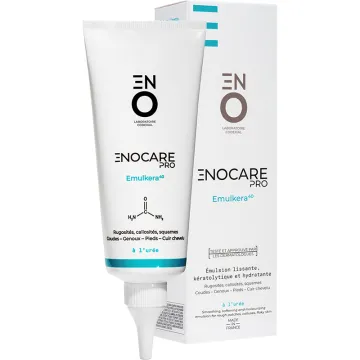
For moderately rough skin (arms, legs, body), 10–20% urea is generally sufficient. Very rough skin with areas of thick hyperkeratosis requires higher concentrations. The 30% urea gel-cream is the gold standard for these severe areas—urea actively breaks down the bonds of accumulated keratin, softens the deposits, and facilitates their removal without scraping. Emulkera40 (40% urea + lactic acid) is the most concentrated formula available in drugstores—reserved for very severe hyperkeratosis of dry, cracked feet, and should be used only under professional guidance. Apply daily (morning and evening on slightly damp skin) for 4 to 8 weeks.
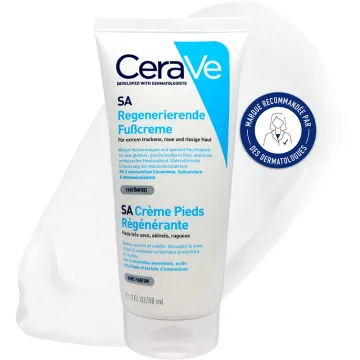
Tri-active formulas combining ceramides, urea, and niacinamide represent the new generation of anti-roughness skincare. Each active ingredient targets a different mechanism: urea exfoliates accumulated keratin (keratolytic), ceramides restore the lipid cement of the skin barrier, and niacinamide (vitamin B3) stimulates the synthesis of endogenous ceramides while reducing transepidermal water loss. This triple action is particularly effective for rough skin caused by a combination of dehydration and mild keratosis—clinical studies show a significant improvement in skin texture after 4 weeks of daily use.
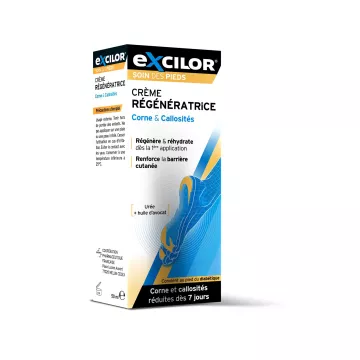
Calluses and corns are the most severe forms of localized skin roughness—they result from protective hyperkeratosis in response to repeated mechanical pressure or friction. They differ from simply rough skin in their thickness and their yellowish-translucent appearance. Regenerating creams containing 20–40% urea (with lactic acid, glycerin, and protective active ingredients) are the first-line treatments for softening and gradually reducing calluses. In cases of severely developed calluses, a consultation with a medical pedicurist is recommended before resuming keratolytic treatment.
Omega-3 and omega-6 fatty acids are precursors to ceramides and structural lipids in the stratum corneum—a deficiency in these weakens the lipid barrier and contributes to roughness. When taken as dietary supplements (flaxseed oil, borage oil, fish oil), they improve skin suppleness and hydration from the inside out over an 8- to 12-week course of treatment. When applied topically, oils rich in linoleic acid (hemp, rosehip) should be applied to damp skin after a keratolytic treatment to lock in moisture.
The optimal anti-roughness routine consists of three daily steps. Cleansing with a gentle keratolytic gel (urea + mild acids) removes dead skin cells with each wash. Apply a tri-active treatment (ceramides + urea + niacinamide) to slightly damp skin after showering—morning and night on all rough areas. Apply a thin layer of a 30–40% urea treatment to the most severely rough areas (heels, elbows, knees). As a supplement: a gentle body scrub 1 to 2 times a week.Argan oil (48% oleic acid, vitamin E), applied in a thin layer after the keratolytic treatment, locks in moisture and nourishes the weakened stratum corneum—particularly effective on rough arms and legs in winter.