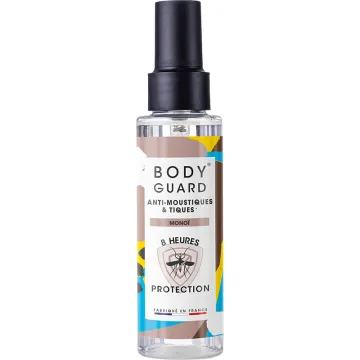
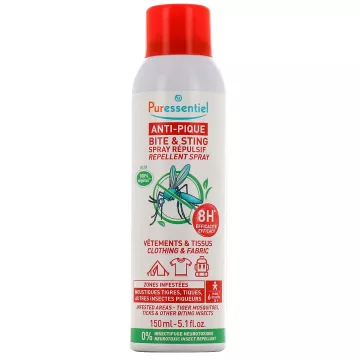
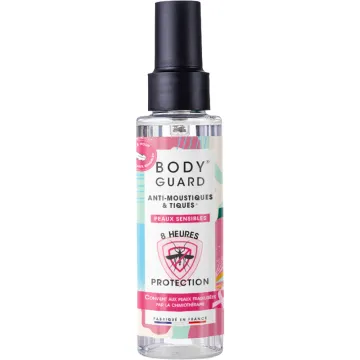
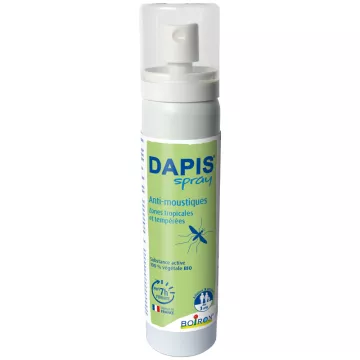
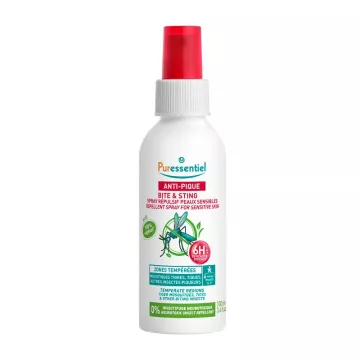
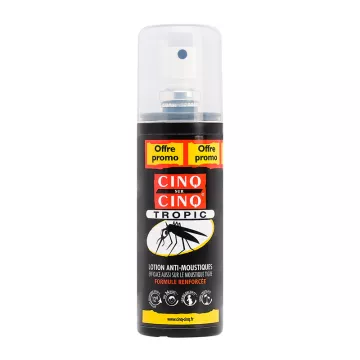
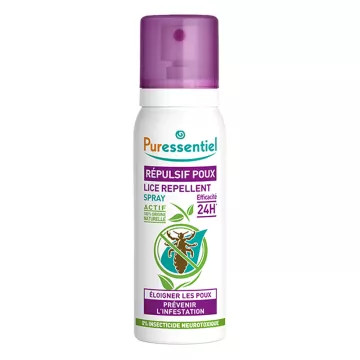
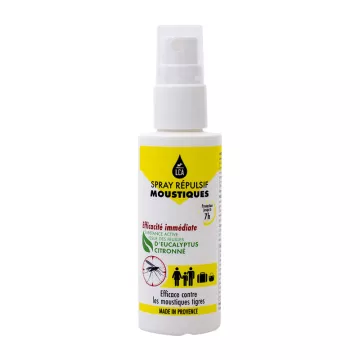
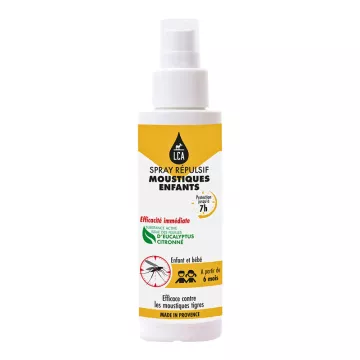
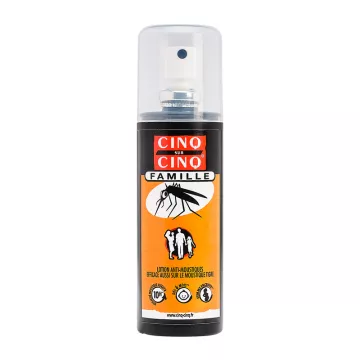
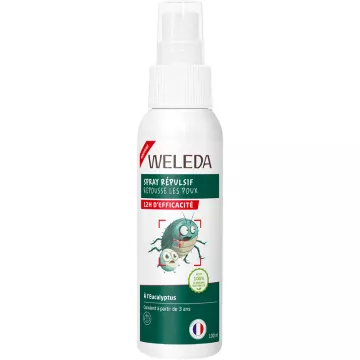
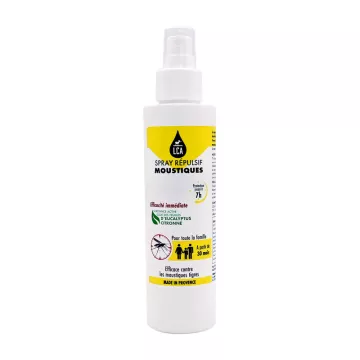
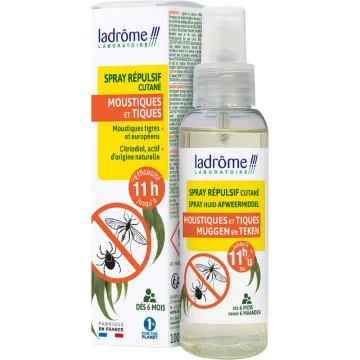
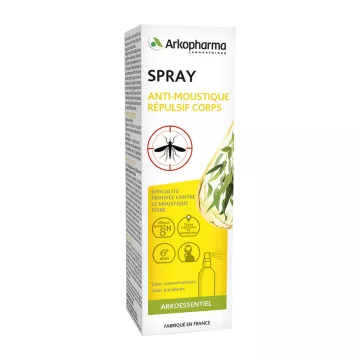
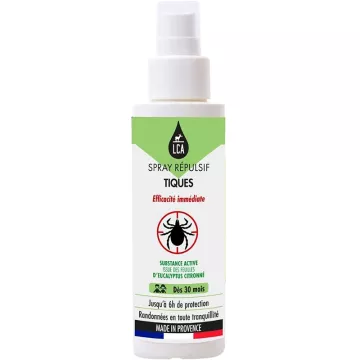
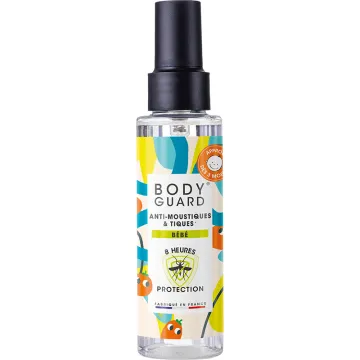
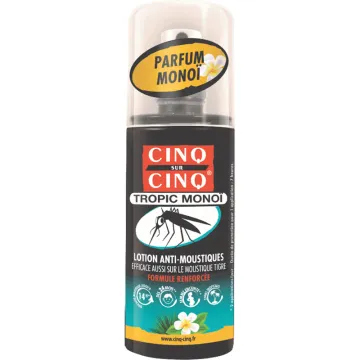
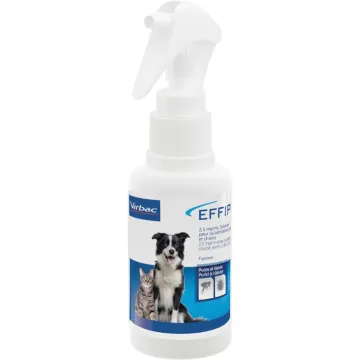
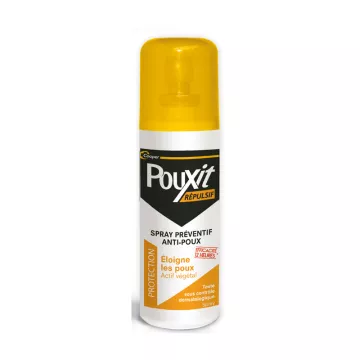
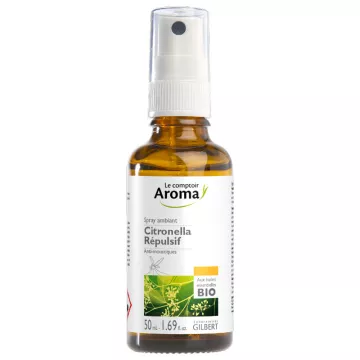
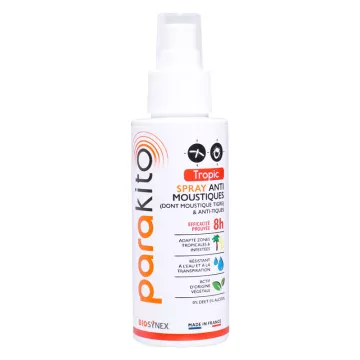
Insect repellent spray is the most versatile form of protection against biting insects: it provides quick coverage of exposed areas, can be applied to clothing, and is easy to use on the go. Using it properly makes all the difference in terms of effectiveness and safety. Check out our line of mosquito repellent sprays.
What is a repellent spray, and how does it work?
A repellent spray is an aerosol or pump formulation that deposits an active repellent ingredient (DEET, icaridin, IR3535, or natural essential oils) onto the skin or clothing. It disrupts the insects’ sensory receptors, preventing them from detecting their target. The spray provides quick and even coverage over large areas of skin, a key advantage over lotion for the limbs and back. Compare it with our selection of mosquito repellent lotions if you prefer a non-inhaled formula.
How do you apply a repellent spray correctly?
The application technique affects both effectiveness and safety.
- Hold the bottle 15–20 cm from the area to be treated
- Spray evenly without rubbing—let it dry naturally
- On the face: never spray directly—apply to your hands first, then spread it on, avoiding the eyes and mouth
- Do not inhale the spray mist during application—it is recommended to hold your breath or apply outdoors
- Wash your hands after application to avoid accidental contact with the eyes
Repellent spray on clothing: what are the guidelines?
Applying it to clothing increases protection without direct skin exposure — particularly useful for children and those with sensitive skin.
- DEET can damage synthetic fibers (nylon, Lycra, plastics)—test on a hidden area
- Icaridin and IR3535 are gentler on fabrics
- Treat clothing with permethrin (using a specific fabric spray) for additional protection against ticks
- Reapply the treatment to clothing after washing
Repellent Spray and Ticks: Effectiveness and Usage?
Ticks are harder to repel than mosquitoes: they crawl along clothing before reaching the skin.
- DEET and icaridin are effective when applied as a spray to the skin against ticks
- Permethrin fabric spray is the gold standard for clothing in wooded areas
- Follow up with a thorough check after any outing in the forest or grassy areas
- Repellent spray on the skin alone is insufficient against ticks—a thorough check remains essential
Indoor repellent sprays: any specific precautions?
Repellent sprays can be used indoors on an occasional basis, but require additional precautions.
- Ventilate the room during and after application
- Avoid prolonged use in enclosed spaces, especially when infants or people with asthma are present
- For long-lasting indoor protection, opt for electric diffusers or room-wide devices
How to Choose the Right Insect Repellent Spray for Your Needs?
The choice of active ingredient depends on the level of risk and the user’s profile.
- Europe, temperate zones: IR3535 or icaridin; a light formulation is sufficient
- Tropics, areas at risk for malaria or dengue: DEET 30–50% or 20% icaridin, reapplied regularly
- Children and pregnant women: Icaridin recommended; avoid DEET unless otherwise advised by a doctor
- Combine insect repellent spray with a mosquito net and protective clothing for complete protection