How do calming pheromones for pets work?
Synthetic calming pheromones are laboratory-produced replicas of natural pheromones specific to cats and dogs, designed to reduce their anxiety:
- Synthetic Feline Appeasing Pheromone (F3): an analog of the facial pheromone deposited by cats when they rub their cheeks—a “safe territory” signal that reduces anxiety and urine marking.
- DAP (Dog Appeasing Pheromone): an analog of the inter-mammary pheromone secreted by nursing female dogs—a signal of safety and well-being that reduces anxiety in adult dogs.
- These pheromones are odorless to humans and cause neither sedation nor any documented side effects—they are not medications.
Stressed Cats: In Which Situations Are Pheromones Recommended?
Cats are particularly sensitive to changes in their environment. Calming pheromones are recommended in the following situations:
- Moving or redecorating: The loss of territorial scent markers is a major source of anxiety for cats.
- The arrival of a new pet or a baby in the home.
- Veterinary visits and hospitalizations: being transported in a carrier causes intense anxiety in most cats.
- Fireworks, thunderstorms, and loud noises.
- Inappropriate urination, excessive scratching, and avoidance behaviors—signs of chronic anxiety that are often alleviated by diffusers.
- Newly adopted kittens benefit particularly from diffusers as soon as they arrive to help them adjust.
How to use calming pheromones for dogs?
Dogs express anxiety through barking, destructive behavior, or excessive drooling. DAP pheromones are effective in:
- Separation anxiety: A DAP diffuser in the main room, combined with behavioral training, reduces destructive behaviors.
- Fear of loud noises (thunderstorms, fireworks): DAP spray applied to a bandana releases the calming signal directly near the dog’s olfactory receptors.
- Travel and vet visits: Spray inside the carrier 15 minutes before loading.
- Integrating a newly adopted puppy: The DAP diffuser helps with adjustment and reduces nighttime whining.
Diffuser, spray, or collar: which form should you choose?
Calming pheromones come in three forms suited to different uses:
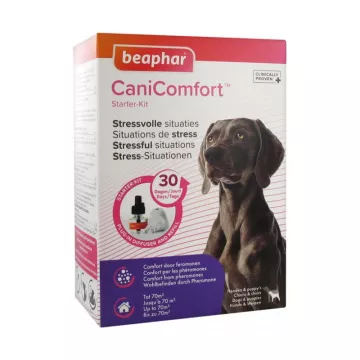
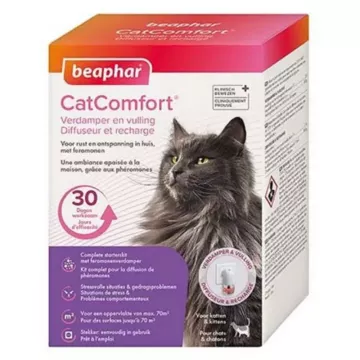
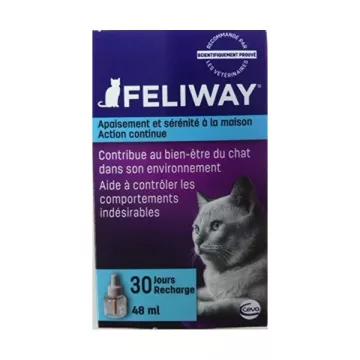
- Electric diffuser (Feliway, Beaphar Catcomfort/Canicomfort): continuous diffusion in a room up to 70 m². Ideal for chronic stress—effective in 7 to 15 days, with a monthly refill.
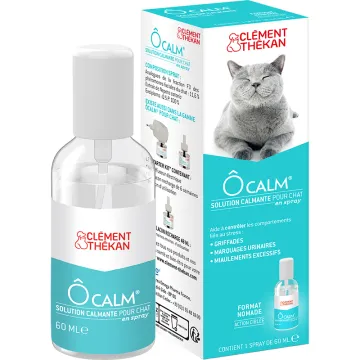
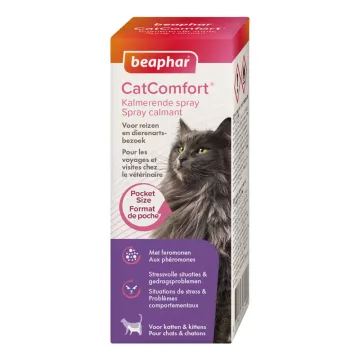
- Spray: targeted application on marking areas, in the carrier, or on a bandana. Immediate but short-lived effect (2 to 4 hours)—suitable for travel and vet visits.
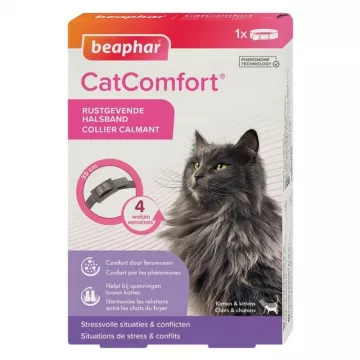
- Impregnated collar: Continuous release 24 hours a day near the animal’s muzzle. Suitable for chronic stress situations—lasts 30 days.
Are pheromones effective for older or anxious cats?
Older cats often experience increased anxiety related to Feline Cognitive Dysfunction Syndrome and chronic joint pain. Calming pheromones are particularly recommended:
- Reducing nighttime vocalizations caused by disorientation.
- Improved sense of security in cats whose reduced mobility limits their usual facial marking behavior.
- Can be combined with nutritional supplements (tryptophan, valerian, lemon balm) for a synergistic effect on chronic feline anxiety.
When are pheromones not enough?
Calming pheromones are a supportive tool, not a treatment for deep-seated behavioral disorders. A veterinary evaluation is necessary if behavioral problems persist after 4 to 6 weeks of continuous use, or if anxiety is severe (self-harm, refusal to eat, aggression). A veterinary evaluation must always rule out an organic cause—pain, systemic disease, or a neurological disorder—before attributing behavioral changes solely to behavioral factors.