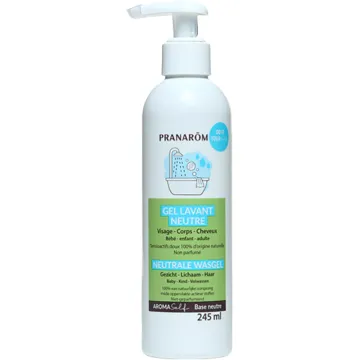
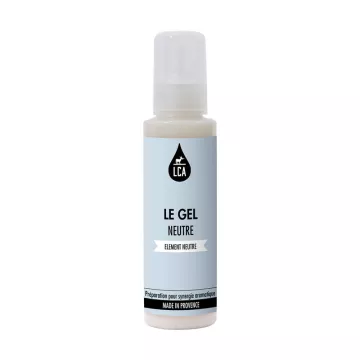
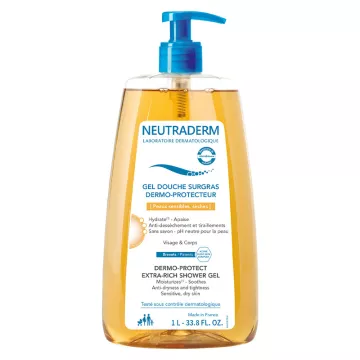
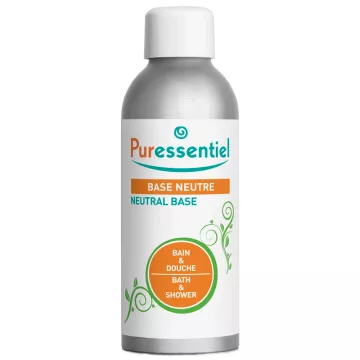
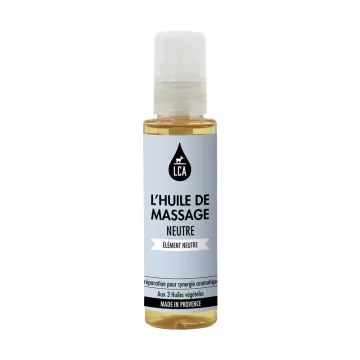
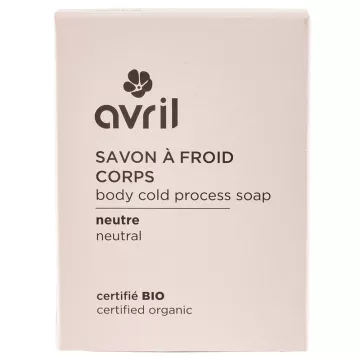
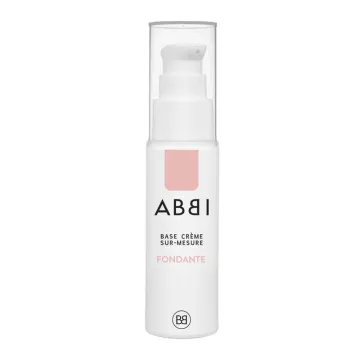
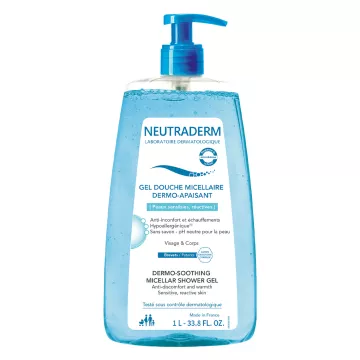
A neutral base is a cosmetic ingredient that contains no fragrance, no colorants, and no specific active ingredients.
This neutrality makes it particularly versatile for various applications: cosmetics, pharmaceuticals, aromatherapy, and personalized homemade formulations.
It serves as a base to which you can add targeted active ingredients, fragrances, or oils according to your specific needs.
To explore our full selection, browse our DIY cosmetic preparations section in our online pharmacy.
In the world of cosmetics, a neutral base serves as a foundation for creating customized skincare products tailored to your skin.
It can be used to make moisturizers, lotions, shower gels, balms, or emulsions by incorporating the active ingredients of your choice.
By adding essential oils, plant extracts, hydrosols, or vitamins, you can create personalized cosmetics that precisely meet your needs.
It is essential to follow the manufacturers’ recommended dosages to avoid any adverse skin reactions.
In aromatherapy, a neutral base allows you to dilute essential oils before applying them to the skin.
This dilution is essential: pure essential oils are rarely suitable for direct skin application and can cause irritation, burns, or allergic sensitization.
It facilitates the penetration of the aromatic active ingredients while preserving their properties and reducing the risk of skin irritation.
Essential oils are not recommended for pregnant or breastfeeding women, children under 3 years of age (or even 6 years for some), and people with asthma or epilepsy.
A neutral base can indeed serve as a foundation for certain natural everyday cleaning products.
It’s used in combination with common ingredients like baking soda, white vinegar, or Castile soap to create solutions suited for various household uses.
For a more holistic approach to natural living, explore our natural cosmetics collection and adapt your routines accordingly.
Follow the recommended proportions for each specific use to ensure effectiveness and safety.
To customize a neutral base, first identify your skin’s specific needs (hydration, soothing, anti-aging, radiance).
Then add targeted active ingredients: hyaluronic acid for hydration, vitamin C for radiance, aloe vera for soothing, or glycerin for skin suppleness.
Follow the concentration percentages specified by the active ingredient suppliers: too high a concentration can be irritating, while too low a concentration will have no visible effect.
For each new formulation, perform a skin test on the inner elbow 48 hours before widespread use.
One of the main advantages of the neutral base is its compatibility with most skin types.
Its formulation, free of potentially irritating substances, makes it an excellent choice for delicate skin or skin prone to allergic reactions.
For particularly reactive skin, also check out our sensitive skin section and opt for bases certified as hypoallergenic.
If you have a history of allergies or a known skin condition, consult your pharmacist before making any homemade preparations.
Choosing a high-quality neutral base depends on several technical criteria:
Opt for products certified organic and free of parabens, silicones, sulfates, and unnecessary dyes to ensure a safe experience that aligns with a natural approach; check out our organic cosmetics section.
Check the origin of the raw materials, the manufacturer’s traceability, and the certifications displayed (Ecocert, Cosmébio, Cosmos).
Look for products recommended by professionals (pharmacists, herbalists) or those with verified online reviews.
Several common mistakes can compromise the effectiveness and safety of your homemade preparations:
Overloading the base with too many active ingredients throws the formula out of balance, which can reduce its effectiveness and increase the risk of cumulative irritation.
Failing to follow the recommended dosages for essential oils or other concentrated active ingredients can cause severe skin reactions.
Neglecting hygiene rules during preparation (clean hands, disinfected utensils, sterilized containers) promotes microbial growth and shortens the product’s shelf life.
Neutral bases are specifically formulated for hair care.
They are used to prepare shampoos, conditioners, hair masks, or customized leave-in treatments.
They allow you to incorporate targeted active ingredients based on your hair’s needs: argan or coconut oil for nourishment, hydrolyzed keratin for repair, and panthenol for hydration.
Always make sure the hair base is compatible with your hair type (dry, oily, fine, curly, or colored).
High-quality neutral bases can be found at several reliable retailers.
Pharmacies and drugstores offer products that have been selected, verified, and recommended by a qualified healthcare professional.
Stores specializing in natural and organic cosmetics often offer a wide selection along with expert guidance.
When shopping online, choose reputable sites with verified customer reviews, clear product traceability, and visible organic certification.
A neutral base allows you to create personalized fragrances by adding aromatic essences or essential oils.
Follow the proportions recommended by suppliers (generally 10 to 20% of essences in a perfumery-grade alcohol base) to achieve a balanced fragrance.
Let the mixture sit for one to several weeks in an airtight container away from light so that the aromas blend into a harmonious fragrance; this step is called maceration.
Avoid applying pure essences directly to the skin without first testing them, as they may cause photosensitivity or allergic reactions.
A neutral base is particularly well-suited for creating custom bath salts, bubble baths, and bath oils.
By adding diluted essential oils, plant extracts, or natural colorants, you can transform your bath routine into a personalized experience.
Be sure to choose active ingredients that do not irritate the mucous membranes if you plan on a prolonged soak, especially for children or pregnant women.
Adhere to the recommended concentrations of essential oils (generally less than 0.5% for an adult bath; avoid use with children under 6 years of age).
Health authorities (ANSES, FDA, dermatologists) strongly advise against making your own sunscreen products at home.
Effective sun protection requires precise dosing of UV filters, a stable formulation, and industrial-scale homogenization—all of which homemade preparations cannot guarantee.
A DIY sunscreen can give a false sense of protection, exposing the skin to UV rays with an increased risk of sunburn, photoaging, and skin cancer (consensus of the WHO and INCa).
For your safety, always choose commercial sunscreens that have been tested, certified, and comply with European regulations (declared SPF, UVA/SPF ratio ≥ 1/3); never use a neutral base as a substitute for proper sun protection.
Homemade preparations made with a neutral base require strict storage precautions to remain safe.
Store your products in airtight containers—preferably opaque ones—away from direct light and heat; ideally, keep them in the refrigerator if possible.
Shelf life varies depending on the ingredients added: generally 1 to 3 months for preservative-free formulations, and longer with a suitable cosmetic preservative.
To extend the shelf life, add an approved cosmetic preservative (Cosgard, Geogard, potassium sorbate, or sodium benzoate at the recommended doses), strictly following the manufacturer’s instructions.
Formulations made with a neutral base may be suitable for children, provided that the added ingredients are carefully selected.
It is essential to choose gentle active ingredients suitable for children’s particularly delicate skin, without harsh fragrances or denatured alcohol.
Essential oils are not recommended for infants and children under 3 years of age (or even 6 years, depending on the essential oil); some remain contraindicated even at older ages.
Always perform a skin test on a small area before using the product more extensively; if in doubt, consult your pharmacist or pediatrician.