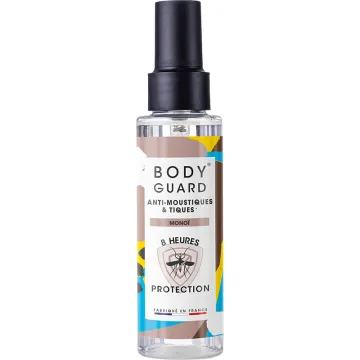
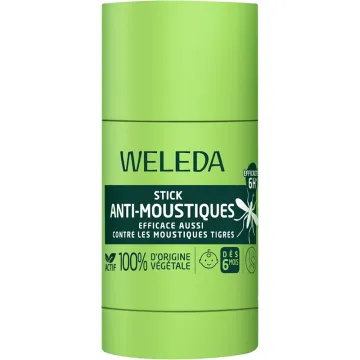
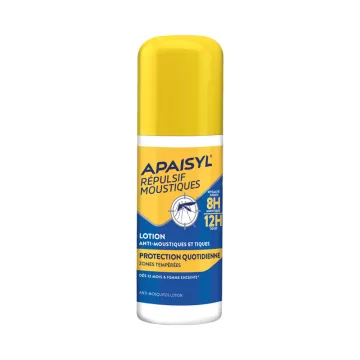
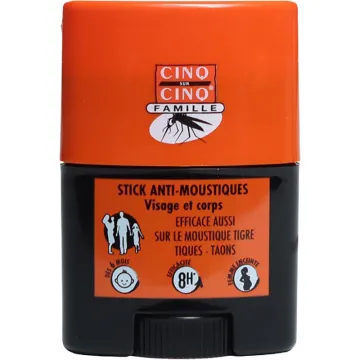
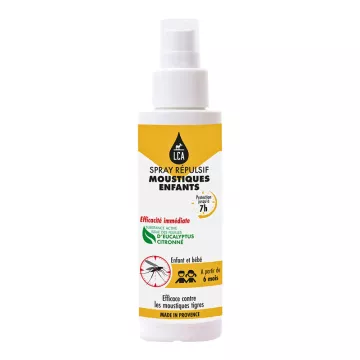
Natural repellents are often the first choice for sensitive groups: children, pregnant women, and those with sensitive skin. Their formulations, based on essential oils or plant extracts, are generally better tolerated by the skin than synthetic chemical products. However, choosing the right product, testing it, and adapting it to its intended use remain essential steps.
Why choose a natural repellent for your family?
Certified natural repellents are better tolerated by sensitive skin and generally pose a lower risk of irritation than DEET or permethrin. They are also biodegradable and compatible with a natural skincare approach. They are truly effective in temperate zones with low mosquito populations, provided they are applied regularly. In high-risk tropical areas, they complement but do not replace approved repellents.
Which natural repellents are suitable for children?
Children have more permeable skin and respiratory tracts that are more sensitive to volatile compounds. Natural pediatric formulations must use reduced concentrations of essential oils.
- Under 3 months: no skin repellents; use mosquito nets only
- 3 months–2 years: natural repellents formulated for babies based on lemon eucalyptus or geraniol, preferably applied to clothing—see our selection of baby mosquito repellents
- 2–12 years: products specifically designed for children; avoid applying to the hands to prevent accidental ingestion
- Apply to clothing rather than directly to the skin whenever possible
How do you test a natural repellent on your skin?
Before widespread use, a skin tolerance test is recommended—especially for essential oils, which can cause reactions even when diluted.
- Apply a small amount to the inside of your elbow or wrist
- Wait 24 hours without rinsing
- If there is no redness, itching, or irritation: it is safe to use on healthy skin
- If a reaction occurs: rinse thoroughly, avoid the product, and opt for an icaridin-based repellent on sensitive skin
- Never apply to broken skin, sunburn, or active eczema
Can you apply a natural repellent to your clothes?
Applying it to clothing increases protection without direct skin contact—especially useful for children and those with highly reactive skin.
- Choose formulations designed for textiles—avoid pure essential oils, which can stain synthetic fibers
- Treated clothing extends protection for up to 4–6 hours
- Wash treated clothing before storing it—essential oils oxidize and can damage certain fibers
- Avoid applying to parts of the garment that come into contact with mucous membranes (collars, children’s cuffs)
Natural Animal Repellents: What Precautions Should Be Taken?
Human repellents are not suitable for animals. Certain natural active ingredients are toxic to domestic carnivores.
- Peppermint, eucalyptus, lemongrass, and tea tree essential oils: toxic to cats (via the liver); not recommended for direct application on dogs
- Use only products approved for animals, following veterinary advice
- Insect-repellent collars for animals: specific formulations—see our selection of veterinary pest control products
Are natural repellents effective in tropical areas?
In areas at risk for malaria, dengue, Zika, or chikungunya, natural repellents alone are not sufficient.
- Lemon eucalyptus: the only essential oil recognized by the WHO; effective against Aedes and Anopheles but short-lasting
- For malaria-prone areas: DEET or high-concentration icaridin are the gold standards—natural repellents complement them but do not replace them
- Combine skin repellent + insecticide-treated mosquito net + protective clothing + pre-travel medical consultation