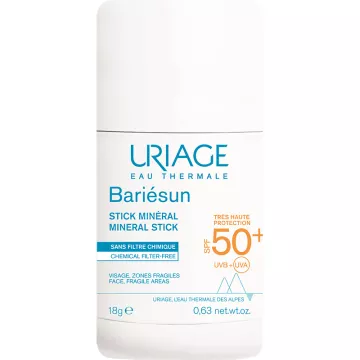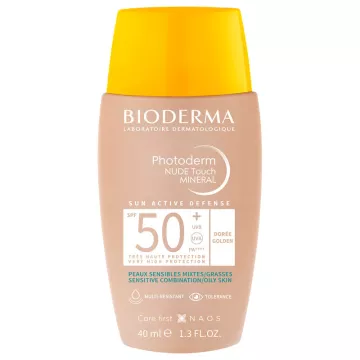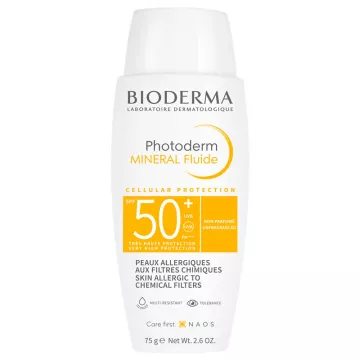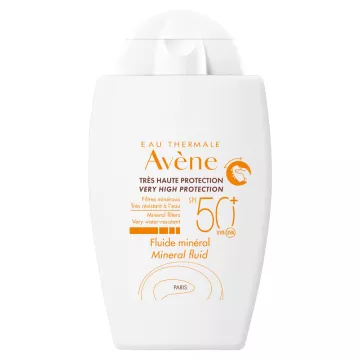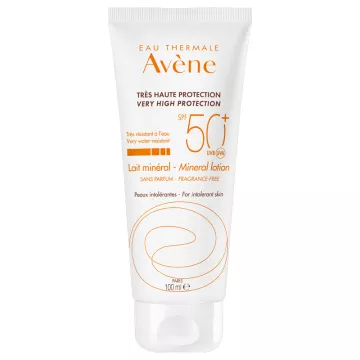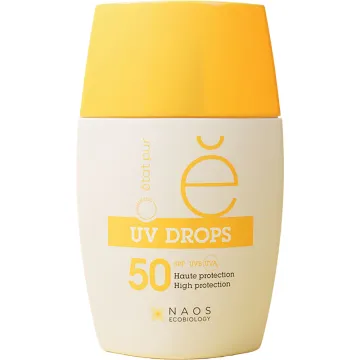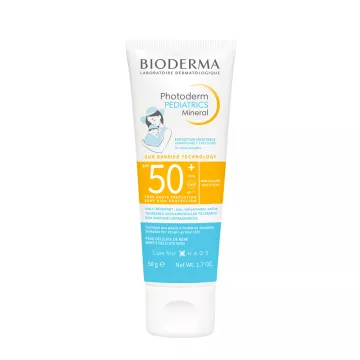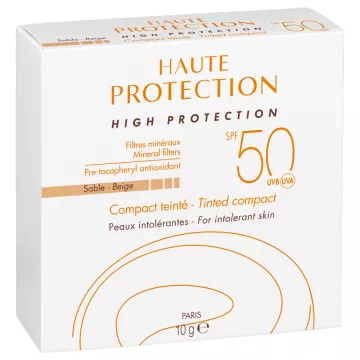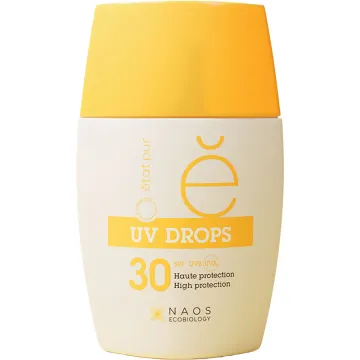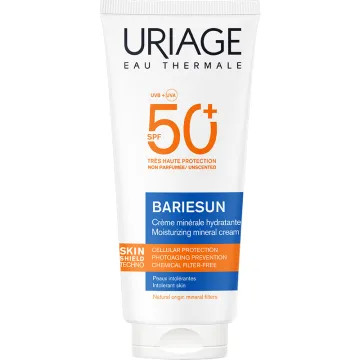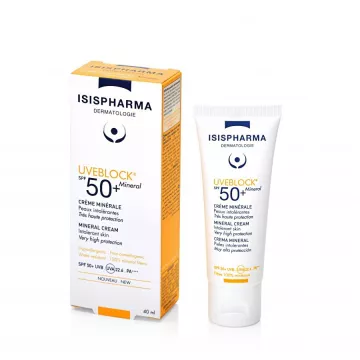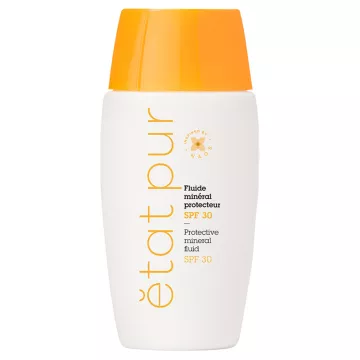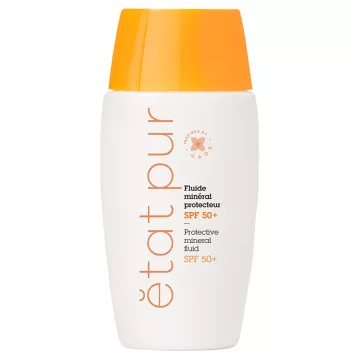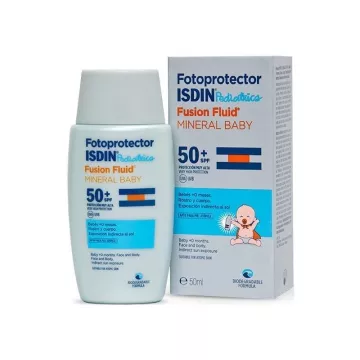
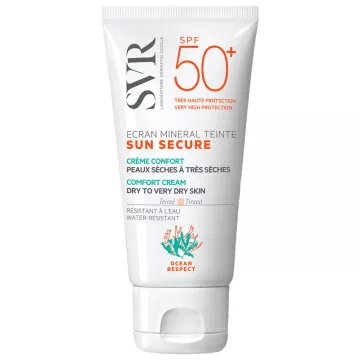
Mineral protection refers to the use of physical filters—primarilyzinc oxide and titanium dioxide—in sunscreen.
Unlike organic filters (often called “chemical” filters), mineral filters act as a physical barrier that sits on the skin’s surface and reflects or scatters the sun’s UV rays.
This approach is valued for its skin tolerance, making it suitable for sensitive skin, children, and people seeking a well-tolerated sunscreen.
Both organic and mineral filters are authorized and regulated by European Regulation 1223/2009; each has its advantages depending on skin type and usage context.
There are several reasons to opt for mineral-based protection:
When choosing a good mineral sunscreen, several criteria should guide your decision:
For optimal effectiveness, mineral sunscreen should be applied generously and evenly to all exposed areas.
Unlike chemical filters, mineral filters provide protection immediately upon application: there’s no need to wait 30 minutes before sun exposure.
Recommended amount: approximately 2 mg/cm², or 30 ml (2 tablespoons) for an adult’s entire body, and about 1 teaspoon for the face and neck. The amount actually applied by most users is generally 2 to 4 times less: be generous.
Reapply every 2 hours and always after swimming, sweating, or drying off with a towel. Areas often missed: ears, nape of the neck, backs of the hands, tops of the feet, and eyelids.
Yes, like any cosmetic product, mineral sunscreen has a limited shelf life.
Check the expiration date on the packaging or the PAO symbol (period after opening)—often 12 months for sunscreen.
Signs of deterioration: discoloration, separation of phases, changes in odor or consistency, or a grainy texture.
Store the product away from light, heat (never in a car in direct sunlight), and prolonged exposure to moisture. Effective protection also depends on the product remaining unaltered.
Mineral sunscreens are frequently recommended for children because they are well-tolerated by the skin and provide immediate protection.
Infants under 6 months: no direct sun exposure; sunscreens are not always suitable for this age group—consult a pediatrician first.
For older children, choose pediatric SPF 50 formulas that are non-comedogenic, fragrance-free, and contain non-nano mineral filters.
Always combine sunscreen with a wide-brimmed hat, UV-protective clothing, appropriate sunglasses, and strict avoidance of peak sun hours (12 p.m.–4 p.m. in summer).
Mineral sunscreens are generally well tolerated by the vast majority of skin types.
Possible side effects, though rare, include a tight feeling, dryness, tingling, redness, and, more rarely, a contact allergy to an excipient (fragrance, preservative, or other active ingredient).
Perform a skin test on the inside of your elbow 48 hours before first use, especially if you have allergic or highly reactive skin.
If you experience a severe reaction (extensive redness, persistent itching, rash), discontinue use and consult a dermatologist.
Parabens are preservatives that have long been used in cosmetics.
Fact: Parabens are regulated by European Regulation 1223/2009. Several long-chain parabens (isopropylparaben, isobutylparaben, phenylparaben, benzylparaben, pentylparaben) have been banned in the EU since 2014. Methyl- and ethyl-parabens remain authorized at regulated concentrations and are considered safe by European authorities.
Choosing a paraben-free cream remains a legitimate preference, particularly for users seeking formulas with simplified ingredients or those with highly reactive skin.
The alternative is to use preservatives authorized in organic cosmetics (benzoic acid, benzyl alcohol, sorbates) or single-use packaging.
Several chemical filters (notably oxybenzone and octinoxate) have been linked to coral reef degradation and coral bleaching.
These two filters are now banned in sunscreen products in Hawaii, Palau, Bonaire, Aruba, and certain Thai and Mexican islands.
Mineral sunscreens without these filters—particularly “non-nano” versions certified as “reef-friendly”—are preferred by water sports enthusiasts and environmentalists.
Note: “reef-friendly” is not a regulated designation; check the full INCI ingredient list.
UVA rays (315–400 nm) penetrate deep into the dermis and are primarily responsible for photoaging and sun allergies, and they contribute to the risk of skin cancer; they are present year-round, even on cloudy days and through glass.
UVB rays (280–315 nm) stop at the epidermis and are primarily responsible for red, painful sunburn; their intensity varies greatly depending on the time of day, season, and latitude.
Broad-spectrum protection is therefore essential: it protects against both types of rays.
Check for the circled UVA logo on the packaging, which guarantees UVA protection of at least one-third of the claimed SPF (European standard).
Mineral sunscreens can and should be used on the face to protect it from the cumulative effects of UV rays.
To minimize the white cast characteristic of physical filters, several solutions exist:
For darker skin tones, several brands now offer tinted formulas specifically designed for medium and dark skin tones.
Mineral sunscreens are perfectly compatible with makeup.
Recommended method: Apply the mineral sunscreen as the first step in your morning routine (after your moisturizer), let it absorb for a few minutes, then apply your usual makeup on top.
Some tinted mineral sunscreens can serve as a makeup primer or even replace BB cream for simplified application and an even finish.
For touch-ups throughout the day, a compact sunscreen powder or an SPF spray lets you reapply protection without smudging your makeup.