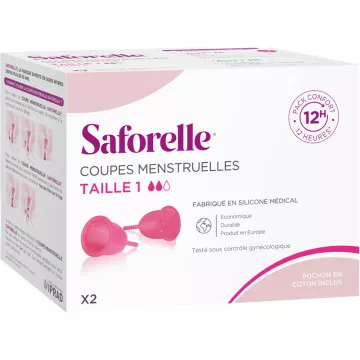
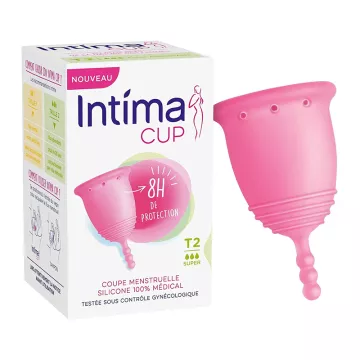
What is a menstrual cup, and how is it different from a menstrual cup?
A menstrual cup —also known as a menstrual cup—is a reusable device made of medical-grade silicone, natural latex, or TPE that collects menstrual fluid without absorbing it. It works by creating a slight vacuum against the vaginal walls, which keeps the cup in place and prevents leaks for up to 12 hours. Unlike tampons, it does not dry out the vaginal lining or alter the natural pH balance. Its environmental impact is significantly lower than that of disposable products: a well-maintained cup lasts up to 10 years, eliminating the need for several thousand single-use products.
How do you properly insert and remove a menstrual cup?
The technique takes a little practice, but you’ll get the hang of it quickly:
- Wash your hands thoroughly before handling the cup.
- Fold the cup (C-fold, punch-down fold, or 7-fold) to make it more compact.
- Gently insert it, directing the stem toward the bottom of the vagina, then release it so it unfolds.
- Rotate the cup slightly or run a finger around it to make sure it’s fully open.
- To remove, pinch the base to break the vacuum, then gently pull it out without pulling on the stem.
It’s normal to need one or two cycles to get used to it. A properly positioned cup on sensitive tissue should not be felt at all.
How do you care for your menstrual cup at home and while traveling?
Proper care determines the cup’s lifespan and prevents infections:
- Rinse with cold water after each emptying (hot water causes blood proteins to set).
- Wash with a mild, pH-balanced soap that is fragrance- and alcohol-free, then rinse thoroughly.
- Sterilize by boiling for 5 to 10 minutes between each cycle, or use compatible sterilization tablets when traveling.
- Store in a breathable fabric pouch between cycles.
When traveling, a small bottle of water allows you to rinse the cup before reinserting it if a sink isn’t available. Avoid any soap that is scented or contains sulfates, as these can cause an allergic reaction on the vaginal lining.
Is the menstrual cup compatible with an IUD?
Using a menstrual cup with an IUD is possible but requires specific precautions:
- Consult your gynecologist before you start to check the length of the IUD strings.
- Always release the vacuum before removing the cup by firmly pinching its base to avoid pulling on the strings.
- Check after each removal to ensure the strings are still accessible.
- Report any unusual pain or changes in the position of the strings to your doctor.
Improper removal without breaking the vacuum is the main risk of IUD displacement. The technique is easy to learn and becomes second nature after a few cycles.
Can the cup be used during sports and water activities?
This is one of the cup’s key advantages: its leak-proof design makes it suitable for swimming, running, yoga, cycling, and all intense physical activities. The vacuum created keeps the cup in place even during sudden movements. For prolonged physical activity, making sure the cup is fully deployed before exercising helps prevent any issues. After exercise, thorough intimate hygiene and changing the cup within a reasonable time frame help maintain the balance of your vaginal flora.
What common problems can arise, and how can they be resolved?
The most common issues can be resolved with a few adjustments:
- Leaks: The cup isn’t fully open or is too small for your flow—check that it’s fully open or switch to a different size.
- Itching or irritation: Allergy to silicone or latex, soap residue, or wearing the cup for too long—opt for a TPE cup and rinse it more thoroughly.
- Discomfort: The cup is too long or the stem is too prominent—trim the stem gradually or choose a shorter model.
- Odors: Insufficient rinsing or wearing for more than 12 hours—clean more thoroughly and support the microbial flora with probiotics after a course of antibiotics.