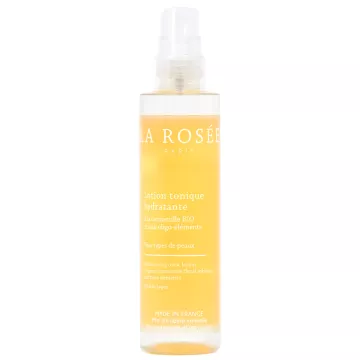
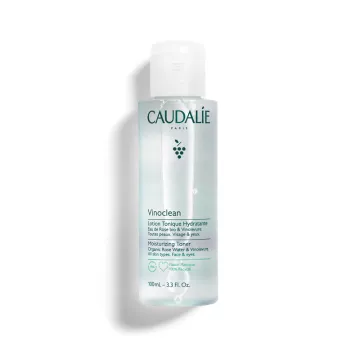
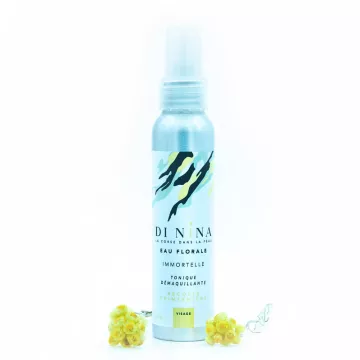
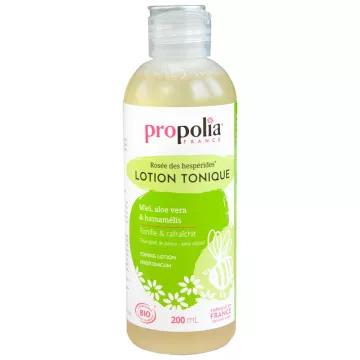
Facial lotion is an essential part of a beauty routine, helping to keep your skin feeling comfortable every day.
It helps remove any remaining impurities after cleansing and prepares the skin to receive the moisturizing, soothing, or anti-aging products applied afterward.
Depending on its formulation, it can hydrate, soothe, purify, or gently exfoliate the skin; its lightweight texture absorbs quickly without leaving a greasy residue.
Discover our selection of facial lotions and toners, as well as our facial creams tailored to every skin type.
There are several categories of facial lotions depending on the skin’s needs.
Moisturizing lotions are formulated with active ingredients such as glycerin, hyaluronic acid, or shea butter to maintain skin hydration and reduce tightness.
Purifying lotions help remove excess sebum and impurities; they’re particularly suitable for oily or blemish-prone skin.
Exfoliating lotions (AHA, BHA) promote cell renewal and a radiant complexion; they increase skin sensitivity to the sun and require a minimum SPF 30 during the day. Soothing lotions enriched with thermal water, chamomile, or aloe vera provide greater comfort for sensitive or reactive skin.
Choosing a facial lotion depends first and foremost on your skin’s specific needs.
Dry skin benefits most from formulas rich in nourishing and hydrating active ingredients to enhance daily skin comfort.
Oily skin benefits from lightweight, non-comedogenic formulas containing zinc orsalicylic acid to help control excess sebum.
Sensitive skin should opt for lotions free of denatured alcohol and fragrance, enriched with soothing active ingredients (allantoin, aloe vera, chamomile); for a complete skincare routine, pair your lotion with a suitable facial serum.
Those with sensitive or reactive skin should avoid certain overly harsh formulations that can weaken the skin barrier.
High concentrations of denatured alcohol can cause dryness or long-lasting discomfort, particularly in reactive skin types.
Synthetic fragrances and certain allergenic preservatives can also trigger redness and skin reactions in the most sensitive skin types.
Opt for dermatologically tested products formulated to respectthe skin’snatural balance.
Face lotion is generally applied after cleansing, to clean, slightly damp skin.
Soak a cotton pad (or use clean hands) and apply the product to the face and neck, avoiding the particularly sensitive eye area.
Use gentle, upward strokes to help the active ingredients absorb without irritating the skin.
To optimize your skincare routine, start with a makeup removal and cleansing routine suited to your skin type, then finish with a suitable moisturizer.
The main difference between a lotion and a face cream lies in their texture and fat content.
Lotion has a fluid, lightweight texture, ideal for quickly hydrating and refreshing the skin without leaving a greasy residue or sticky feeling.
Face cream has a richer, more emollient texture, designed to provide deeper nourishment and strengthen the skin barrier in dry skin types.
Both products complement each other in a complete skincare routine: apply the lotion first, followed by the cream.
Exfoliating lotions can be used on certain types of sensitive skin, provided you choose gentle formulas.
Chemical exfoliants with low concentrations of AHA or PHA (polyhydroxy acid) are generally better tolerated than mechanical exfoliants with granules.
Introduce this type of treatment gradually into your routine to avoid irritation: 1 to 2 times a week at first, then increase gradually depending on your skin’s tolerance.
AHAs and BHAs can make your skin more sensitive to the sun: always use sunscreen with an SPF of at least 30 the day after applying them.
Certain purifying lotions formulated with zinc, salicylic acid, or other sebum-regulating active ingredients help reduce excess sebum and unclog pores.
Regular use can help visibly improve skin texture and limit the appearance of new breakouts.
Salicylic acid is not recommended for pregnant or breastfeeding women.
If you havemoderate to severe or persistent acne, consult a dermatologist, who will prescribe an appropriate medical treatment.
The natural pH of healthy skin is slightly acidic, ranging from 4.5 to 5.5 depending on the area of the body.
A suitable facial lotion respects this balance, which is essential for the proper functioning of the skin barrier and the skin microbiome.
A pH that is too alkaline (such as in traditional soaps) or too harsh can lead to dryness, irritation, or persistent skin discomfort.
Lotions formulated to respect the skin’s natural pH help keep the skin more comfortable and better protected against external aggressors.
Several natural alternatives can complement or replace certain traditional lotions depending on the skin’s needs.
Rose water, cornflower, and orange blossom are particularly prized for their refreshing and soothing properties when used as pure hydrosols.
Plant-based oils such as jojoba and argan help nourish and protect skin that is dry or weakened by environmental stressors.
Discover our selection ofnatural floral waters and aromatic hydrosols for a gentler skincare routine.