How can you keep your legs feeling light and prevent venous congestion?
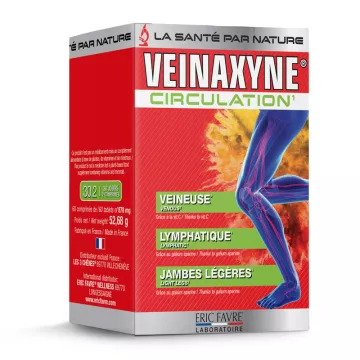
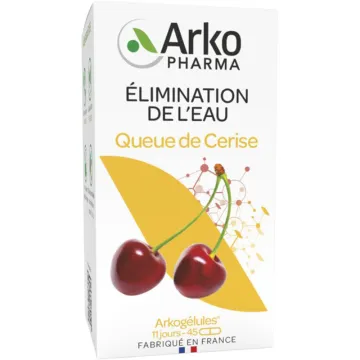
The sensation of light legs results from effective venous return and functional microcirculation in the lower limbs. It can be maintained through a series of daily measures designed to support the venous muscle pump, maintain the tone of the vascular walls, and limit blood stasis. Venous care products are available in the “heavy legs ” and “venous circulation ” sections of the store.
- Daily walking: at least 30 minutes per day — activates the calf’s muscle pump (the main driver of venous return in the lower limbs) — brisk walking is more effective than standing still, which worsens stasis — see products for heavy legs
- Recommended activities to improve circulation: swimming (beneficial hydrostatic pressure + full-body muscle engagement) — cycling (muscle pump without joint impact) — yoga and Pilates (flexibility + stretches that promote circulation) — ankle flexion and extension (10 × 3 sets, every hour while seated)
- Posture and positioning: Avoid crossing your legs (compresses the popliteal veins) — elevate your legs above heart level for 15–20 minutes, 2 to 3 times a day — do not stand still (shift your weight from one leg to the other or walk in place) — sit in a chair with good lumbar support and feet flat on the floor
- Hydration: 1.5 to 2 L of water per day — reduces blood viscosity — essential in hot weather, while traveling, or during physical activity
What clothing and topical treatments can help keep your legs feeling light?
- Compression stockings and socks: Class 1 (15–20 mmHg) for daily prevention (prolonged sitting, travel, mild pregnancy) — apply graduated compression that decreases from the foot toward the knee — put on in the morning before getting out of bed — never wear if you have peripheral arterial disease
- Loose-fitting clothing: Avoid tight clothing around the thighs or groin (which compresses the iliofemoral veins) — opt for soft elastic waistbands
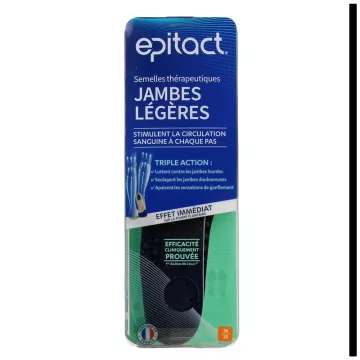
- Appropriate shoes: Avoid high heels > 4 cm (they shorten the soleus muscle—impairing venous return)—opt for a 2- to 4-cm heel that optimizes calf contraction—support the arch of the foot
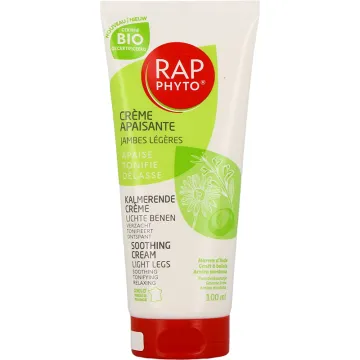
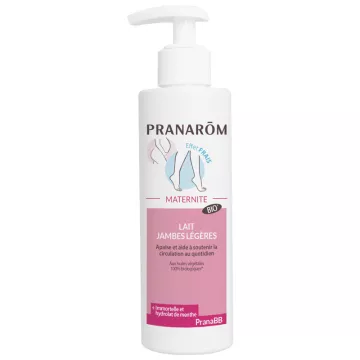
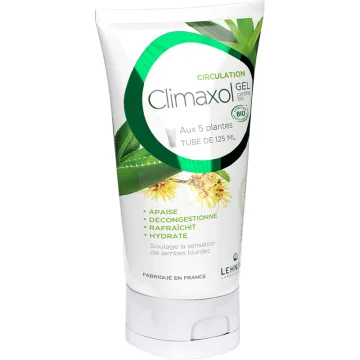
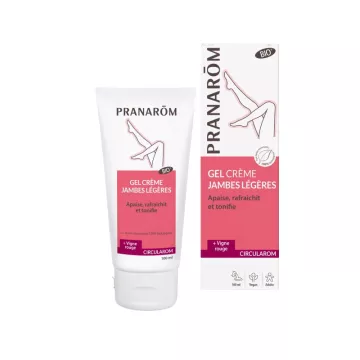
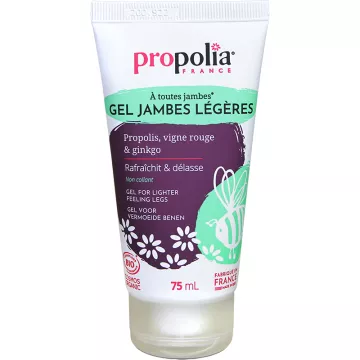
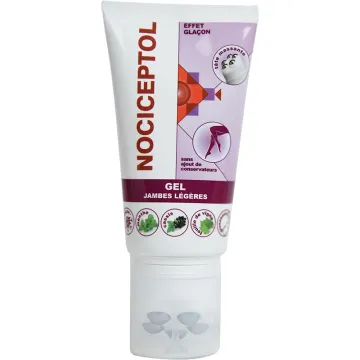
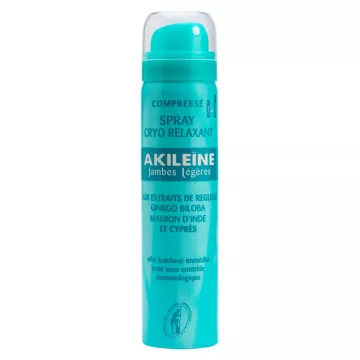
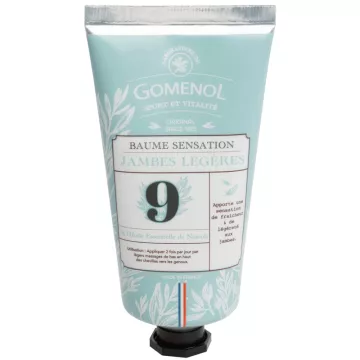
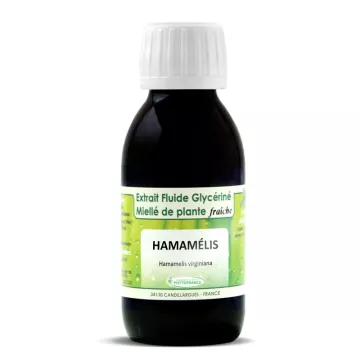
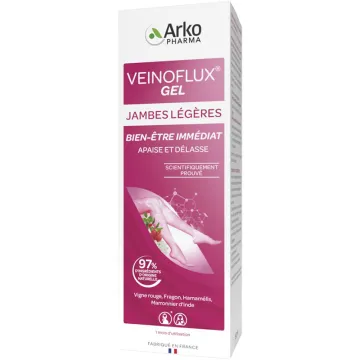
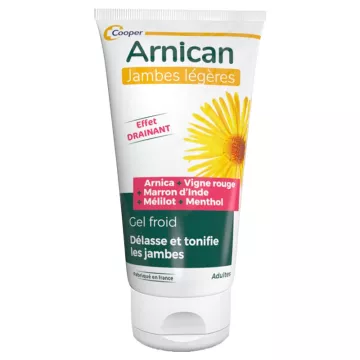
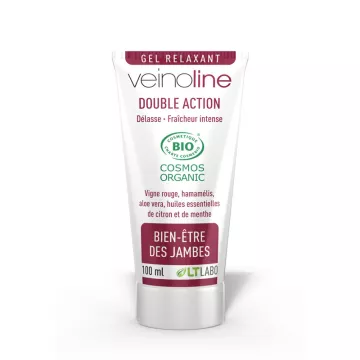
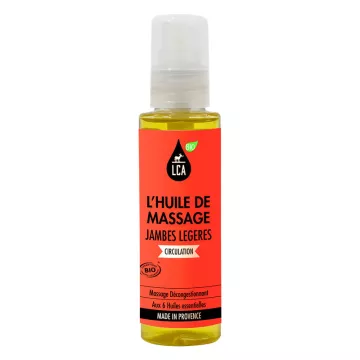
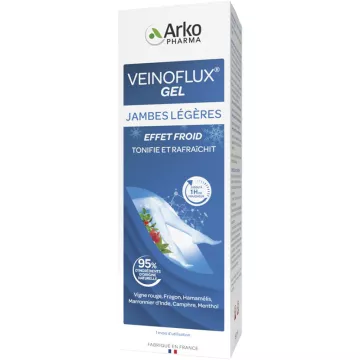
- Topical venotonic treatments: gels and creams containingescin (horse chestnut), witch hazel, or menthol — apply with a massage motion from the bottom up (circulatory effleurage) — morning and evening — cold foot baths or a cold shower on the legs (reflex vasoconstriction — venous “wake-up” effect)
What natural supplements and dietary changes can help keep your legs feeling light?
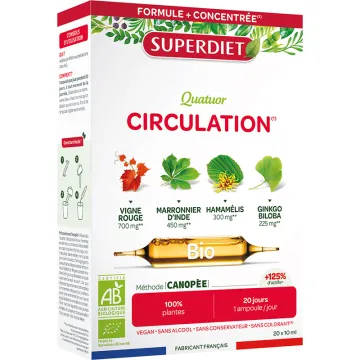
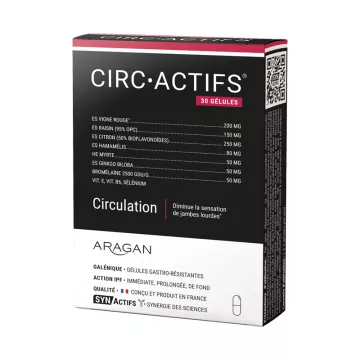
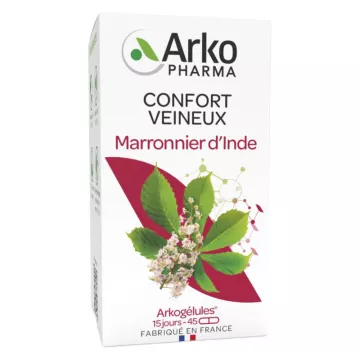
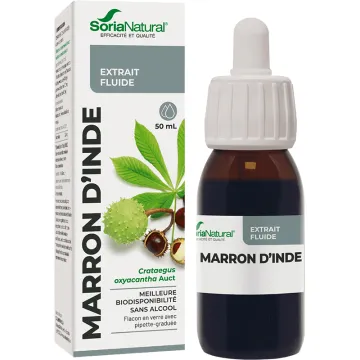
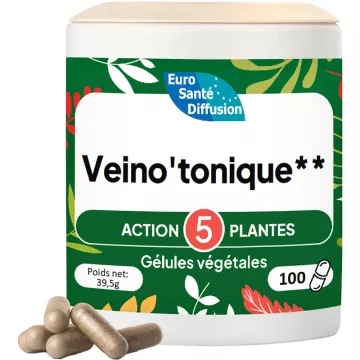
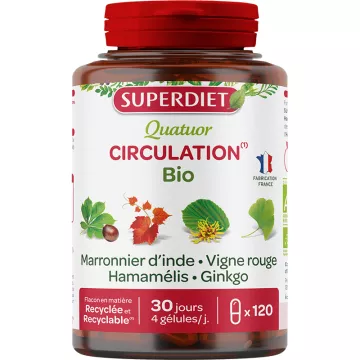
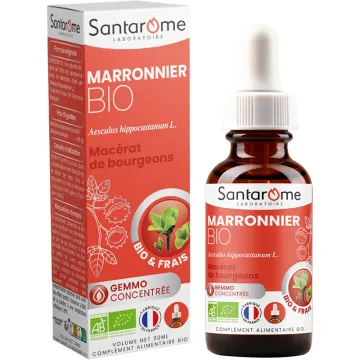
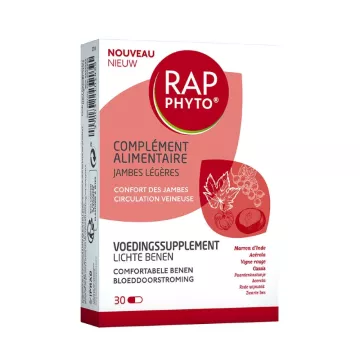
- Aescin (horse chestnut): venotonic and anti-edematous — well-established EMA for chronic venous insufficiency — in 250–500 mg/day capsules or as a topical gel — contraindicated with anticoagulants
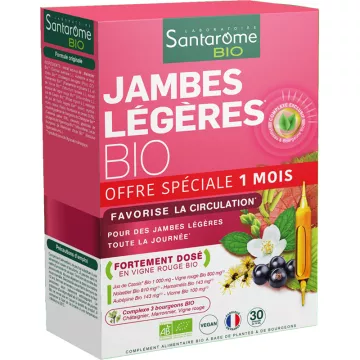
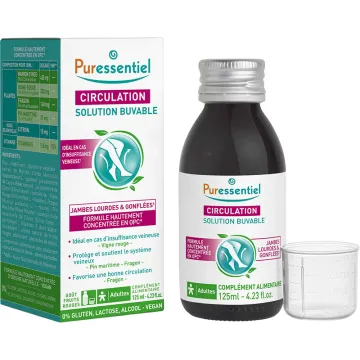
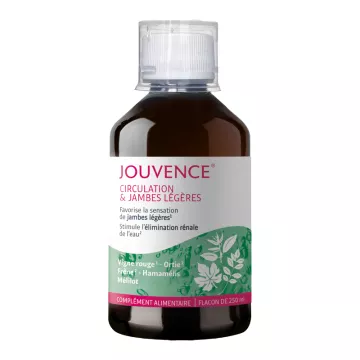
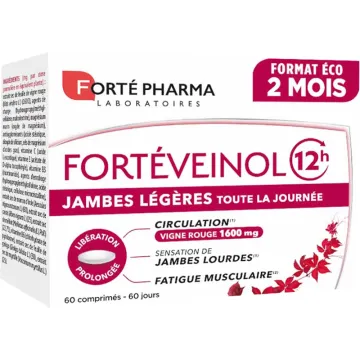
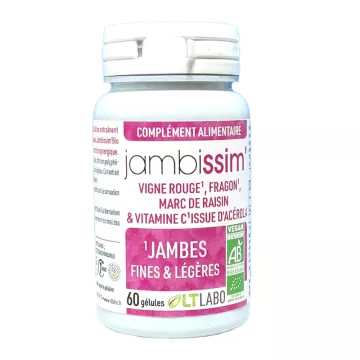
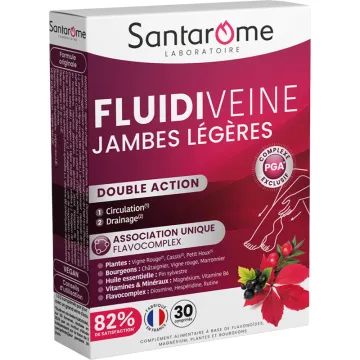
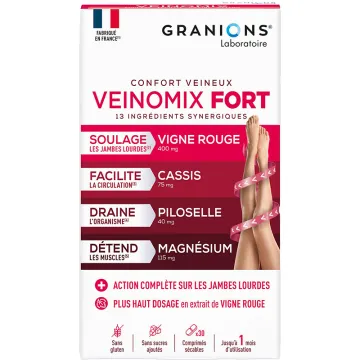
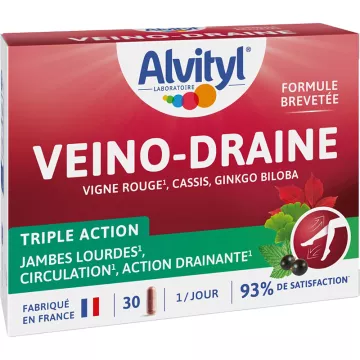
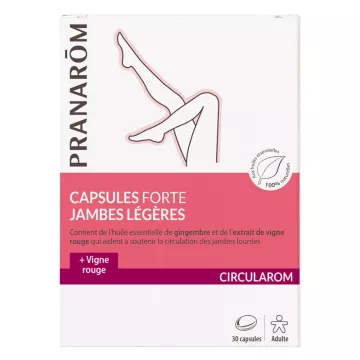
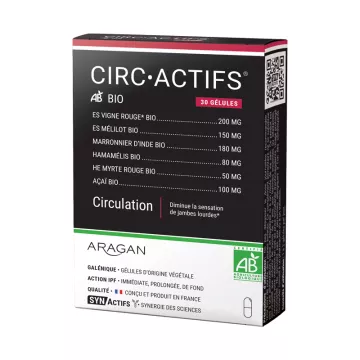
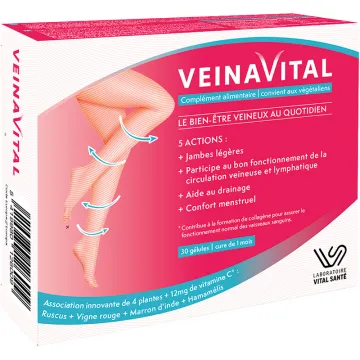
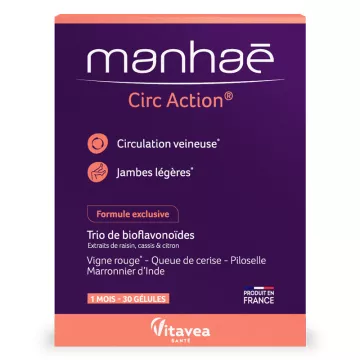
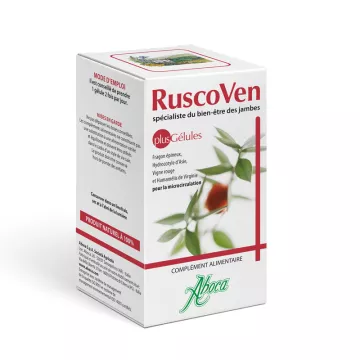
- Red vine: vasoprotective OPCs—strengthens vein walls and reduces capillary permeability—well-established EMA
- Bioflavonoids (diosmin, hesperidin): reduce capillary hyperpermeability — improve venous tone — strong clinical evidence for chronic venous insufficiency
- Vein-protective diet: Vitamin C (citrus fruits, kiwi, bell peppers — synthesis of vascular collagen) — flavonoids (blueberries, black currants, red berries) — omega-3 (fatty fish — vascular anti-inflammatories) — reduced salt intake (< 5 g/day — limits fluid retention, which aggravates stasis) — see improving circulation