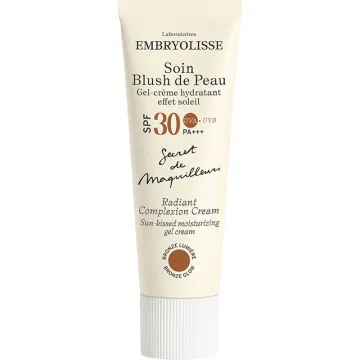
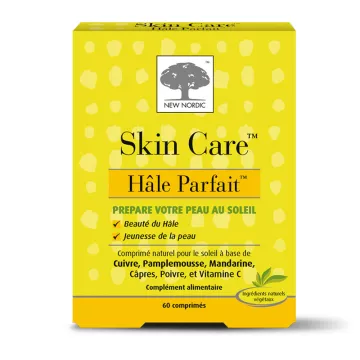
The sun-kissed look refers to the appearance of slightly tanned skin, which gives the complexion a healthy, vibrant, and radiant glow.
Highly sought after year-round, this look evokes vitality, youth, and well-being, without requiring prolonged exposure to UV rays.
A sun-kissed complexion enhances natural beauty, evens out skin tone, visually minimizes imperfections, and instantly brightens both the face and body.
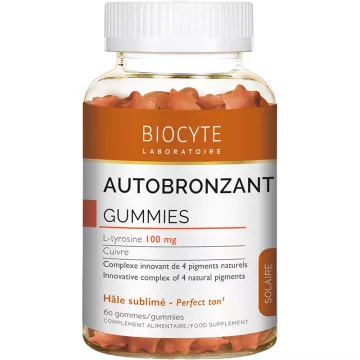
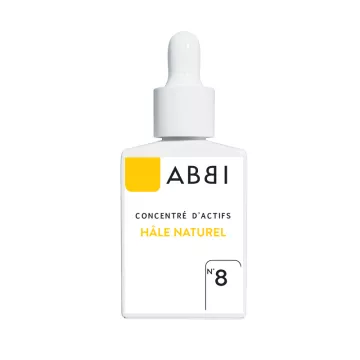
For a natural-looking result without sun exposure risks, opt for self-tanners, tinted moisturizers, or gradual tanning products available in our self-tanning and sun prep section.
For a safe sun-kissed look, opt for self-tanners formulated with dihydroxyacetone (DHA), a plant-derived sugar.
This molecule reacts with the keratinocytes on the skin’s surface to temporarily darken the skin and simulate a natural tan, without any UV exposure.
Choose products with recognized safety certifications and dermatologically tested formulas, ideally available at pharmacies.
Before your very first application, always perform a skin test on the inside of your elbow to prevent any allergic reactions.
To prepare your skin for summer sun exposure, check out our selection of sun prep products that enhance your complexion’s radiance.
How you prepare your skin directly affects the quality andevenness of the finalresult.
Start by gently exfoliating to remove dead skin cells and ensure the product applies evenly all over your body.
Choose a gentle exfoliator that respects the skin’s barrier and doesn’t irritate sensitive areas like the décolletage or the inner arms.
Next, moisturize dry areas—elbows, knees, ankles, and wrists—to prevent the skin from becoming too dark in those spots.
Let your skin fully absorb the moisturizer for a few minutes before applying the self-tanner.
The most common mistakes involve improper skin preparation,uneven application of the product, and failure to follow the manufacturer’s instructions.
Apply the product sparingly using circular motions, and wash your hands thoroughly after use to avoid the characteristic orange-tinged palms.
Wait several minutes before putting on tight-fitting clothing to allow the product to dry properly and avoid staining light-colored fabrics.
Maintaining a sun-kissed look throughout the seasons depends on regular applications of self-tanner as part of your weekly routine.
Adjust the frequency based on the desired tan intensity, alternating between a gradual-tanning formula and a more pigmented one as needed.
To make your tan last longer, moisturize your skin daily and gently exfoliate once a week to prevent streaks caused by natural skin shedding.
For more tips on best practices, check out our comprehensive self-tanning guide.
Choosing the right self-tanner depends directly on your skin type and skin sensitivity.
Those with sensitive skin should opt for hypoallergenic, fragrance-free formulas that are dermatologically tested and free of drying alcohol.
Dry skin benefits from formulas enriched with moisturizing agents like aloe vera or glycerin, which nourish the skin while providing color.
Those with oily or combination skin should choose non-comedogenic self-tanners that won’t clog pores or aggravate existing blemishes.
It’s still entirely possible to achieve a sun-kissed look without using a self-tanner, thanks to bronzing powders and tinted skincare products.
These products temporarily color the skin for an instant sun-kissed glow that simply washes off with soap and water at the end of the day.
These alternatives are particularly well-suited for people who want a temporary or reversible tan, without committing to it for several days.
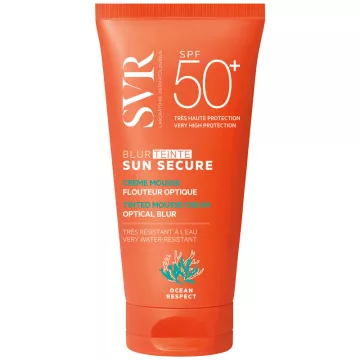
Discover our selection of tinted sunscreen lotions that combine UV protection with an instant healthy glow.
A sun-kissed look visibly improves your overall appearance by giving your face and body a healthy glow and an even skin tone.
A tanned complexion helps conceal minor skin imperfections such as superficial scars, isolated freckles, or uneven pigmentation.
An even, luminous tan also gives the impression of a more toned and sculpted figure—an effect that’s especially appreciated during special events or in the summer.
If you choose to tan in the sun, it’s essential to protect your skin to minimize both short- and long-term skin damage.
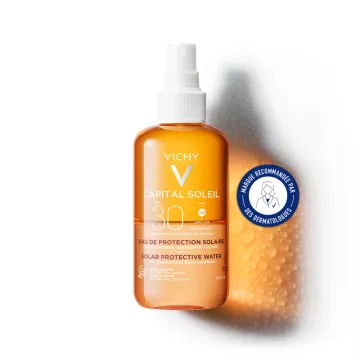
Always apply sunscreen with an SPF of at least 30 to all exposed areas, and reapply every two hours or after each time you go in the water.
Avoid sun exposure between 10 a.m. and 4 p.m., when UV rays are at their strongest, and opt for short periods of sun exposure early in the morning or late in the afternoon.
Complete your protection with a wide-brimmed hat, UV-protective sunglasses, and covering clothing; check out our sun care section for a selection tailored to every type of sun exposure.
To avoid streaks and lines when applying a self-tanner, follow a precise and systematic method.
Apply the product in small amounts, using steady circular motions, to ensure an even distribution over your entire body.
Use an application glove to avoid stained hands, and take special care with transition areas: ankles, wrists, the base of the neck, and the hairline.
Let the product dry completely before getting dressed or going to bed to prevent staining your clothes and bedding.
Regular moisturizing in the days that follow prolongs the duration and evenness of the results.