What is graduated compression, and how does it work?
Graduated compression is a therapeutic technique that applies pressure that decreases from the ankle toward the upper leg—with maximum pressure at the ankle (the lowest point of the venous column) and decreasing toward the knee or thigh. This pressure gradient forces the dilated vein walls to close together, accelerating blood return to the heart. Explore our line of venous compression products for all needs.
- Physical mechanism: external pressure on the vein → reduction in vein diameter → acceleration of blood flow → prevention of stasis → reduction of edema and the risk of thrombosis
- Compression socks: cover the foot and calf — classes 1 and 2 are the most common — for sports, standing work, and prevention
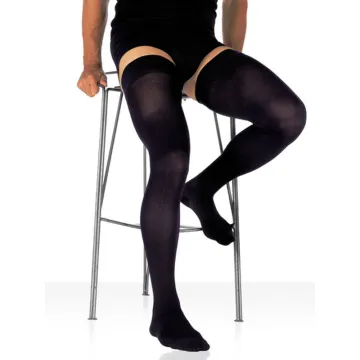
- Compression stockings: cover the foot, calf, and thigh — medical indications (varicose veins, venous insufficiency, post-operative use) — require a doctor’s prescription for Class 2 and higher
- Compression tights: full coverage of both lower limbs and the perineum — pregnancy, severe venous insufficiency, lymphedema
- Compression classes in mmHg: Class 1 (15–20 mmHg, mild prevention) — Class 2 (20–36 mmHg, moderate venous insufficiency) — Class 3 (36–46 mmHg) — Class 4 (> 46 mmHg, reimbursed with a prescription)
Who should wear compression stockings or socks?
Venous compression is recommended for a variety of people—from athletes to pregnant women to patients at risk for thrombosis.
- Professions involving prolonged standing or sitting: nurses, teachers, salespeople, drivers, office workers—Class 1 (15–20 mmHg)—significant reduction in leg fatigue and evening edema
- Sports and recovery: runners, cyclists, soccer players—sports compression socks—improved muscle oxygenation + reduced vibrations + accelerated post-exercise recovery
- Air travel: risk of deep vein thrombosis (DVT)—wear compression socks during flights longer than 4 hours—combine with ankle exercises and adequate hydration
- Pregnancy: Increased progesterone dilates the veins — wear compression tights starting in the first trimester if you have a history of varicose veins or heavy legs
- Postoperative care: prevention of DVT after any surgery—compression stockings should be put on before the operation and kept on until the patient is able to walk normally again
How to choose and measure compression?
- Ankle measurement: in the morning upon waking (before edema sets in) — ankle circumference + foot length + calf circumference + calf-to-knee length
- Appropriate compression level: no prior history = Class 1 is sufficient — diagnosed varicose veins or venous insufficiency = Class 2 by prescription — lymphedema or DVT = Classes 3–4 by specialized prescription
- Summer/winter materials: microfiber or technical yarns (breathable, summer) — wool or cotton blend (warm, winter) — some models suitable for both seasons
- Do not wear at night unless specifically directed by a doctor — when lying down, gravity no longer exerts pressure on the venous system, so compression is no longer physiologically necessary
- Care: Wash at 30–40°C, without fabric softener — lay flat to dry or air dry — replace every 3–6 months as elasticity degrades with washing
Compression and natural active ingredients: a combined approach for venous comfort
- Horse chestnut (aescin): tones the vein walls and reduces capillary permeability — complements compression to reduce evening edema
- Red vine, blueberry, witch hazel: venotonic flavonoids—support microcirculation and reduce the sensation of heavy legs
- Omega-3: reduces blood viscosity and platelet aggregation—a valuable supplement for cardiovascular and venous prevention
- Hydration: 1.5–2 L of water per day — thinner blood circulates more easily — particularly important when traveling by air (dehydration worsens venous stasis)
- Physical activity (walking, swimming, cycling): contraction of the calf muscles is the most effective “venous pump”—combined with compression, this maximally reduces the risk of thrombosis