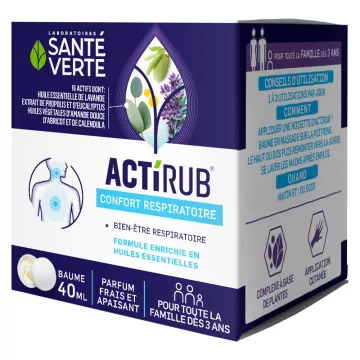
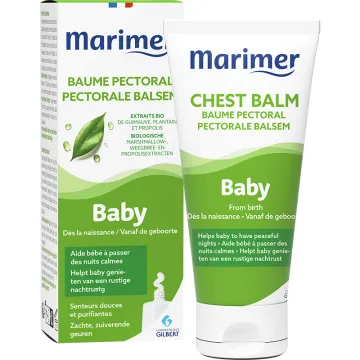
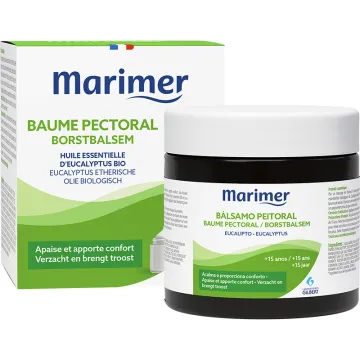
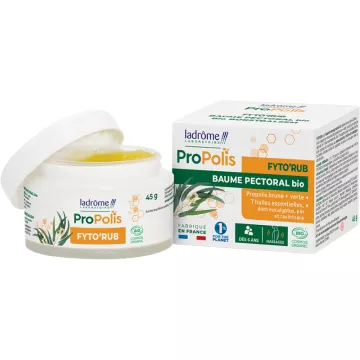
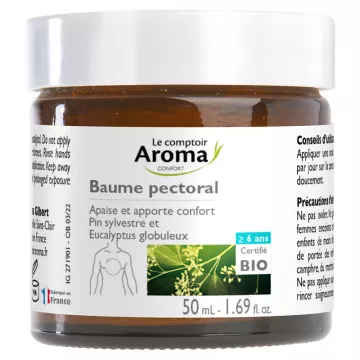
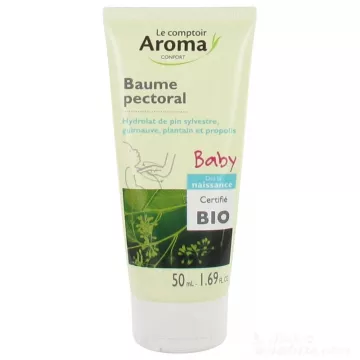
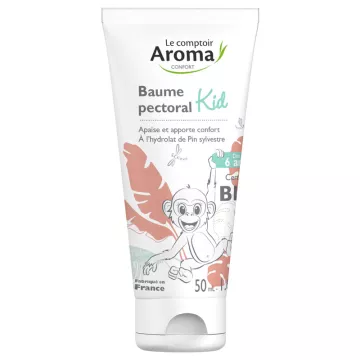
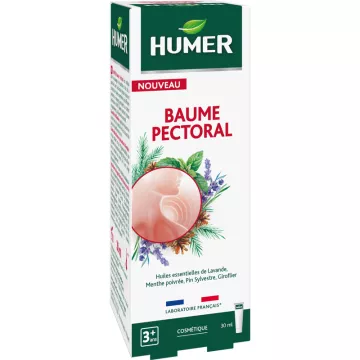
What is a chest rub, and what is it used for?
A chest rub is a topical preparation made from essential oils and fatty substances, applied to the chest, neck, and back to relieve symptoms of winter respiratory ailments. Unlike a respiratory balm (which has a milder use and is intended for diffusion into the air), a chest balm combines a decongestant effect through the inhalation of vapors with a local warming and circulatory effect on the chest. Respiratory care products are available in the Respiratory Care line and among the essential oils for respiratory comfort.
- Main indications: chest and nasal congestion due to a cold or acute bronchitis — productive cough with bronchial secretions (expectorant action) — chest muscle tension caused by repeated coughing — sinusitis and nasal congestion
- Difference from cough syrup: the chest balm is for topical application (transdermal + passive inhalation of vapors) — no digestive absorption — no interaction with oral medications — an ideal complement to ongoing medical treatments, with no general contraindications except in specific cases
- Difference from respiratory balm: pectoral balm generally has a higher concentration of expectorant essential oils and provides a stronger warming sensation (camphor, menthol at a higher dose)—the warming effect activated by massage stimulates local circulation and promotes the penetration of active ingredients—respiratory balm is milder, suitable for light use or passive nighttime application
What are the active ingredients in chest balm, and how should it be used properly?
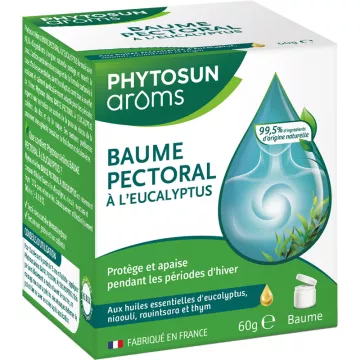
- Eucalyptus globulus: 1,8-cineole — mucolytic, bronchial decongestant, antibacterial against Staphylococcus and Haemophilus — the primary active ingredient in classic chest balms — contraindicated for topical application to the chest in children under 7 years of age
- Menthol (crystallized peppermint essential oil): provides a cooling sensation by stimulating TRPM8 receptors — nasal and oral decongestant — mild local anesthetic (relieves chest muscle pain associated with coughing) — contraindicated for children under 7 years of age
- Natural camphor: local rubificant and vasodilator—warming action that stimulates blood circulation in the chest and enhances the effects of other essential oils—mild antispasmodic—contraindicated for people with epilepsy, those with severe asthma, and children under 7 years of age
- Scots pine: alpha-pinene and limonene — expectorant and bronchial decongestant — aromatic cleansing effect on the respiratory tract
- Optimal application: Massage a small amount of balm onto the chest (sternum and pleura) and back (interscapular area) using vigorous circular motions until a slight sensation of warmth is felt — apply a thin layer under the nostrils — cover with a warm cloth to enhance the warming effect — 2 to 3 applications per day, including one at bedtime — do not use under a heating device
What precautions and contraindications should be observed with the chest balm?
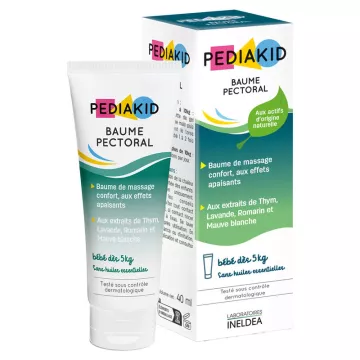
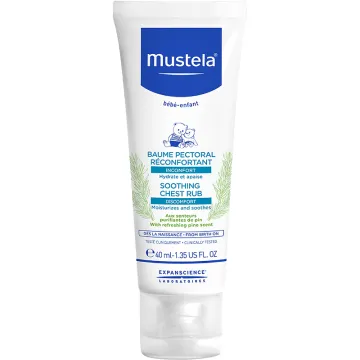
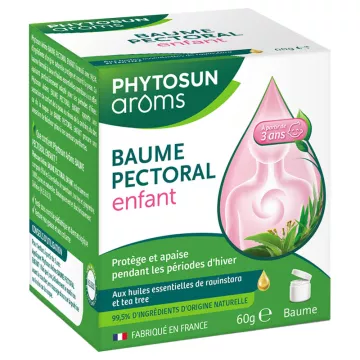
- Children: Essential oils of menthol, Eucalyptus globulus, and camphor are contraindicated for children under 7 years of age — specific pediatric formulas are available with suitable active ingredients (Eucalyptus radiata, ravintsara) — See the Baby Respiratory Comfort line — Consult a pediatrician before use on infants or children under 6 years of age — A child’s cough requires age-appropriate treatment
- Pregnant women: Most essential oils found in standard chest balms are contraindicated during the first trimester—consult a doctor or pharmacist before use during the second and third trimesters
- People with asthma: camphor and terpenes can trigger bronchospasm — opt for camphor-free formulas under medical supervision — never apply a chest rub to the chest area during an asthma attack
- Epilepsy (camphor is neurotoxic at high doses), severe kidney failure—perform a 48-hour skin tolerance test on the inner elbow before first use—never apply to the face, nasal mucous membranes, or open wounds—keep out of reach of children—store away from heat and light (6 to 12 months after opening)