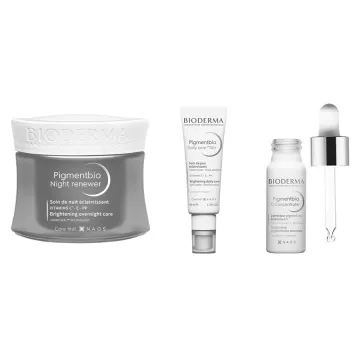
What is a skin-enhancing product?
A beautifying skincare product is a cosmetic formulated to visually enhance the skin's appearance.
Unlike targeted skincare products, it offers a comprehensive approach that combines hydration, radiance-boosting, and the visual reduction of imperfections.
It can be used daily for an immediate and long-lasting effect and is particularly appreciated for the “healthy glow” it provides without the need for constant makeup.
Beauty-enhancing skincare products generally contain several well-known active ingredients: hyaluronic acid, vitamins (B5, C, E), antioxidants, peptides, and sometimes sun filters.
How do you use a beautifying skincare product?
Applying a beautifying skincare product follows a specific method:
- Cleanse your face with a gentle cleanser to remove impurities and residue.
- If desired, apply a toner or facial mist to prepare the skin.
- Use a moderate amount (about the size of a hazelnut for the entire face) of the skin-enhancing treatment, applying it evenly to the face and neck.
- Gently massage in upward motions until fully absorbed.
- Apply a moisturizer as well if your skin is very dry or during cold weather.
- In the morning, always finish with sunscreen with an SPF of at least 30.
Use morning and night for optimal results.
What are the benefits of a beautifying treatment?
A beautifying skincare product offers several cosmetic benefits:
- Sustained hydration: maintains moisture in the skin’s outer layers throughout the day.
- Radiance: a “healthy glow” effect on dull and tired skin.
- Even skin tone: visually minimizes dark spots, redness, and blemishes.
- Partial protection against external aggressors: pollution, wind, and cold.
- Visual reduction of signs of aging: less pronounced dehydration lines.
For effective sun protection during prolonged sun exposure, a dedicated sunscreen with an SPF of at least 30 remains essential: the amount of beautifying skincare product applied is generally too small to provide the advertised level of protection.
What are the key ingredients in a beautifying skincare product?
The key active ingredients in an effective beautifying skincare product include:
- Hyaluronic acid: a major humectant that supports skin hydration and suppleness.
- Vitamin C: evens out the complexion and enhances radiance, while visually reducing dark spots. May cause photosensitivity; store away from light.
- Antioxidants (vitamin E, polyphenols, niacinamide): combat free radicals.
- Peptides: visually support skin firmness.
- Broad-spectrumsunscreens (UVA + UVB): provide supplemental protection (insufficient for prolonged exposure).
- Mineral pigments (iron oxides, non-nano titanium dioxide) if the formula is tinted.
What skin types is the beautifying skincare product suitable for?
Beauty-enhancing skincare products are formulated to suit different skin types, with tailored variants:
- Dry skin: formulas rich in humectants and plant-based lipids.
- Oily skin: Light, non-comedogenic textures, free of heavy oils.
- Sensitive skin: hypoallergenic formulas, fragrance-free, denatured alcohol-free, with soothing active ingredients.
- Mature skin: anti-aging cosmetic active ingredients (peptides, retinol, antioxidants). Retinol: photosensitizing; use only at night; minimum SPF 30; not recommended for pregnant or breastfeeding women.
Skin conditions (rosacea, eczema, atopic dermatitis, psoriasis): consult a dermatologist before introducing a new active skincare product.
How long does it take to see results?
The results of a skincare product depend on the formula, the initial condition of the skin, and how regularly it is applied.
Immediate effects: hydration, comfort, slight visual evening out of the complexion, and a “healthy glow.”
Visible effects on skin texture and radiance: generally after 2 to 4 weeks of regular use.
Visual reduction of imperfections, dark spots, and fine lines: 4 to 12 weeks, depending on the active ingredients and the skin’s needs.
Consistency in application is more important than excessive intensity or frequency.
Can a beautifying treatment replace my moisturizer?
A beautifying treatment can replace a moisturizer in certain situations:
- Well-balanced normal to combination skin, outside of the dry season.
- A temperate climate with no significant external stressors.
- A simplified routine for minimalist users.
However, in many situations, using a moisturizer in addition to a beauty serum is still preferable:
- Very dry, atopic, or sensitive skin.
- Winter, exposure to central heating or air conditioning.
- Traveling at high altitudes or by plane.
- After prolonged sun exposure.
A beautifying treatment under makeup?
A beautifying treatment often makes an excellent makeup base. It prepares the skin by smoothing and moisturizing it, which helps ensure even foundation application and longer-lasting wear.
Recommended method:
- Follow your usual skincare routine (cleansing, treatments).
- Apply a thin layer of the beauty-enhancing treatment.
- Wait 2 to 3 minutes to allow full absorption.
- Apply foundation or tinted moisturizer as the finishing touch.
- Apply eye and lip makeup as desired.
This approach results in a more natural look and better staying power throughout the day.
Are there any possible side effects?
Beauty treatments are generally well tolerated, but side effects are possible:
- Redness or tingling: temporary sensitivity, particularly to concentrated active ingredients.
- Itching or rashes: possible contact allergy to an excipient (fragrances, preservatives, certain active ingredients).
- Temporary skinimperfections: if the formula is unsuitable for a specific skin type.
Always perform a skin test on the inner elbow 48 hours before first use.
If you experience a severe or persistent reaction, stop using the product and consult a dermatologist. Swelling of the face, lips, or tongue, or difficulty breathing (angioedema): call 15 or 112 immediately.
How can you recognize a high-quality beauty product?
Several objective criteria help identify a high-quality beauty product:
- Transparent formulation: a complete, legible INCI list, with recognized cosmetic active ingredients listed prominently in the formula.
- Compliance with European Regulation (EC) No. 1223/2009 on cosmetics.
- The 26 mandatory EU allergens clearly listed.
- The labels “non-comedogenic” and “dermatologically tested,” which are helpful for blemish-prone or sensitive skin.
- Recognized certifications if you prefer organic products: Ecocert, COSMOS Natural, COSMOS Organic, Cosmébio.
- Clinical studies or dermatologically tested results mentioned.
- Appropriate packaging: airless bottle or pump for formulas containing sensitive active ingredients (vitamin C, retinol).
- Traceability of raw materials and a commitment to environmental responsibility.
Compatibility with your skin type and personal needs remains the most important factor; user reviews and professional recommendations are useful additions to the selection process.