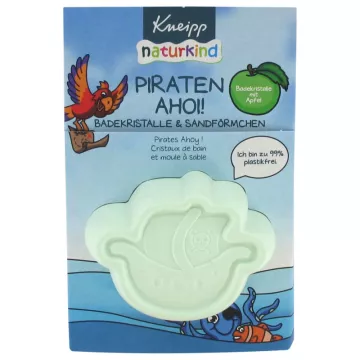
What are bath crystals, and how do they differ from regular bath salts?
Bath crystals are coarse-grained mineral salts (crystals) that dissolve in bathwater, releasing their minerals into the water. They differ from fine bath salts in their texture and their often higher mineral concentration. In aromatherapy, bath crystals also serve as an ideal carrier for essential oils—their porous surface absorbs the essential oils and gradually releases them into the water, unlike when undispersed essential oils are added directly.
- Epsom salt (magnesium sulfate): the most effective for muscles—rich in transdermal magnesium—200–400 g per bath, 20 minutes—the gold standard for post-workout muscle comfort
- Unrefined sea salt: sodium chloride + trace minerals (iodine, zinc, potassium)—purifies and tones the skin—less effective for muscles than Epsom salt
- Himalayan salt: similar to sea salt, broad mineral profile — primarily cosmetic and sensory effects — pink color due to iron oxide content
- Dead Sea salt: the richest in minerals (magnesium, potassium, bromide, calcium) — documented therapeutic tradition for sensitive skin and mild skin conditions
Transdermal magnesium absorption through bathing: Is it effective?
This is the central question regarding Epsom salt—and the scientific answer is nuanced. Studies have shown that magnesium is absorbed through the skin during Epsom salt baths, although the amount absorbed remains modest compared to oral supplementation. The muscle-relaxing effect is well documented empirically, making it a valuable addition to an evening relaxation routine.
- Whether you’re magnesium-deficient, an athlete, or simply stressed, an Epsom salt bath provides real relief—and is more soothing for tense muscles than a regular bath
- Recommended soak time: at least 12–15 minutes at 37–38 °C for significant skin absorption
- Do not confuse Epsom salt (magnesium sulfate) with table salt (sodium chloride)—table salt does not have the same effects on muscles
- Oral magnesium remains more effective in cases of confirmed deficiency—the bath is a complement, not a substitute for supplementation
How do you make homemade bath crystals with essential oils?
A homemade bath crystal recipe lets you choose your own essential oils and tailor the properties to your needs—relaxation, toning, or dry skin care.
- Base: 200–300 g of Epsom salt + 100 g of coarse sea salt — mix in a dry bowl
- Required dispersant: 1 tbsp vegetable oil (sweet almond, jojoba) or powdered milk — to disperse the essential oils in the salt before adding to the water
- Relaxation/Sleep Essential Oils: 10 drops of true lavender + 5 drops of marjoram—mix with the dispersant, then incorporate into the salt
- Muscle and sports essential oils: 8 drops of rosemary cineole + 5 drops of wintergreen — always dilute in the dispersant first
- Store in an airtight jar away from moisture—use within one month to preserve the essential oils
- Pregnancy: Do not use essential oils in bath crystals—use Epsom salt alone or with powdered milk
Bath Crystals and Sensitive or Atopic Skin: How to Use Them?
For sensitive skin, bath crystals must be chosen and measured carefully—some are beneficial, while others can irritate already reactive skin, as explained in our guide to skinhydration.
- Dead Sea salt (50–100 g): documented for mild atopic skin and skin irritations—soothing and remineralizing—start with small amounts
- Epsom salt alone without essential oils: well-tolerated by sensitive skin—avoid commercially available scented blends, which may contain allergens
- Always use without essential oils for highly reactive skin —even mild essential oils can trigger skin reactions when used in the bath
- Warm water at a maximum of 36–37 °C, duration 10–15 minutes—baths that are too long worsen dryness even with bath crystals
- Always apply a moisturizer immediately afterward, while the skin is still damp—bath crystals prepare the skin but do not replace moisturizer