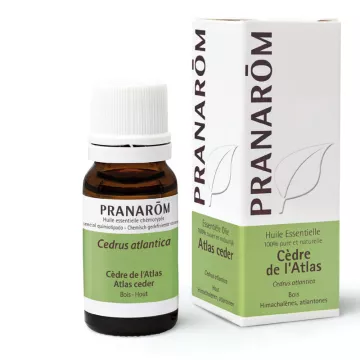
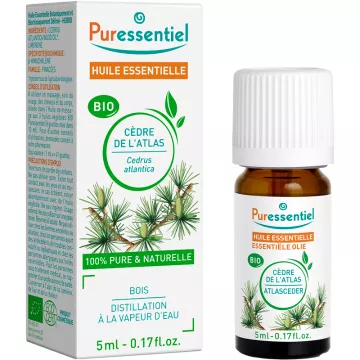
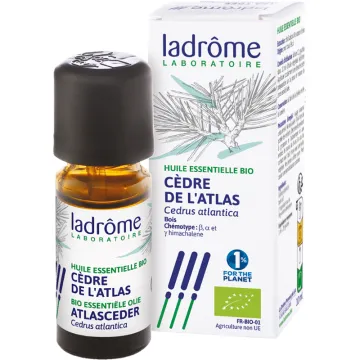
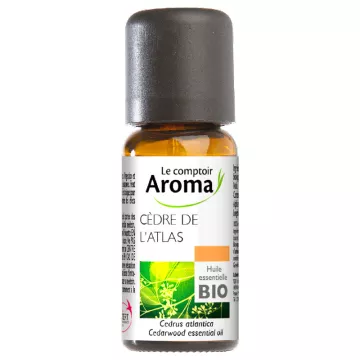
Atlas cedar essential oil (Cedrus atlantica, wood, Morocco-Algeria) is the aromatherapeutic standard for the genus Cedrus. Its unique sesquiterpene profile—rich in himachalenes (α, β, γ himachalene 45–65%) and atlantol—gives it well-documented lymphotonic and sebum-regulating properties that distinguish it from other cedar species. Explore our aromatherapy selection.
What sets Atlas cedar apart?
Distinguishing between cedar species is essential for choosing the right essential oil.
- Cedrus atlantica (Atlas, Morocco-Algeria): predominant himachalenes (45–65%), atlantol—the richest in lymphotonic sesquiterpenes— the gold standard in French aromatherapy
- Cedrus deodara (Himalayas): milder profile, higher cedrol content—used in traditional Ayurveda
- Cedrus libani (Lebanon): rarer to extract, less well-documented clinically
- Juniperus virginiana (Virginia cedar): CAUTION—this is not a true cedar but a juniper, often sold as “cedarwood”—entirely different profile (cedrene, thuyopsene)
- Always check the exact species (Cedrus atlantica), the source material (wood), and the geographic origin (Morocco or Algeria) on the label
Himachalene compounds: the key molecules in Atlas cedar?
Himachalenes are the sesquiterpenes characteristic of Cedrus atlantica —responsible for its most distinctive properties.
- Lymphotonic action: himachalenes stimulate the contraction of lymphatic vessels—supporting lymphatic drainage when massaged onto the lower limbs
- Mild central sedative action: crosses the blood-brain barrier via the olfactory pathway—has a calming effect on the nervous system without significant sedation
- Keratoplasty: regulation of scalp keratinization—the basis for its anti-dandruff effect and regulation of scalp sebum
- Atlantol (sesquiterpenol) enhances the lymphotonic effect and contributes to the characteristic warm, woody scent
- These sesquiterpene properties make Atlas cedar a complementary essential oil to monoterpene essential oils (pine, spruce, rosemary) in respiratory formulations
Atlas cedar and lymphatic circulation?
This is the most specific and well-documented aromatherapeutic indication for Atlas cedar.
- Draining massage: 3–5% in a carrier oil (calophyllum, arnica)—upward strokes on the lower limbs, from the feet toward the groin—heavy legs, swollen ankles
- Synergistic blend: Atlas cedar + evergreen cypress + grapefruit — the classic trio for circulatory massages in aromatherapy
- See our venous circulation line
- Protocol: 2 drops of Atlas cedar + 2 drops of cypress + 2 drops of grapefruit in 15 mL of calophyllum oil — massage the legs in the evening and in the morning
- Water retention and a feeling of heaviness in the limbs: support for circulatory comfort without any medical therapeutic claims
Atlas cedar and hair care?
The keratolytic and keratoplastic properties of himachalenes make it a leading hair care ingredient.
- Dandruff and seborrhea of the scalp: 2–3% in a mild shampoo—regulates scalp keratinization and fungal flora
- Hair loss: vasoactive properties affecting follicular microcirculation — stimulates oxygenation of the hair bulb
- Anti-hair loss protocol: 5 drops Atlas cedar + 3 drops rosemary cineole + 2 drops spike lavender in 30 mL of castor oil — apply to the scalp 30 minutes before shampooing
- See our line of natural hair care and shampoos
Atlas cedar and nervous system well-being?
The himachalene compounds in Atlas cedar act on the central nervous system through the sense of smell.
- Diffusion: 8–12 drops in an ultrasonic diffuser — 30 minutes in the evening — warm, earthy, woody base note — emotional grounding and preparation for sleep
- Direct Inhalation: 1–2 drops on the wrists — take 5 to 10 deep breaths — for managing occasional stress
- Meditative blend: Atlas cedar + frankincense + sandalwood — a woody-resinous base note for meditation and concentration
- Sleep blend: Atlas cedar + Roman chamomile + marjoram — diffuse for 20 minutes before bedtime
Precautions and contraindications?
Precautions for Atlas cedar are the same as those for sesquiterpene essential oils in general.
- Pregnant and breastfeeding women: avoid—insufficient safety data; may affect uterine contractions
- Children under 6 years of age: avoid—sesquiterpene concentrations may be too high
- Never apply undiluted to the skin: dilute to 2–5% in a vegetable oil — risk of skin irritation at high concentrations
- Oral use without a specialized prescription: not recommended — sesquiterpenes may have neurotoxic effects at high oral doses
- Storage: in a dark bottle, protected from heat and light—sesquiterpenes are very stable (shelf life: 3–5 years)