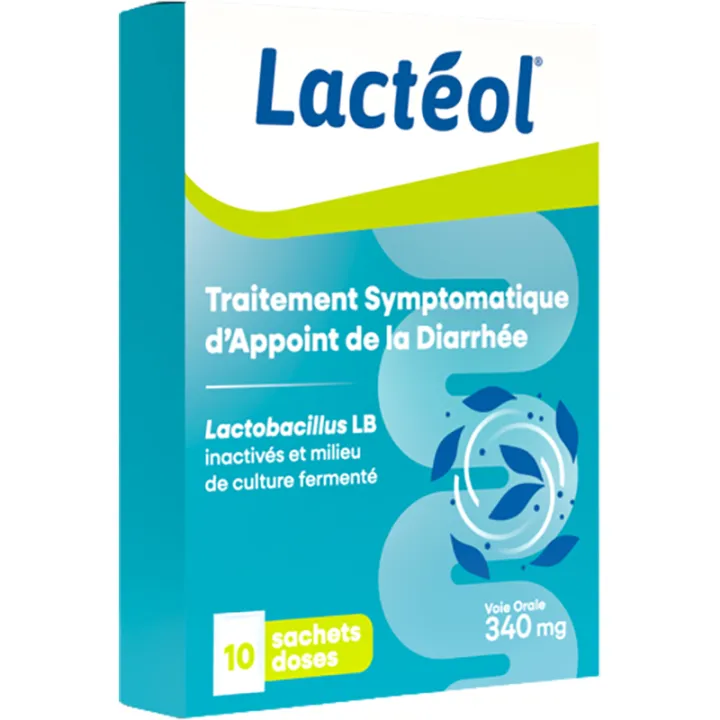
Lactéol Lactobacillus LB for Infants and Toddlers 340 mg, 10 packets
Over-the-counter medication

Lactéol Lactobacillus LB for Infants and Toddlers 340 mg, 10 packets

Lactéol Lactobacillus LB 340 mg, 10 sachets, is a microbial antidiarrheal medication used as an adjunct to rehydration therapy in infants and children under 6 years of age, and in conjunction with rehydration and/or dietary measures in children over 6 years of age and adults. The powder for oral suspension comes in convenient single-dose packets.


€5.36 EXCL. VAT €5.90 INCL. VAT
Not in stock Out of stock Secure payment
Reference : 3400933073602
5 / 5
(1Reviews)
You must be logged in to add this product to a list. Customer login
See delivery conditions

Our doctors of pharmacy advise you

BabyBiane Imedia Probiotics Pileje, 7 Sachets BabyBiane Imedia Probiotics Pileje, 7 Sachets
€8.99
Shipped within 24h
LB Baby probiotic Lactobacillus 10 ml LB Baby probiotic Lactobacillus 10 ml
€7.95
Shipped within 24h
Gallia Calisma 2 Immune System 6-12 Months Gallia Calisma 2 Immune System 6-12 Months
1.2 kg 800 g
€26.71
Add to cart
Shipped within 24h
Gallia Baby Expert Pre-Gallia From Birth 400 g Gallia Baby Expert Pre-Gallia From Birth 400 g
€29.95
Shipped within 24h
Picot Magic Mix Thickening Powder Baby Milk 350 g Picot Magic Mix Thickening Powder Baby Milk 350 g
€15.49
Shipped within 24h
Inovance Probiovance J 30 ml Inovance Probiovance J 30 ml
€21.30
Shipped in 5 to 7 working days

When should Lactéol 340 mg be used to treat diarrhea?

For warnings, precautions, and contraindications regarding LACTEOL Infant Sachets, please refer to the package insert.

The gut microbiota is a balanced ecosystem that constantly regulates itself. This balance is threatened by factors that can disrupt it.  Dysbiosis is an imbalance in the microbiota associated with harmful consequences for the host. Dysbiosis can result from an excess of harmful microorganisms and/or a relative deficiency of microorganisms beneficial to the host.

Acute diarrheabegins suddenly and lasts only a short time. If it persists for more than four days, it is best to consult a doctor. Most cases ofacute diarrhea arecaused by bacterial or viral infections. Diarrhea that lasts longer than 2 to 3 weeks is considered chronic diarrhea. This may indicate an intolerance to certain foods, particularly those containing lactose, or it may be a symptom of a more serious illness. It is therefore important to see a doctor to determine the causes.

Lactéol Lactobacillus LB 340 mg is a microbial anti-diarrheal medication intended for the symptomatic treatment of diarrhea. In infants and children under 6 years of age, it is used as an adjunct to rehydration. For children over 6 years of age and adults, it is used in conjunction with rehydration and/or appropriate dietary measures to aid in the management of diarrhea.

Each packet contains 340 mg of active ingredients, including inactivated Lactobacillus LB and a neutralized fermented culture medium. More specifically, it contains 10 billion inactivated Lactobacillus LB, corresponding to Lactobacillus fermentum and Lactobacillus delbrueckii, combined with 160 mg of fermented culture medium.

The package insert classifies Lactéol as a microbial antidiarrheal, without providing further details on its mechanism of action. It is therefore a complementary treatment intended to support digestive comfort during an episode of diarrhea, but it does not replace rehydration, which remains essential for compensating for losses of water and electrolytes.

In adults and children over 6 years of age, certain dietary adjustments can also help reduce digestive discomfort. It is recommended to drink plenty of fluids and to focus on foods such as rice and grilled meats, while temporarily avoiding raw vegetables, leafy greens, spicy dishes, and frozen foods or beverages.

If diarrhea does not improve after 2 days in children over 6 years of age or adults, medical attention is necessary. In young children, certain situations require a more prompt medical consultation, particularly when bowel movements are very frequent, diarrhea persists, or weight loss occurs.

In addition to Lactéol, an appropriate oral rehydration solution can be particularly helpful, especially for infants and young children: it helps replace fluids lost due to diarrhea and thus complements treatment.

How should this powder for oral suspension be used?

Directions for Use

The usual dosage is 1 to 2 packets per day, depending on the severity of the symptoms. It may be increased to 3 packets on the first day of treatment.

Always take this medication as directed in the package insert or as advised by your doctor or pharmacist.

For infants and children under 6 years of age, Lactéol must be used in conjunction with the rehydration measures recommended by a doctor. For children over 6 years of age and adults, be sure to drink enough fluids to compensate for fluid loss caused by diarrhea.

Share your feedback on the usage instructions and dosage of Lactéol Lactobacillus LB 340 mg 10 sachets with our partner Avis Vérifiés after your purchase.

Precautions

  • Do not take Lactéol if you are allergic to the active ingredients or any of the other components of the medication.
  • This medication contains lactose and sucrose.
  • Its use is not recommended in cases of galactose or fructose intolerance, glucose-galactose malabsorption syndrome, Lapp lactase deficiency, or sucrase/isomaltase deficiency.
  • Do not use in individuals with a history of allergy to cow’s milk proteins.
  • In infants under 30 months of age, the onset of diarrhea requires a medical consultation to determine the cause and to initiate rehydration if necessary.
  • For children under 6 years of age, seek medical attention promptly if diarrhea exceeds 6 stools per day, lasts longer than 24 hours, and/or is accompanied by weight loss.
  • Seek medical attention promptly if the child has a fever, is vomiting, or has blood or mucus in the stool.
  • Intense thirst or a dry mouth may indicate the onset of dehydration and requires medical attention.
  • For children over 6 years of age and adults, consult a doctor if no improvement is seen after 2 days of treatment.
  • It is best not to use this medication during pregnancy. If you are pregnant or planning to become pregnant, consult your doctor or pharmacist.
  • If you miss a dose, do not take a double dose to make up for the missed one.
  • If you take more than the recommended amount, consult your doctor or pharmacist immediately.
  • Allergic reactions or hives may occur.
  • Store the medication at a temperature not exceeding 25°C and protect it from moisture.
  • Keep out of the sight and reach of children.

What are the ingredients in this medication for diarrhea?

The active ingredient is: 10 billion inactivated Lactobacillus LB, 160 mg neutralized fermented culture medium.

This amounts to 340 mg of active ingredients per packet containing 800 mg of powder.

Lactobacillus LB corresponds to: Lactobacillus fermentum, Lactobacillus delbrueckii.

Composition of the culture medium: Lactose Monohydrate, Casein Peptone, Yeast Extract, Sodium Acetate Trihydrate, Anhydrous Dipotassium Phosphate, Purified Water.

Other ingredients are: silicic acid, banana-orange flavoring, sucrose, lactose monohydrate, calcium carbonate.

Excipients with known effects: sucrose, lactose monohydrate.

Presentation

Lactéol 340 mg is available as a powder for oral suspension packaged in single-dose sachets. Box of 10 sachets.

Our expert advice on Lactéol 340 mg for diarrhea

During an episode of diarrhea, the top priority is rehydration: be sure to drink small amounts regularly rather than waiting until you are very thirsty. For infants and young children, use an oral rehydration solution as recommended by a doctor or pharmacist. Also monitor how symptoms develop: persistent diarrhea, reduced fluid intake, extreme thirst, vomiting, or blood in the stool warrant a prompt medical consultation.

FAQ

Can Lactéol 340 mg be used in infants?

Yes. Lactéol can be used in infants to treat diarrhea, but always as a supplement to rehydration. However, in infants under 30 months of age, the onset of diarrhea requires a medical consultation to determine the cause and identify appropriate rehydration measures.

How many Lactéol packets can I take per day?

The usual dosage is 1 to 2 packets per day, depending on the severity of the symptoms. It may be increased to 3 packets on the first day of treatment. Always follow the instructions in the package insert or the advice of your doctor or pharmacist.

When should I seek medical advice if the diarrhea persists?

For children over 6 years of age and adults, see a doctor if there is no improvement after 2 days. Prompt medical attention is also recommended in cases of fever, vomiting, blood or mucus in the stool, intense thirst, or a dry mouth. For children under 6 years of age, diarrhea involving more than 6 bowel movements per day that lasts longer than 24 hours and/or is accompanied by weight loss requires medical attention.


Pharmacovigilance Report an adverse drug reaction(s)

Download PDF leaflet

NOTICE

ANSM - Updated on: 24/02/2016

Name of the medicinal product

LACTEOL 340 mg powder for oral suspension in sachet-dose

Lactobacillus LB inactivated and fermented culture medium

framed

Please read this leaflet carefully before you start taking this medicine because it contains important information for you.

You should always take this medication exactly as prescribed in this leaflet or by your doctor or pharmacist.

· Keep this leaflet. You might need to read it again.

· Ask your pharmacist for advice or information.

· If you experience any of the side effects, talk to your doctor or pharmacist. This also applies to any side effects not mentioned in this leaflet. See section 4.

Review summary

In this notice :

1. WHAT IS LACTEOL 340 mg powder for oral suspension in a sachet-dose AND WHAT IT IS USED FOR?

2. BEFORE YOU TAKE LACTEOL 340 mg powder for oral suspension in a sachet-dose?

3. HOW TO TAKE LACTEOL 340 mg powder for oral suspension in a sachet-dose?

4. WHAT ARE POSSIBLE SIDE EFFECTS?

5. HOW TO STORE LACTEOL 340 mg powder for oral suspension in a sachet-dose?

6. ADDITIONAL INFORMATION

1. WHAT IS LACTEOL 340 mg powder for oral suspension in a sachet-dose AND WHAT IT IS USED FOR?

Pharmacotherapeutic group

This medication is an antidiarrheal agent of microbial origin.

Therapeutic indications

LACTEOL 340 mg powder for oral suspension in sachets is used to treat diarrhea:

· in infants and children under 6 years in addition to rehydration,

· in children over 6 years of age and adults in addition to rehydration and / or dietary measures.

You should contact your doctor if you experience no improvement or feel less well after 2 days.

2. BEFORE YOU TAKE LACTEOL 340 mg powder for oral suspension in a sachet-dose?

List of information needed before taking the medication

If your doctor has told you about an intolerance to some sugars, contact your doctor before taking this medicine.

Cons-indications

Do not take LACTEOL 340 mg powder for oral suspension in a sachet-dose:

· if you are allergic to any of the active ingredients or any of the other ingredients of this medication mentioned in section 6.

Precautions for use; special warnings

Warnings and Precautions

Warnings

In infants under 30 months of age, the appearance of diarrhea, ie the increase in the number of stools per day, requires a medical consultation in order to investigate the origin and to start a rehydration if it is necessary.

You should consult your doctor promptly in the following cases:

· In a child under 6 years of age:

o if diarrhea exceeds 6 stools per day and lasts more than 24 hours

o and / or if diarrhea is accompanied by weight loss.

· In children over 6 years of age and adults , if you experience no improvement after 2 days of treatment.

You should consult your doctor promptly if you experience any of the following:

o if you have fever and vomiting,

o if you have blood in the stool or if you have viscous stools (presence of mucus)

o if you feel intense thirst or have dry mouth. These signs show an early dehydration caused by a significant loss of fluid. In this case, your doctor may prescribe rehydration by mouth or by injection if he deems it necessary.

· This medicine contains 2 sugars (lactose and sucrose). The use of this medication is not recommended in patients with galactose or fructose intolerance, glucose-galactose malabsorption syndrome or Lapp lactase deficiency or sucrase / isomaltase (rare hereditary diseases).

· This medication should not be used in patients with a history of allergies to cow's milk proteins.

Precautions for use

In infants and children under 6 years of age:

· You must follow the directions for use of this medication and also the recommendations of your doctor if he has prescribed a method of rehydration for your child.

· You should follow your doctor's advice regarding your child's diet. Your doctor will inform you of the need to remove milk and dairy from the diet.

In children over 6 years of age and in adults: this treatment is a complement to the following dietary rules:

· You must rehydrate yourself by drinking large quantities of drinks, salty or sweetened, to compensate for the loss of fluid due to diarrhea (an adult must drink an average of 2 liters of water per day)

· You must eat well the time of the diarrhea:

o excluding certain intakes and especially raw vegetables, fruits, green vegetables, spicy dishes, as well as frozen foods or drinks.

o favoring grilled meats, rice.

Ask your doctor or pharmacist for advice before taking any medicine.

Interaction with other medicines

Other medicines and LACTEOL 340 mg powder for oral suspension in sachet-dose

Inform your doctor or pharmacist if you are taking, have recently taken or may take any other medicines.

Interactions with food and beverages

Not applicable.

Interactions with Herbal Medicines or Alternative Therapies

Not applicable.

Use during pregnancy and lactation

Pregnancy and breast feeding

It is best not to use this medication during pregnancy.

If you are pregnant or plan to become pregnant during treatment, consult your doctor.

Ask your doctor or pharmacist for advice before taking any medicine.

Sport

Not applicable.

Effects on ability to drive or use machines

Not applicable.

List of excipients with known effect

List of excipients with a known effect: sucrose, lactose monohydrate.

3. HOW TO TAKE LACTEOL 340 mg powder for oral suspension in a sachet-dose?

Instructions for proper use

Always take this medication exactly as prescribed in this leaflet or as directed by your doctor or pharmacist. Check with your doctor or pharmacist if you are not sure.

Dosage, Mode and / or route (s) of administration, Frequency of administration and Duration of treatment

The dosage is 1 to 2 sachets per day, depending on the intensity of your disorders. The dosage may be increased to 3 sachets on the first day of treatment.

If you feel that the effect of LACTEOL 340 mg powder for oral suspension in a sachet is too strong or too weak, talk to your doctor or pharmacist.

Symptoms and Instructions for Overdose

If you take more LACTEOL 340 mg powder for oral suspension in a sachet-dose than you should:

Immediately consult your doctor or pharmacist.

Instructions for omission of one or more doses

If you forget to take LACTEOL 340 mg powder for oral suspension in sachet-dose:

Do not take a double dose to make up for the missed dose.

Risk of withdrawal syndrome

If you stop taking LACTEOL 340 mg powder for oral suspension in a sachet-dose:

Not applicable.

If you have any further questions on the use of this medication, ask your doctor or pharmacist.

4. WHAT ARE POSSIBLE SIDE EFFECTS?

Description of adverse reactions

Like all medicines, this medicine may cause side effects, although not everybody gets them.

The following side effects may occur:

· Allergic reactions

· hives

Declaration of side effects

If you experience any side effects, talk to your doctor or pharmacist. This also applies to any side effects not mentioned in this leaflet. You can also report adverse reactions directly via the national reporting system: National Agency for the Safety of Medicines and Health Products (ANSM) and network of Regional Centers of Pharmacovigilance

By reporting adverse reactions, you are helping to provide more information about the safety of the drug.

5. HOW TO STORE LACTEOL 340 mg powder for oral suspension in a sachet-dose?

Keep out of the reach and sight of children.

Expiration date

Do not use LACTEOL 340 mg powder for oral suspension in a sachet-dose after the expiry date which is stated on the carton.

Storage conditions

Store at a temperature not exceeding 25 ° C and away from moisture.

If necessary, warnings against visible signs of deterioration

Not applicable.

Medicines should not be disposed of via wastewater or household waste. Ask your pharmacist what to do with unused medications. These measures will help protect the environment.

6. ADDITIONAL INFORMATION

Full list of active substances and excipients

What does LACTEOL 340 mg contain, powder for oral suspension in a sachet-dose?

The active substances are :

Lactobacillus LB * inactivated .............................................. .................................................. .......... 10 billion

Culture medium ** fermented (neutralized) ......................................... .................................................. ... 160 mg

That is to say 340 mg of active substances for a sachet of 800 mg of powder.

* Lactobacillus fermentum and Lactobacillus delbrueckii.

** Composition of the culture medium: lactose monohydrate, casein peptone, yeast extract, sodium acetate trihydrate, anhydrous dipotassium phosphate, purified water.

The other components are :

Silicic acid, banana-orange flavor, sucrose, lactose monohydrate, calcium carbonate.

Pharmaceutical form and content

What is LACTEOL 340 mg powder for oral suspension in sachet-dose and contents of the pack?

LACTEOL 340 mg is in the form of a powder for oral suspension in a dose sachet. Box of 10 and 100.

Name and address of the marketing authorization holder and the holder of the manufacturing authorization responsible for the release of the lots, if different

Holder

ADARE PHARMACEUTICALS SAS

BUS ROUTE

AT THE PLACE SAYS THE "PREVOTE"

78550 HOUDAN

exploiting

ADARE PHARMACEUTICALS SAS

BUS ROUTE

"THE PREVOTE"

78550 HOUDAN

Maker

ADARE PHARMACEUTICALS SAS

BUS ROUTE

AT THE PLACE SAYS THE "PREVOTE"

78550 HOUDAN

Names of the medicinal product in the Member States of the European Economic Area

Not applicable.

Date of approval of the notice

The last date on which this leaflet was approved is {date}.

AMM under exceptional circumstances

Not applicable.

Internet Information

Detailed information on this medicine is available on the ANSM website (France).

Information for health professionals only

Not applicable.

Other

Not applicable.

VIDAL OF THE FAMILY

LACTÉOL

antidiarrheal

Lactobacillus

. Presentations . Composition . Indications . Warning . Pregnancy and breastfeeding . Directions for use and dosage . Advice . Lexicon

PRESENTATIONS (summary)

LACTÉOL 340 mg: capsule (white); box of 10.
-

LACTÉOL 340 mg: capsule (white); box of 30.
-

LACTÉOL 340 mg: powder for oral suspension (flavors: banana, orange); box of 10 sachets-dose.
-

Laboratory

COMPOSITION (summary)
p gel p sachet
Lactobacillus inactivated, number of germs 10 billion 10 billion
Lactose + +
Sucrose +

INDICATIONS (summary)
This medication belongs to the family of antidiarrheals of microbial origin. It promotes the restoration of the intestinal flora.
It is used in the adjunctive treatment of diarrhea , in addition to dietary measures.
WARNING (Contents)
If there is no improvement after 2 days of treatment, contact your doctor.
PREGNANCY AND BREAST-FEEDING (summary)
This medicine contains only presumed safe substances during pregnancy or lactation. However, do not use it prolonged without the advice of your pharmacist or doctor.
DIRECTIONS FOR USE AND DOSAGE (summary)
The contents of the sachets must be dissolved in a glass of water or a bottle of water.
Capsules are not suitable for children under 6 years of age. They may clog the airways if the child swallows and the capsule passes into the trachea (false route).

Usual dosage:

1 to 2 capsules or 1 to 2 sachets per day, depending on the intensity of the disorders. The dosage can be increased to 3 capsules or 3 sachets on the first day.
TIPS (summary)
Diarrhea can cause dehydration, especially in young children or the elderly. This loss of water by the body must be compensated by abundant drinks (salted broth, sugary drinks) because it can cause fatigue, discomfort or confusion of ideas.
In the infant, two situations arise:
  • the child is breast-fed: breast-feeding will continue throughout the diarrheal period;
  • the child is not breastfed: particularly suitable rehydration solutions are available in pharmacies. They should be used for the first 3 to 4 hours after the onset of diarrhea and should be offered to the infant very regularly during this period. After this initial phase, the usual diet, and especially milk, will be resumed even if the diarrhea persists. The exclusion of milk, with or without lactose, is no longer part of the official recommendations. In the unlikely event that you can not obtain a commercial rehydration solution, you can prepare a solution with 1 liter of water with 4 teaspoons of sugar and ½ teaspoon of table salt.
    Rehydration solutions should not be used for more than half a day because they are too nutrient-poor.
Diarrhea diet is based on a light diet, based on:
  • banana, potato, soup or mashed potatoes;
  • pasta, rice or tapioca, cooked water, rice;
  • apple or quince sauce, quince or blueberry jelly;
  • biscuits or sweet.
Should be avoided: raw fruit juices and fruit, vegetables rich in fiber, meats, eggs, dairy products and iced drinks.


GLOSSARY (summary)


diarrhea
The strict medical sense of diarrhea is "emission of stools too frequent and too abundant". In fact, common sense equates diarrhea with the notion of fluid and frequent stools. Normally, stools are pasty, but the emission of liquid or barely formed stools, without pain or particular associated disorder, is not pathological. Diarrhea can occur when liquid stool emissions are repeated during the day and the needs are overwhelming or painful.
Many medicines can accelerate intestinal transit and make the stools more liquid, without this undesirable effect being of real concern.
Antibiotics can alter the digestive flora, essential for digestion, and cause more or less troublesome but benign diarrhea. The effect appears immediately or after a few days of treatment. A severe and exceptional form of diarrhea, pseudomembranous colitis, can be observed after antibiotic treatment; this condition results in the emission of mucus and false membranes (resembling skin flaps) associated with abdominal pain; constipation may replace the initial diarrhea. Pseudomembranous colitis can occur several days after discontinuation of antibiotic treatment and requires urgent medical advice.


infant
Child from one to 30 months. A child under one month is a newborn.


dosage
Quantity and distribution of the dose of a drug according to the age, weight and general condition of the patient.


treatment
Treatment that complements the action of a specific treatment, but generally does not achieve healing on its own.

Logo avis vérifiés
Voir l'attestation de confiance
Avis soumis à un contrôle
  • Pour plus d'informations sur les caractéristiques du contrôle des avis et la possibilité de contacter l'auteur de l'avis, merci de consulter nos CGU.
  • Aucune contrepartie n'a été fournie en échange des avis
  • Les avis sont publiés et conservés pendant une durée de cinq ans
  • Les avis ne sont pas modifiables : si un client souhaite modifier son avis, il doit contacter Avis Verifiés afin de supprimer l'avis existant, et en publier un nouveau
  • Les motifs de suppression des avis sont disponibles ici.
5 / 5
(1Reviews)
  • 5 étoiles
    1
  • 4 étoiles
    0
  • 3 étoiles
    0
  • 2 étoiles
    0
  • 1 étoile
    0
RELATED SEARCHES WITH DIARRHEA AND COLIC IN BABIES

Advice from our naturopaths

How to naturally protect baby against mosquitoes? How to naturally protect baby against mosquitoes?

The beautiful days are coming, with them the mosquitoes have made their return for the sole purpose of preventing us from sleeping and devouring us. There are many protections on the market to protect us from it, but what about baby?  We are often afraid to apply harmful and aggressive lotions on our little blond heads, so nothing better than to turn to…

Read the article on the blog
Travelling safely with baby Travelling safely with baby

Travelling is an experience and an opportunity to create beautiful memories. A touch of sunshine, the caress of the wind, long roads to clear your mind, what more could you want? No need to hesitate, pack your bags and let's go! Whatever the means of transport or the destination, the preparations remain almost the same... Oops, this time, no! You…

Read the article on the blog
How do you rebuild your intestinal flora after taking antibiotics? How do you rebuild your intestinal flora after taking antibiotics?

The intestinal flora, also known as the microbiota, plays a crucial role in our digestive and overall health. After taking antibiotics, it is essential to take steps to restore the balance of this flora, which is often disturbed by these drugs. This article explores effective strategies for reconstituting intestinal flora and maintaining good health. Understanding the impact of antibiotics on…

Read the article on the blog
Natural Health Advice

Order a selection of products frequently purchased by our customers