When should you use this ointment for tattooed skin?
Bepanthen Tattoo Ointment is a skin care ointment for tattooed skin, formulated with panthenol (provitamin B5) in a rich, emollient base containing lanolin, petroleum jelly, liquid paraffin, sweet almond oil, and beeswax. Unscented and free of dyes, it is designed for skin that has just been weakened by the needle and, like care for sensitive and fragile skin, requires a simple formula and gentle application.
After a session, the tattooed area feels tight and becomes dry as the skin’s surface regenerates. Applied regularly, this ointment moisturizes and protects the tattooed skin during the weeks when the design remains sensitive to friction from clothing and repeated washing.
Its texture forms a transparent protective layer over the tattoo: the design remains visible beneath the cream; this film allows the skin to breathe rather than trapping it under a thick, greasy layer. The design is visible through the film, allowing you to track the skin’s healing progress from one day to the next.
It’s suitable for all designs, from small line art tattoos to large pieces covering an arm or the back, regardless of the area of the body. The tube fits easily into a bag for use throughout the day, whether at the office or on the go.
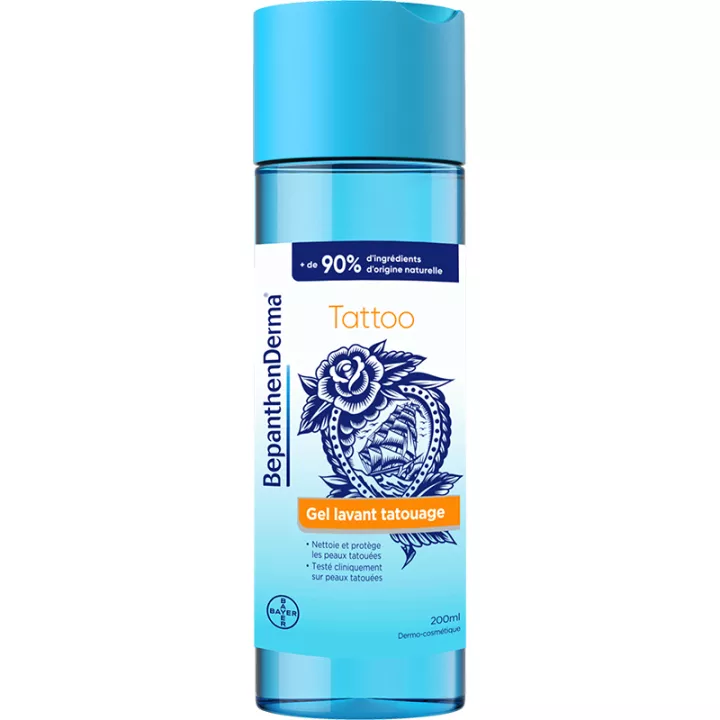
Tattoo care begins with cleansing: skin that is not washed properly or rubbed with harsh soap will not absorb the ointment as effectively. For this, we recommend BepanthenDerma Tattoo Cleansing Gel, a soap-free, pH-balanced cleanser designed for tattooed skin. It gently cleanses without drying out the skin, so that the ointment applied immediately afterward is applied to clean skin that remains comfortable.
How do you apply this ointment to a tattoo?
Directions for Use
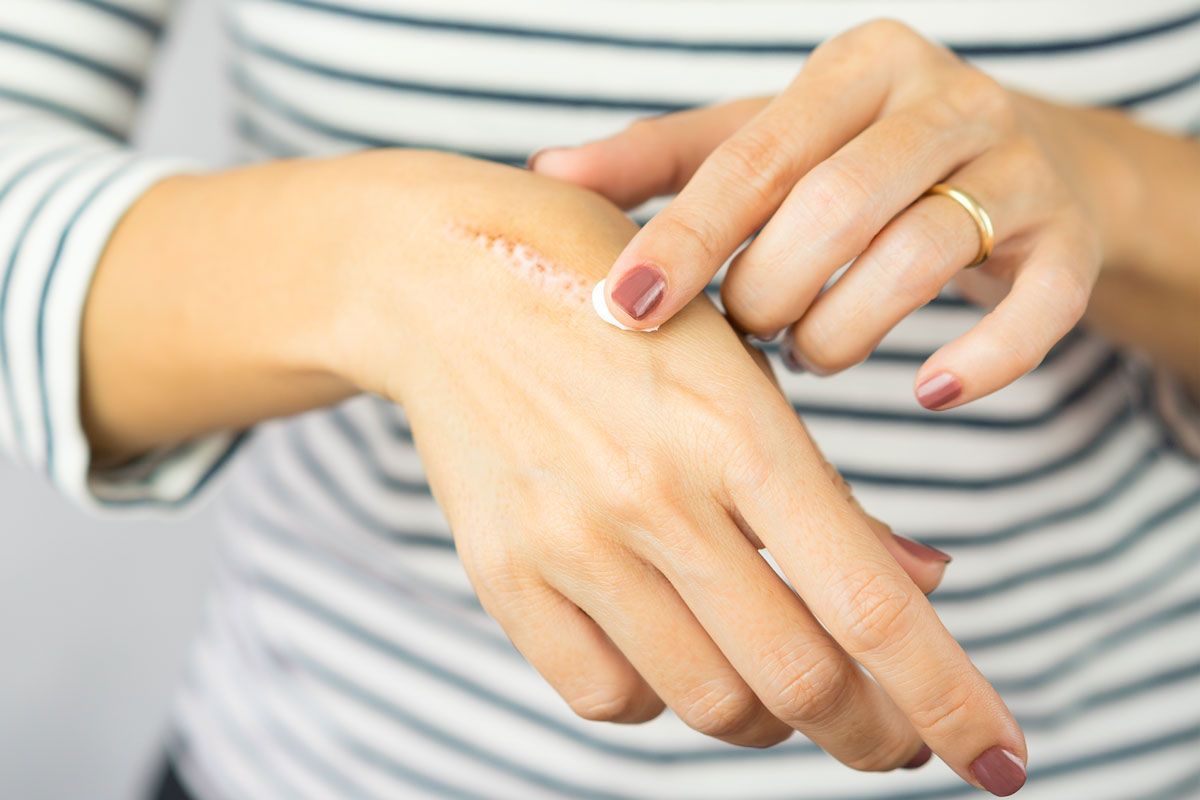
Apply a thin layer to clean tattooed skin, up to 4 times a day.
Share your feedback on the usage instructions and dosage for Bepanthen Tattoo Ointment with our partner “Verified Reviews” after your purchase.
Precautions
- For external use only.
- Do not use if you have a known allergy (hypersensitivity) to any of the ingredients, particularly lanolin (wool fat), almonds or tree nuts (sweet almond oil), and beeswax.
- Do not apply to broken skin.
- Avoid contact with the eyes. In case of contact, rinse thoroughly with clean water.
- Wash your hands with soap before each application and do not touch the tattoo with dirty hands.
- Do not pick at scabs or flaking skin; let them fall off on their own.
- Until the tattoo has healed, avoid sun exposure, baths, swimming pools, saunas, and excessive sweating. If sun exposure is unavoidable, protect the area with high-SPF sunscreen.
- If the tattooed area becomes red, painful, or swollen, step up hygiene measures as advised by your tattoo artist. If the redness persists or spreads, or if you develop a fever, consult a doctor.
- If you experience itching, rashes, or redness after application, discontinue use. A reaction that appears in the months following the tattoo requires a dermatologist’s evaluation.
- Any adverse reaction related to a cosmetic product or a tattoo can be reported on the portal signalement.social-sante.gouv.fr.
- Store at a temperature not exceeding 25°C. Use within 12 months after opening. Keep out of reach of children.
What are the ingredients in this provitamin B5 ointment?
Ingredients
Aqua, Lanolin, Paraffinum Liquidum, Petrolatum, Panthenol, Prunus Amygdalus Dulcis Oil, Cera Alba, Cetyl Alcohol, Stearyl Alcohol, Paraffin, Lanolin Alcohol, Glyceryl Oleate, BHT, Tocopherol.
Packaging
30 g tube.
Our Expert Advice on Bepanthen Tattoo Ointment
The key factor depends more on the timeline than on the product itself. The first few days follow the tattoo artist’s protocol: plastic wrap or a bandage, antiseptic, and the frequency of cleaning. The artist knows their ink, their technique, and the area being worked on—their instructions take precedence over any general guidelines. The ointment takes over to maintain the skin’s comfort; it does not disinfect. A tattoo that feels hotter or swells more each day does not require more ointment: the key is to take precautions if symptoms worsen.
It’s often believed that you should keep using this rich ointment until the tattoo looks “back to normal.” Healing generally takes three to four weeks, depending on the area; once the skin is smooth, with no scabs or shine, a light, fragrance-free moisturizing lotion is sufficient for daily use. The ointment should then be reserved for areas that still feel tight.
FAQ
How long can I keep the bandage on before applying Bepanthen Tattoo Ointment?
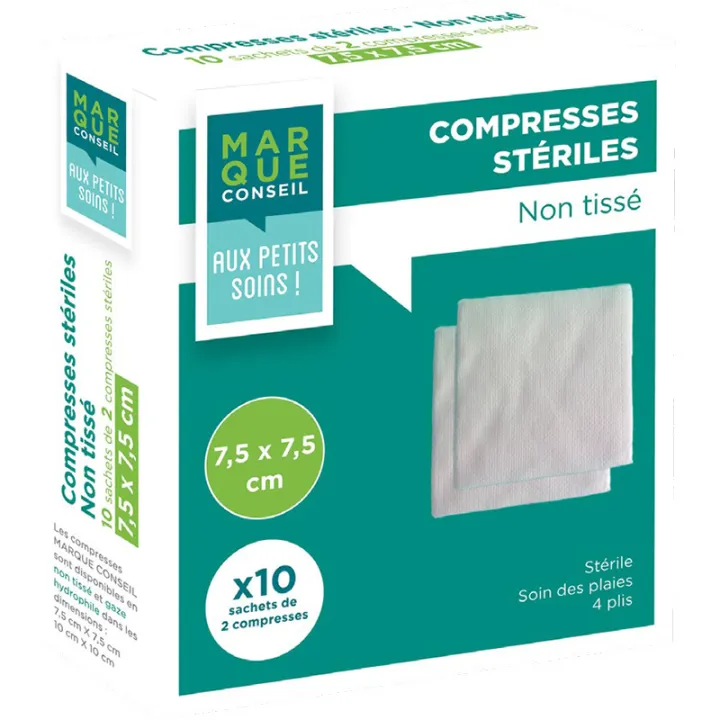
The duration depends on the type of protection applied and is determined by the tattoo artist’s instructions, which must be provided in writing. Once the bandage is removed, it’s best to let the tattoo air out as often as possible. If the tattoo artist asks you to cover it, sterile non-woven gauze pads are suitable; change them as soon as they become soiled.
Should I apply an antibiotic cream in addition to Bepanthen Tattoo Ointment?
No, not without medical advice. The ointment contains neither antiseptic nor antibiotic: disinfection is performed using the antiseptic recommended by the tattoo artist. An antibiotic cream should only be used for an infection diagnosed by a doctor, who will decide whether to prescribe it.
Is it a problem if I apply too much Bepanthen Tattoo Ointment?
A thick layer doesn’t provide any additional benefit: a small amount is enough to cover the design; any excess remains on the surface, shines, and stains delicate clothing. The right amount disappears almost immediately upon application, leaving a light film. For a small tattoo, a tiny dab is enough.
Does Bepanthen Tattoo Ointment cause the colors in my tattoo to fade?
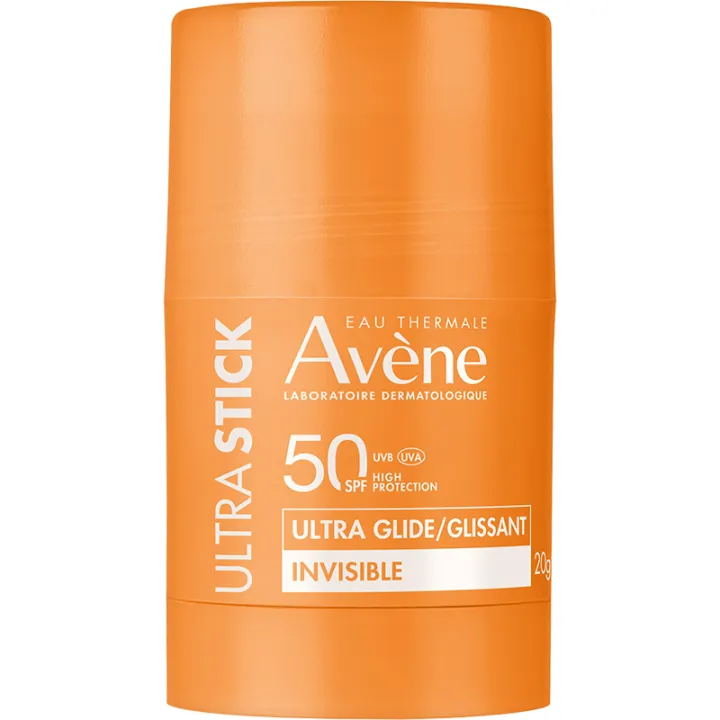
No color loss was reported as a side effect in the clinical study conducted on the Tattoo Ointment. Over the years, colors fade, especially due to sun exposure: once the skin has healed, applying SPF 50+ sunscreen to the tattoo every time you’re in the sun helps preserve its appearance.