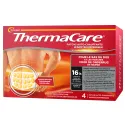
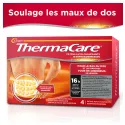
What is the ThermaCare Lower Back Self-Heating Patch used for?
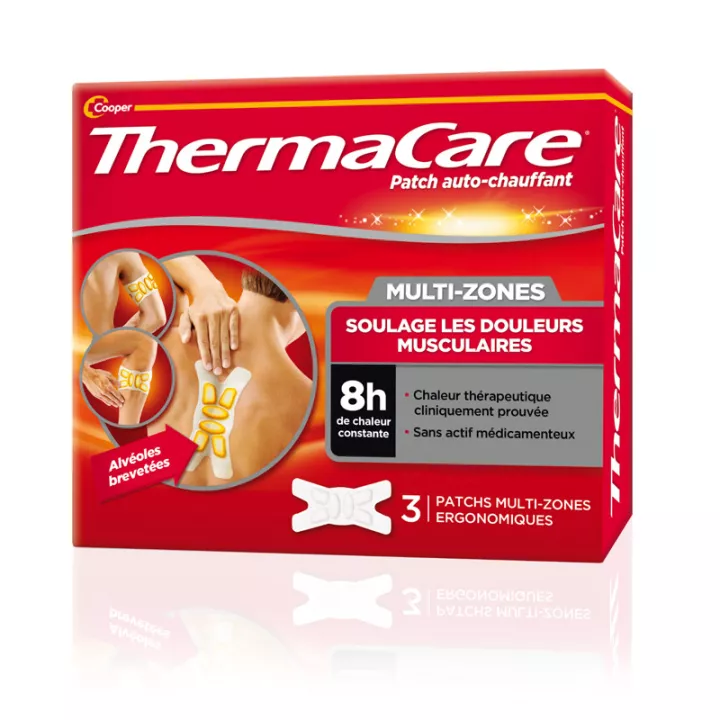
ThermaCare heating patches allow you to move freely while providing therapeutic heat that penetrates deeply to relax and relieve pain in tight lower back muscles.
ThermaCare Lower Back and Hip Heat Patches provide long-lasting relief from mild muscle pain associated with overuse, strains, sprains, and arthritis.
When used as directed, ThermaCare Lower Back and Hip heat patches can be worn for 8 hours a day, for 7 consecutive days*.
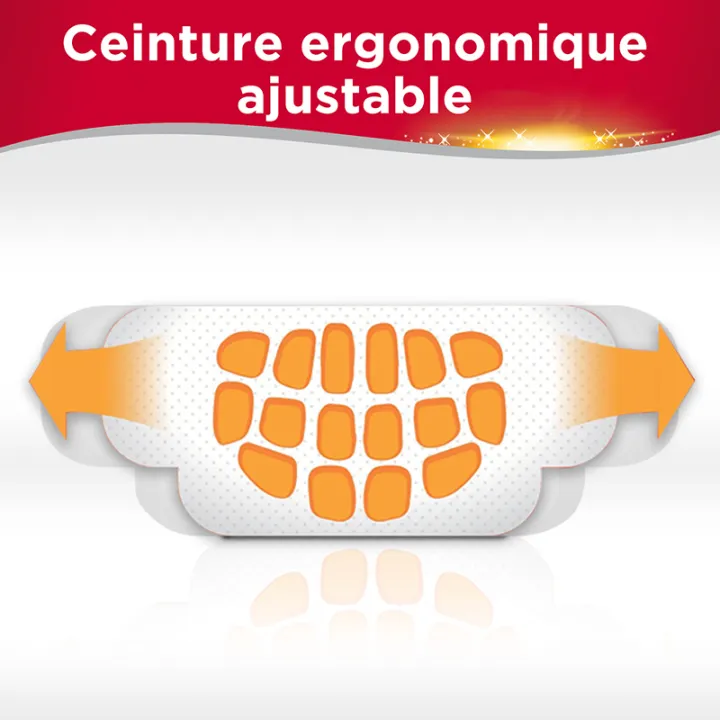
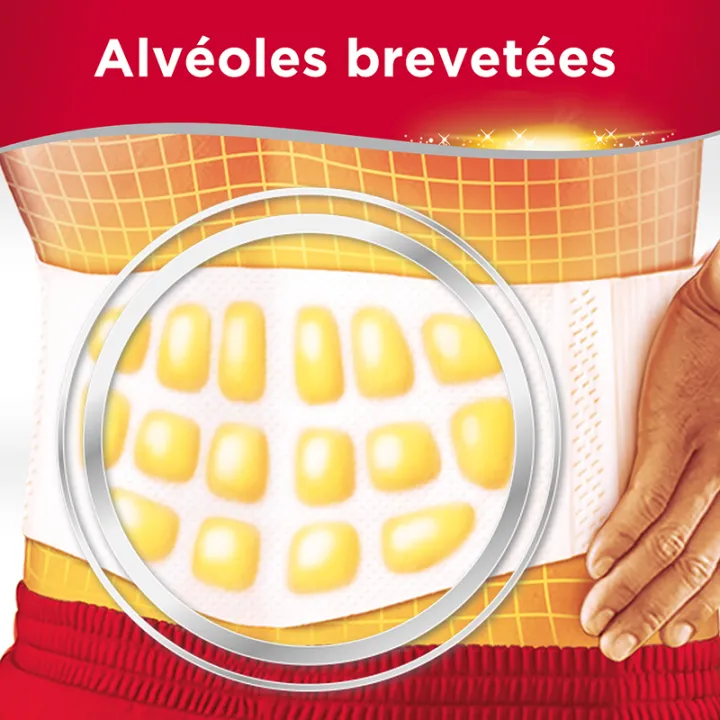
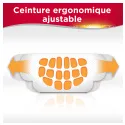
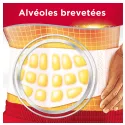
ThermaCare Lower Back and Hip heating patches produce real heat that penetrates deeply to soothe and relax tense muscles. Each patch provides 8 to 16 hours of relief while you wear it, and the soothing sensation lasts even after you remove it. ThermaCare heating patches are designed to contour to the shape of your lower back and hips, and they’re thin enough to be worn discreetly under clothing.
We also offer Thermacare Shoulder/Neck/Wrist 6-Pack of Pain-Relief Heating Patches at the best price in our online pharmacy.
How do you use this remedy for back pain?
To benefit from the therapeutic heat of ThermaCare Lower Back and Hip, follow these steps:
- Open the packet by tearing it open only when you’re ready to use it. The ThermaCare belt patch may take up to 30 minutes to reach its full therapeutic temperature.
- Place the patch, with the dark side against your skin, on your lower back or hip, over the sore area.
- If you are 55 or older, apply the patch over clothing rather than directly on the skin.
- Press firmly. For maximum effectiveness, it is recommended that you wear ThermaCare for 8 consecutive hours.
Do not use for more than 8 hours within a 24-hour period.
Share your feedback on the usage instructions and dosage for the ThermaCare Lower Back Self-Heating Patch with our partner Verified Reviews after your purchase.
Precautions for Use
- See the complete list of precautions on the box
- This product may cause burns or blisters. Check your skin frequently during use. If you feel or notice any irritation or burning, remove the product immediately.
- For users who are not self-sufficient, or for users aged 12 to 18: adult supervision is required.
- For people 55 years of age or older: The risk of burns increases with age.
- If you are 55 or older, wear ThermaCare® over clothing and do not use it while sleeping. Consult your doctor before use if you have diabetes, circulatory problems, heart disease, rheumatoid arthritis, or if you are pregnant.
- Stop use and consult a doctor:
- If you experience discomfort, a burning sensation, swelling, a rash, or any other persistent change where you’ve applied the patch;
- If, after 7 days, your pain worsens or remains unchanged.
- Each patch contains iron (approximately 2 g):
- If swallowed, contact a healthcare professional immediately.
- If the patch comes into contact with your skin or eyes, remove it, rinse the affected area with water, and contact a healthcare professional immediately.
- If the patch is damaged or torn during use, remove it.
- Keep out of reach of children and pets.
- Never heat the patch in the microwave or attempt to warm it up, as it could catch fire.
- Do not use:
- If the cells are leaking and/or the patch or packaging is damaged or torn.
- In combination with other topical medications or other sources of heat.
- On broken skin.
- If there is a bruise or swelling that is less than 48 hours old.
- On individuals who cannot remove the product themselves without assistance or who are unable to follow all precautions for use, including children and certain older adults.
- In children under 12 years of age.
- On areas of the body other than the lower back and hips.
- If you exceed the maximum waist circumference indicated in theDirections for Use section.
- When using this product:
- Do not wear for more than 8 hours in any 24-hour period.
- Do not apply the patch too tightly to the skin, and be careful not to overlap the heating pads.
- Do not apply additional pressure to the product, such as by pressing it against hard surfaces or wearing it under tight clothing or a belt.
- If the patch feels too hot, stop using it or wear it over a layer of clothing rather than directly on your skin.
- To avoid any increased risk of burns, remove the product before undergoing any MRI (magnetic resonance imaging) procedure.
- Keep the self-heating patch dry.
- See theInstructions for Use section.
- Any serious incident related to the device must be reported to the manufacturer, the authorized representative, and the relevant local authorities.
- This product does not require any special storage conditions. After use, dispose of the patch as soon as it is no longer heating, in accordance with applicable local waste disposal regulations, taking care to prevent its contents from being released into the environment.
Product Description
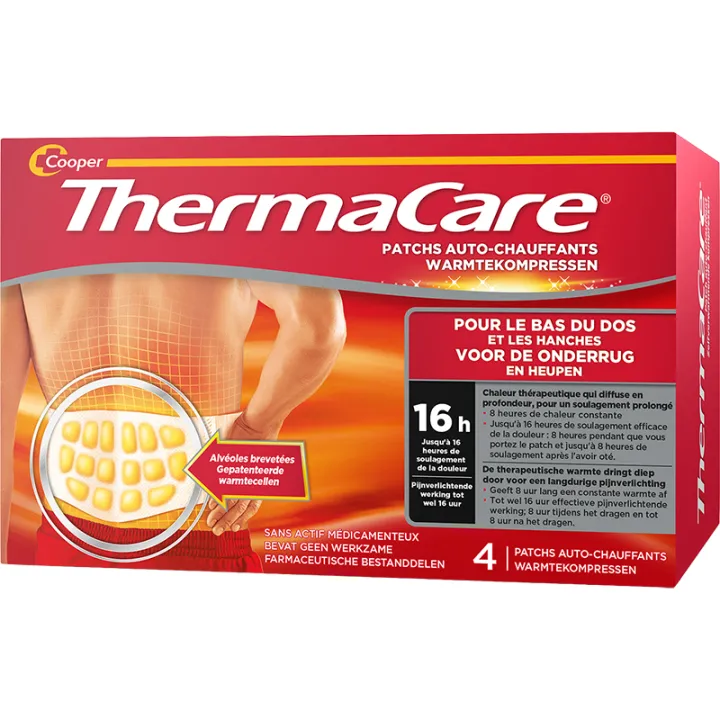
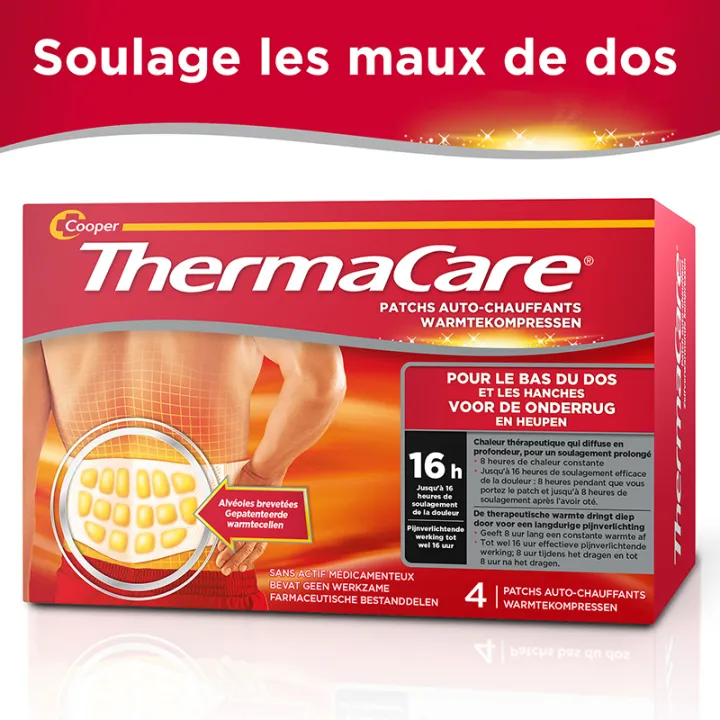
Thermacare Lower Back Self-Heating Patch comes in a box containing 4 individual patches, each hermetically sealed to ensure the patch activates only upon opening. This convenient format allows you to take Thermacare with you and use it wherever you are, ensuring relief is available at any time. Also available in a pack of 2 boxes of 4 patches.
How to Manage Joint Pain (and Osteoarthritis Pain)?
Back pain—also known asdorsalgia, lumbago, and sometimes even kidney pain or a “stiff back”—is a common condition affecting the back region from the base of the neck to the pelvis. This pain isvery common: 80% of French people will experience back pain at least once in their lives. Most often, back pain has a mechanical cause:muscle spasms,the aftereffects of an injury, orosteoarthritis.
A “wrong” movement (rotation, bending, straightening up, raising the arms, a fall, lifting heavy loads without taking precautions, etc.) duringphysical activity, remaining immobile in a poor posture (a long car ride, prolonged computer work...), or repetitive movements can cause back pain. In addition, other factors can contribute toback pain, such as being overweight, a lack of physical activity, or stress.
EULAR* Recommendations
- Lifestyle and dietary guidelines: weight loss, physical exercise
- General management: use of analgesics, slow-acting anti-osteoarthritis drugs, and anti-inflammatory medications
- Local management: intra-articular injections (corticosteroids, hyaluronic acid)
- Surgical management
*European League Against Rheumatism