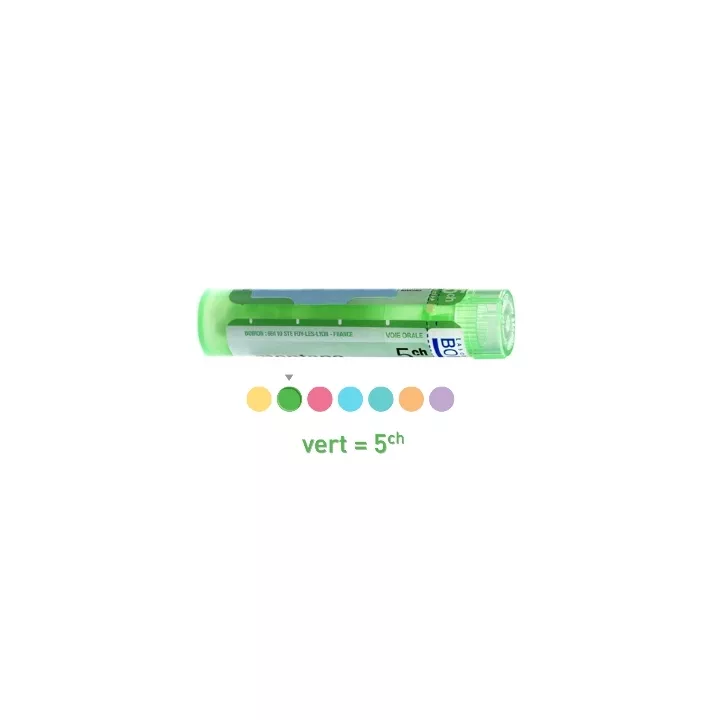
Paeonia officinalis granules or homeopathic doses from Boiron
Registered medication: EH00836
Source: Plant-based
Available in Korsakovian dilutions at 200K
Paeonia officinalis, better known as the common peony, is a medicinal plant belonging to the Ranunculaceae family. This homeopathic remedy is traditionally used for its effectiveness against a wide range of ailments, including intestinal disorders, muscle pain, and skin problems. Discover how this plant can improve your daily well-being.
Origin and Composition
The medicinal peony is derived from the peony, a plant that captivates not only with its beauty but also with its therapeutic properties. Its scientific name, Paeonia officinalis, reflects its frequent use in medicinal preparations. Rich in beneficial compounds, the roots of this plant are primarily used to prepare the extract used in homeopathy.
Relief from Intestinal and Anal Pain
One of the main benefits of Paeonia officinalis is its targeted action on the digestive system. It is effective in soothing acute intestinal pain as well as anal discomfort such as fissures or hemorrhoids. Its ability to reduce inflammation and promote natural healing makes it a preferred choice among homeopathic remedies.
Treatment of Muscular and Skin Disorders
This remedy is also recommended for people suffering from muscle pain, offering relief thanks to its anti-inflammatory properties. Users often find significant relief during painful episodes. Additionally, Paeonia officinalis is used to treat various skin issues, such as itching or dryness, particularly around the eyes.
Effects on Ulcers and Headaches
The benefits of this plant do not stop there. It is often used for patients struggling with ulcers, helping to reduce pain and speed up the healing process. Headaches and earaches are also common indications for the use of Paeonia officinalis, thanks to its soothing and anti-inflammatory effects.
Indications and Dosage
Homeopathic remedies can be used for a variety of symptoms, so it is not possible to specify the indications and dosage for a particular preparation.
A homeopathic physician selects the appropriate remedy, dilution, and dosage based on the patient’s health condition and characteristic symptoms.
Paeonia officinalis 9CH—Your Homeopathic Remedy for Proctology and Behavioral Disorders
Natural Relief from Intestinal and Anal Pain
The tube of Paeonia officinalis 9CH granules is a versatile homeopathic remedy used in proctology to relieve intestinal and anal pain, as well as certain behavioral disorders. Discover how this homeopathic remedy can improve your well-being by soothing hemorrhoids, reducing inflammation, and helping to manage mood swings.
Use in Proctology: Relief from Anal and Intestinal Pain
For Optimal Intestinal Comfort
Paeonia officinalis 9CH is a wise choice for treating hemorrhoids accompanied by pain and burning in the anal region. It is particularly effective at relieving intense pain that occurs during or after a bowel movement. In addition, this homeopathic remedy helps soothe acute or chronic inflammation of the anus or rectum.
To treat anal inflammation thoroughly and prevent recurrence, homeopathy—an alternative medicine—can be used to effectively manage the condition, especially if the patient receives treatment as soon as the first symptoms appear. The homeopathic treatment will be administered based on the type of anitis and the observed symptoms. However, a more thorough medical evaluation is necessary if the patient experiences no improvement after homeopathic treatment.
Symptoms of Anitis
Anitis generally manifests as a tingling sensation around the anus, followed by burning and itching. In some patients, anitis may cause serous or serosanguineous discharge if they have contracted a sexually transmitted disease such as gonorrhea.
In children, a bright red, well-defined, and painful perianal erythema is observed. Anitis can present as a fungal infection or eczema. Sometimes these symptoms are preceded by pharyngitis accompanied by a recent case of perioral impetigo.
Use in Behavioral Disorders: Managing Mood Swings
Restore Emotional Balance
Paeonia officinalis 9CH can also be used to treat behavioral disorders characterized by frequent mood swings or excessive nervousness. It offers a natural solution for restoring emotional balance.
Use in Dermatology: Treatment of Skin Ulcers
Promoting Optimal Skin Healing
In dermatology, Paeonia officinalis 9CH is recommended for the treatment of localized skin ulcers, such as those on the leg, breast, thumb, and back of the foot. It promotes optimal skin healing.
Why Choose Paeonia officinalis 9CH?
- Relief from Anal and Intestinal Pain: Paeonia officinalis 9CH is effective in relieving hemorrhoids and associated pain.
- Management of Behavioral Disorders: It can help stabilize mood swings and reduce nervousness.
- Treatment of Skin Ulcers: Promotes the healing of localized skin ulcers.
Usage Tips and Instructions
To reap its benefits, it is recommended to use Paeonia officinalis in a low dilution, typically 4 or 5 CH (Hahnemannian centesimal). Doses should be spread out throughout the day to maximize the treatment’s effectiveness and minimize the risk of adverse reactions.
Directions for Use and Dosage
Using Paeonia officinalis 9CH granules is simple. For adults and children over 6 years of age, let the granules dissolve under the tongue. For children under 6 years of age, dissolve the granules in a small amount of water.
The dosage should be adjusted according to the doctor’s prescription, as it varies depending on the condition being treated.
Dosage for Hemorrhoid Flare-Ups
To relieve acute hemorrhoid symptoms: Take 3 granules of Paeonia officinalis 5 CH, three times a day.
Treatment of Anal Fissures
For anal fissures accompanied by discharge: Apply an ointment containing Paeonia officinalis (4% of the mother tincture) to the affected area, morning and evening, to relieve discomfort and promote healing.
Pain During and After Bowel Movements
In cases of acute pain during and after bowel movements: Take 5 granules of Paeonia officinalis 5 CH, three times a day, until symptoms improve.
Inflammation of the Anus or Rectum
For inflammation, whether chronic or acute: Take 5 granules of Paeonia officinalis 5 CH three to four times a day for 10 days.
Other Dosages for Various Indications
- Behavioral Disorders. For symptoms such as mood swings and nervousness: Take 5 granules of Paeonia officinalis 15 to 30 CH, three times a day.
- Muscle Pain. For cramps and generalized muscle pain: Take 3 granules of Paeonia officinalis 5 CH, three times a day.
- Skin Ulcers. For ulcers on the breast, leg, or foot: Take 3 granules of Paeonia officinalis 5 CH, three times a day.
- Relief from Headaches, Earaches, Itching, and Dry Eyes. To treat these common symptoms: Take 3 granules of Paeonia officinalis 5 CH, three times a day.
Dosage of Homeopathic Remedies for Anitis
The prescribed homeopathic remedy will depend on the secondary symptoms.
If anal itching is accompanied by a burning sensation in the anus, take 5 granules of Hura brasiliensis 5 CH, 4 times a day.
It is recommended not to touch the homeopathic granules with your fingers.
Use a mint-free toothpaste (such as Homéodent Boiron, a toothpaste compatible with taking homeopathic granules).
Treatments and Conditions Associated with “Paeonia Officinalis”
Complementary Homeopathic Treatments. Remedies associated with Paeonia officinalis include:
- Aesculus Hippocastanum
- Aloe Socotrina
- Arnica montana
- Collinsonia canadensis
- Hamamelis virginiana
- Hura brasiliensis
- Nux Vomica
- Ratanhia
- Sulfur
These remedies can be used as complementary treatments, depending on specific symptoms and the advice of a healthcare professional.
Paeonia officinalis is frequently used for conditions such as:
- Anitis (inflammation of the anus)
- Hemorrhoids
Packaging and Quantity
Paeonia officinalis, commonly known as the peony, is a plant widely used in homeopathy to treat various painful conditions, particularly those affecting the skin and mucous membranes. Registered under number EH00836 and listed in the French and European Pharmacopoeias, this plant-based remedy is available in doses, tubes, and compounded preparations, including Korsakovian dilutions.
Origin and Properties
The peony is traditionally recognized for its anti-inflammatory and analgesic properties. In homeopathy, Paeonia officinalis is specifically used to relieve pain and inflammation, especially when localized in the anal and perianal regions, as well as to treat anal fissures, hemorrhoids, and certain skin conditions.
Available Formulations
Dosages and Tubes:
- Potencies: Available in 9 CH and 15 CH, suitable for intensive treatment of acute or chronic conditions.
- Tubes: The granules are available in dilutions ranging from 4 CH to 9 CH, allowing for use according to the homeopathic practitioner’s recommendations.
Compounded Preparations:
- Available in Hahnemannian dilutions starting at 2 CH.
- Available Korsakovian dilutions include 200K, 1,000K, and 10,000K, offering options for long-term personalized treatments or deep support for healing.
Therapeutic Applications
Paeonia Officinalis is often recommended for:
- Anal Fissures and Hemorrhoids: Relieves pain, discomfort, and inflammation associated with anal fissures and hemorrhoids, reducing irritation and promoting healing.
- Gastrointestinal Pain: Used for lower abdominal pain, particularly pain that radiates toward the rectum.
- Skin Conditions: Effective in treating eczema, skin ulcers, and other skin irritations, particularly those exacerbated by contact with water.
- Perineal Pain: Treats pain in the perineum, often described as a burning sensation, accompanied by a feeling of swelling and fullness.
Precautions for Use
Warning
Contains sucrose.
Administering Homeopathic Granules to Infants and Children
For granules or alcohol-based drops, dissolve them in 100 ml of water. Since the granules take a long time to dissolve, you should prepare the mixture in advance.
Homeopathy and Pregnancy
Homeopathic remedies have no chemical toxicity, no contraindications, no interactions with other medications, and no adverse effects related to the amount ingested. Pregnant women can use them without any known risk to themselves or their unborn child, but it is best to seek advice.
Frequency of Homeopathic Use
For acute conditions, it is recommended to take homeopathic remedies every hour until symptoms improve. Once symptoms improve, doses should be spaced out to 3 or 4 times a day, then gradually discontinued.
For chronic conditions, remedies in low dilutions (>9CH) are taken 1 to 2 times a day, while constitutional remedies are taken once a week or even once a month. This decision is up to the homeopath.
What to Do If There Is No Improvement Within 24 Hours
Certain conditions cannot be treated with homeopathy through self-medication alone. Their severity requires medical advice, which can be provided by a homeopathic physician. This physician will determine whether your condition can be treated with homeopathy alone or whether your treatment needs to be supplemented with allopathic medicine.