What are Urgo Stretch Bandages used for?
Urgo Stretch Antiseptic Bandages are designed to provide reliable and comfortable protection against minor everyday accidents. Thanks to their pad impregnated with an antiseptic agent, they help prevent infections and promote optimal healing in a healthy environment. Their non-adhesive gauze doesn’t stick to the wound, allowing for gentle removal without irritating the skin.
Soft and stretchy, these bandages move with the body, making them particularly suitable for mobile areas such as the knees, elbows, or fingers. They are also suitable for sensitive skin thanks to their hypoallergenic, micro-ventilated material , which allows the skin to breathe and reduces the risk of irritation. Each bandage is individually wrapped to ensure perfect hygiene, and the strong adhesive strip provides long-lasting hold throughout the day. Their pre-cut size makes them easy to use anytime, whether at home, on the go, or outdoors.
Urgo stretchable antiseptic bandages are a must-have in any first-aid kit. They effectively treat scrapes, cuts, and minor burns, and are suitable for the whole family, from children to adults. Practical and discreet, they slip easily into a bag or pocket so they’re always within reach. Urgo stretchable antiseptic bandages are high-quality solutions for protecting your wounds and supporting the healing process; the box allows for easy and secure transport in your bag or first-aid kit. The dressing is saturated with anantiseptic, which provides microbial protection for superficial wounds; furthermore, it does not stick to the wound, as it is lined with a non-adhesive gauze layer that protects it.
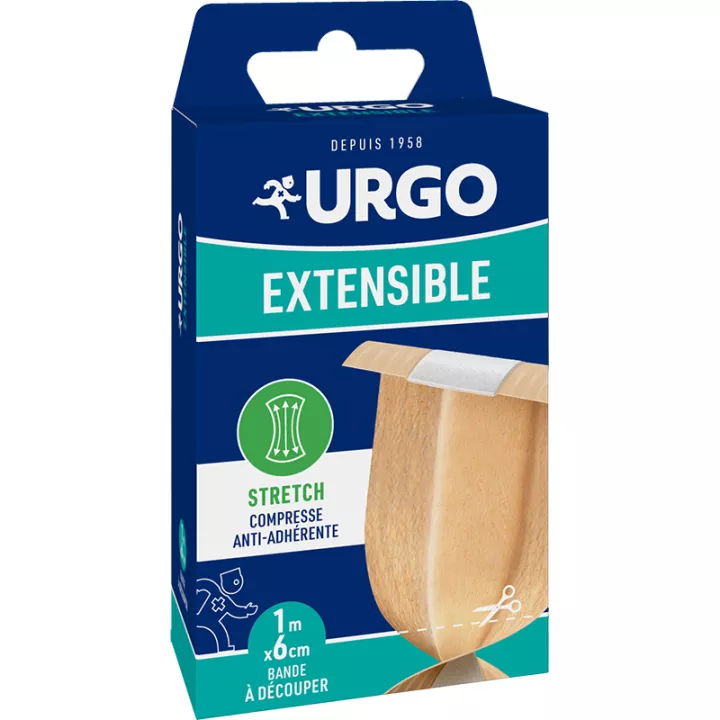
We also offer Urgo Bamboo Bandages (1 m x 6 cm ) at the best price in our online pharmacy—an eco-friendly and practical alternative to meet all your wound care needs.
How do you use these bandages?
Clean, disinfect, rinse, and thoroughly dry the wound and the surrounding area.
Apply the bandage, carefully smoothing the edges.
Replace at least twice a day.
Share your feedback on the usage instructions and dosage for URGO 48 Antiseptic Stretch Bandages with our partner Verified Reviews after your purchase.
Precautions for Use
- For external use only
- Keep out of reach of young children.
- Do not apply the bandage to deep or infected wounds.
- If you have any doubts about the severity of the injury, consult a healthcare professional.
- Also, make sure the skin around the wound is clean and dry before application to prevent the bandage from coming off.
- Not suitable for children under 1 year of age.
- If there are foreign objects in the wound, heavy bleeding, a bite, a sting, or a burn, or if you see no improvement in healing after 6 days, consult your pharmacist or doctor.
- Like any bandage, this product may cause skin reactions such as dermatitis, irritation, or pain upon removal.
- To minimize the risk of infection or skin reactions: Follow the instructions for use carefully.
- Do not reuse a used bandage.
- Do not use on wounds that are longer or wider than the dressing and may extend beyond its edges.
- Do not apply to the eyes, thin skin, or mucous membranes.
- Do not use after the expiration date. Do not use a damaged product.
- Any serious incident related to this product must be reported to URGO HEALTHCARE Laboratories and the French National Agency for Medicines and Health Products (ANSM).
What are the ingredients in these protective medical devices?
Ingredients
Viscose/polypropylene/polyethylene pad covered with a non-adhesive polyethylene film. Skin-colored backing.
Packaging
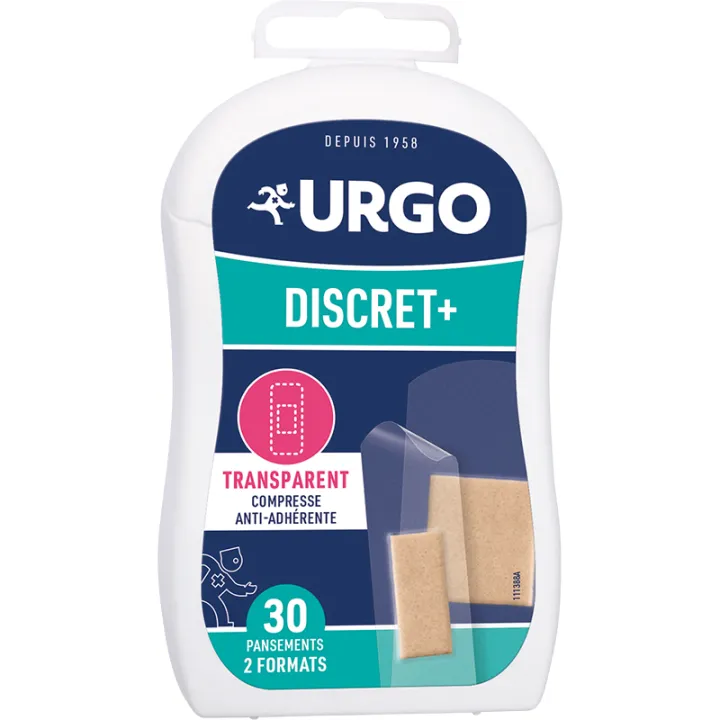
Box of 30 assorted bandages: 6 measuring 3.4 x 7.2 cm and 24 measuring 2 x 7.2 cm.
Box of 48 assorted dressings: 18 measuring 3.4 x 7.2 cm and 30 measuring 2 x 7.2 cm.
Box of 60 assorted bandages: 6 measuring 3.4 x 7.2 cm, 34 measuring 2 x 7.2 cm, and 20 measuring 2 x 4 cm
These products are available online at the best price.
Our tips and advice from pharmacy experts
When you cut yourself, the wound becomes a perfect entry point for germs. They find favorable conditions there to multiply, which can lead to an abscess (pain, localized redness, swelling, pus) or even an infection causing a fever.
Superficial wounds are simple, small wounds. Even if they seem minor, they should be treated to avoid complications—and, above all, infection. Learn the proper steps to take and find out when to seek advice from a healthcare professional.
- Step 1: Clean with an antiseptic
- Step 2: Protect with a protective bandage
- Step 3: Apply a wound-healing dressing