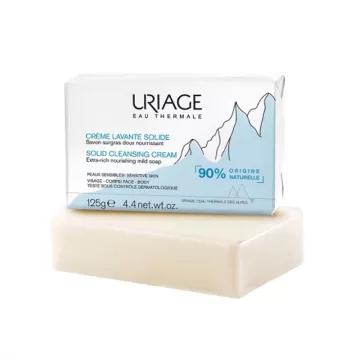
What is thermal water, and why is it beneficial?
Thermal water, which comes from deep within the earth, is mineral water that is naturally rich in trace elements and minerals.
Used in dermatology and cosmetics for its soothing and moisturizing properties and optimal skin tolerance, it has become an essential part of skincare routines.
Thanks to its specific mineral balance, it helps visibly support the skin barrier, soothe feelings of discomfort, and protect the skin from external aggressors.
Each thermal spring has a unique composition, giving it properties suited to different skin types, particularly sensitive, reactive, or redness-prone skin.
What are the benefits of thermal water for the skin?
Thermal water is known for several cosmetic benefits, particularly appreciated by those with sensitive, reactive, or uncomfortable skin:
- Soothes discomfort and redness: minerals and silicates calm reactive skin prone to visible redness (couperose, rosacea-prone skin).
- Hydrates and protects: it helps maintain hydration by forming a natural mineral-rich film on the skin’s surface.
- Supports skin comfort after irritation: useful after sun exposure, hair removal, or as part of post-procedure care prescribed by your dermatologist.
- Strengthens the skin barrier: provides trace minerals that support the skin’s natural defenses against pollution or wind.
- Supports the balance of the skin microbiome: certain thermal waters have a documented beneficial effect on the skin’s flora and the comfort of sensitized skin.
When used daily, thermal water improves perceived resilience and skin comfort while providing an immediate sensation of freshness.
Is thermal water suitable for sensitive and atopic skin?
Thermal water is particularly well-suited for sensitive, reactive skin, or skin prone to certain dermatological conditions, as a cosmetic supplement:
- Eczema and psoriasis: soothing properties that are beneficial when used alongside a prescribed medical treatment—never as a substitute; dermatological monitoring is essential for these conditions.
- Allergic or intolerant skin: a gentle mineral composition and a pH level that is generally well-tolerated, which helps minimize feelings of discomfort.
- After dermatological treatments (laser, chemical peels, post-surgery): use as prescribed or advised by a healthcare professional to promote comfort and alleviate sensations of heat.
Certain thermal waters (Avène, La Roche-Posay, Uriage) are used in conventional dermatological thermal treatments, within a supervised medical setting.
Is thermal water beneficial for the eye area?
Thermal water can be beneficial for tired, sensitive eyes or uncomfortable eyelids:
- Visibly soothes the eye area and provides an immediate decongesting effect.
- It soothes sensitive eyes in cases of eye strain or seasonal allergies (in addition to an appropriate treatment if necessary).
- It hydrates the eye area and reduces feelings of dryness.
Tip: Spray thermal water onto two cotton pads and apply them to your closed eyelids for a few minutes for an immediate soothing effect.
Is thermal water beneficial for the hair and scalp?
Thermal water can also be used on the hair and scalp:
- Soothes sensitive or irritated scalps.
- Reduces itching and improves comfort in cases of superficial, dry dandruff.
- Helps moisturize the hair strands against external aggressors (wind, sun, chlorine).
Spray directly onto the scalp after shampooing, or throughout the day to refresh and soothe temporary discomfort.
How can you incorporate thermal water into your beauty routine?
Thermal water is a versatile skincare product that easily fits into your daily routine:
- In the morning: Spray on your face after cleansing to prepare your skin for moisturizers.
- Throughout the day: Use as a refreshing mist to hydrate and provide a protective barrier against pollution.
- After shaving or hair removal: to soothe discomfort and calm temporary redness.
- Before applying makeup: to help makeup last longer and provide a natural setting effect.
- After sun exposure: to rehydrate the skin and soothe a burning sensation (in addition to a dedicated sunscreen ).
Which thermal water should you choose for optimal effectiveness?
Each thermal spring water has a unique composition, tailored to different skin needs:
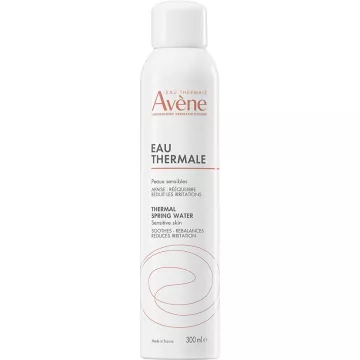
- Avène Thermal Spring Water: soothing and well-tolerated, highly recommended for sensitive and allergy-prone skin.
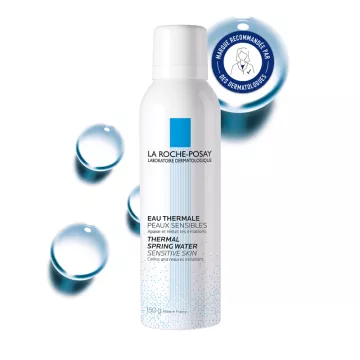
- La Roche-Posay Thermal Water: rich in selenium with recognized antioxidant properties.
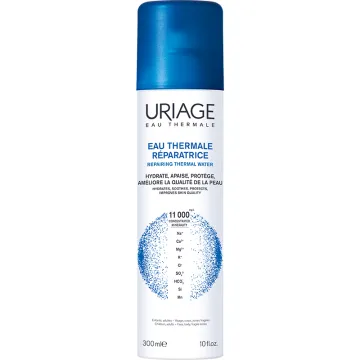
- Uriage Thermal Water: isotonic and rich in minerals, prized for hydrating and supporting the skin barrier.
- Vichy Thermal Water: rich in 15 essential minerals, valued for revitalizing the complexion and strengthening the skin.
Does thermal water have any side effects?
Thermal water is very well tolerated, even by the most sensitive skin types.
Following a few precautions will help you get the most out of it:
- Do not rub after spraying: let it dry naturally or gently pat it dry with a soft tissue.
- Store at room temperature or in the refrigerator to avoid temperature fluctuations that could alter the mineral properties.
- Follow the “use by” date indicated on the bottle after opening.
Is thermal water suitable for babies and pregnant women?
Thermal water is generally beneficial for these groups, with certain precautions:
- To soothe skin discomfort in babies (early-stage diaper rash, cradle cap, superficial redness): use as a supplement to the appropriate specific skincare product; for infants under 3 months of age and in cases of persistent rash, a pediatric consultation is recommended before use.
- To moisturize the skin of pregnant women prone to tightness or hormonal fluctuations.
- Relieving a sensation of heavy legs through its cooling effect; in case of persistent symptoms (daily heaviness, swelling), a medical consultation is recommended to rule out a circulatory disorder.
How should thermal water be stored?
To preserve the benefits of thermal water, follow a few simple rules:
- Store at room temperature or in the refrigerator for an extra refreshing effect.
- Use the bottle within one year of opening to maintain optimal effectiveness.
- Store away from direct light and heat to preserve the mineral properties.
- Follow the PAO (period after opening) indicated on the packaging.