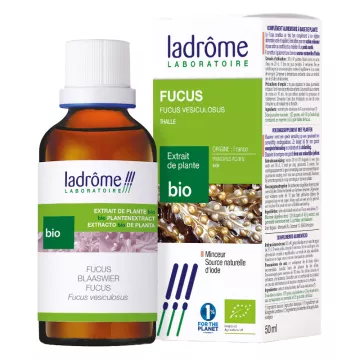


Fucus (Fucus vesiculosus) is a brown seaweed found along the Atlantic coast that has traditionally been used in herbal medicine for its high natural iodine content. This iodine content is the basis for its reputation as a weight-loss aid, since iodine is a trace element essential for the synthesis of thyroid hormones, which regulate the basal metabolic rate. Bladderwrack thus differs from other edible seaweeds, which are valued more for their high mineral and fiber content than for a targeted effect on metabolism.
Iodine is an essential component of thyroxine (T4) and triiodothyronine (T3), the thyroid hormones that regulate the rate of basal metabolism in the thyroid gland. In theory, iodine supplementation in a person with an iodine deficiency can support optimal thyroid function, but this supplementation only has a stimulating effect on metabolism if the person actually has an iodine deficiency, a situation that is rare in France, where the diet (iodized salt, seafood) generally meets these needs.
In a person with normal thyroid function, supplemental iodine from fucus does not accelerate metabolism beyond its usual physiological rate: the weight-loss effect often touted is therefore limited to cases of actual iodine deficiency, which are rarely diagnosed without prior laboratory testing. Fucus should not be considered a stand-alone solution, but at most as a supplement to a comprehensive weight management approach combining a balanced diet and physical activity.
The iodine content of fucus is notoriously variable from one batch to another depending on harvesting conditions, which poses a risk of iodine overdose that is difficult to anticipate. An excess of iodine can disrupt thyroid function in either direction: it can worsen preexisting hyperthyroidism, but it can also, paradoxically, inhibit hormone production and promote hypothyroidism through a negative feedback mechanism (the Wolff-Chaikoff effect), particularly with prolonged use at high doses.
Fucus is generally available in capsules or powder form, with iodine content varying by manufacturer; it is important to check the label carefully to avoid exceeding the recommended daily intake of iodine (150 micrograms per day for adults). A short course of treatment lasting a few weeks is generally preferred over continuous use, particularly during pregnancy, when any use should be limited to exceptional cases and taken under medical supervision.
Fucus is strongly discouraged in cases of known thyroid disorders (hyperthyroidism or hypothyroidism), whether treated or untreated, as well as during pregnancy and breastfeeding, since the fetal thyroid is particularly sensitive to excess maternal iodine. Prior medical consultation is essential if you are currently undergoing thyroid treatment or taking anticoagulant medication, as fucus may interact with both of these classes of drugs.