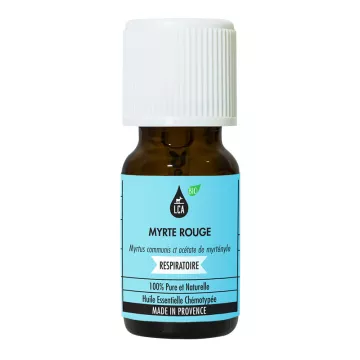
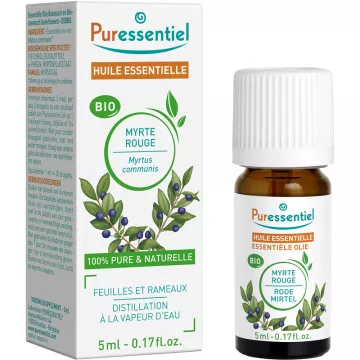
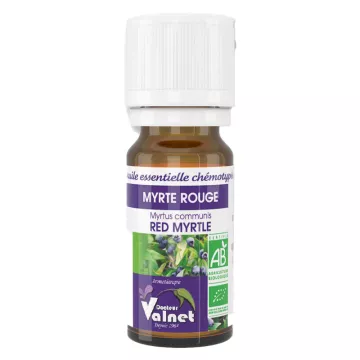
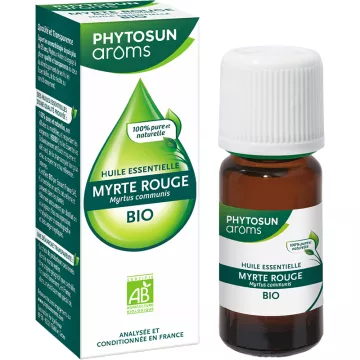
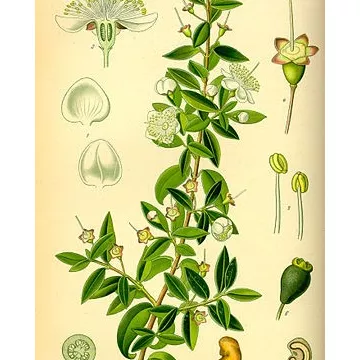
Red myrtle is a rare variety of myrtle native primarily to the Maghreb and the Mediterranean basin. Its essential oil, which is richer in ketones than that of green myrtle, gives it a more potent active profile for the respiratory tract and circulation. It is used in aromatherapy, herbal medicine, and cosmetics, but its ketone content requires strict precautions for use.
What is red myrtle?
Red myrtle (Myrtus communis, ketone chemotype) differs from green myrtle in that its biochemical composition is richer in ketones (myrtenone, verbenone). This difference explains its more pronounced effect on the respiratory system and microcirculation, as well as its potentially higher toxicity for certain populations.
What are the benefits of red myrtle?
Its uses are based on its active ingredients—ketones and flavonoids.
- Expectorant support for the respiratory tract in cases of cough or cold
- Stimulates microcirculation, traditionally associated with relief from heavy legs
- Purifying effect on oily, blemish-prone skin
- Soothing effect when diffused, promoting relaxation and emotional balance
- Traditional support for digestive comfort when brewed as a light herbal tea
In what forms can red myrtle be used?
In health food stores, red myrtle is available in targeted forms.
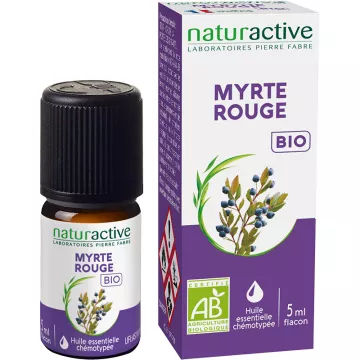
- Essential oil: used in a diffuser for respiratory comfort or diluted in a carrier oil for massage; never apply undiluted to the skin
- Hydrosol: for skin and respiratory use; better tolerated than the essential oil
- Dried leaf tea: for traditional digestive support, in low doses
- Cosmetic products: toners and skincare products for combination skin with excess sebum
Is red myrtle effective for the skin?
Thanks to its astringent and antioxidant properties, red myrtle is suitable for caring for oily skin.
- Regulates excess sebum and tightens pores
- Soothes redness and mild irritation
- Brightens and enhances the complexion’s radiance thanks to its antioxidants
Red myrtle or green myrtle: what are the differences?
These two varieties belong to the same species but differ in their biochemical composition.
- Red myrtle: richer in ketones, with a more pronounced expectorant effect on the bronchi and circulation; requires greater caution when using
- Green myrtle: rich in myrtényl acetate, milder profile, versatile, better tolerated; recommended for everyday use
Does red myrtle have any contraindications?
Its high ketone content means it should be used with caution.
- Contraindicated for pregnant and breastfeeding women (risk of neurotoxicity and miscarriage)
- Contraindicated for children under 6 years of age; use with caution for children up to 12 years of age
- Contraindicated for people with epilepsy
- Use with caution in cases of severe asthma or a history of allergies
- Always dilute in a vegetable oil before applying to the skin
- Avoid prolonged diffusion in an enclosed space
Content reviewed by Arnaud, Ph.D. in Pharmacy.