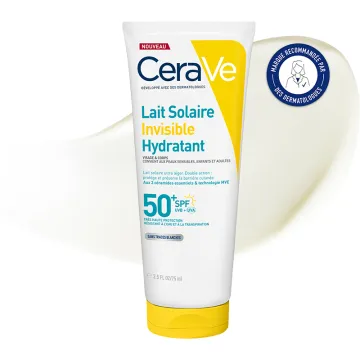
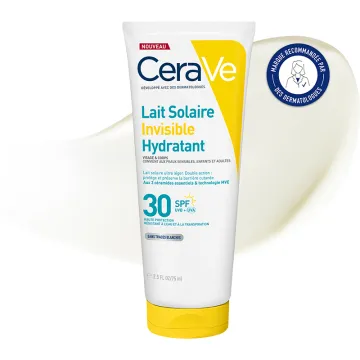
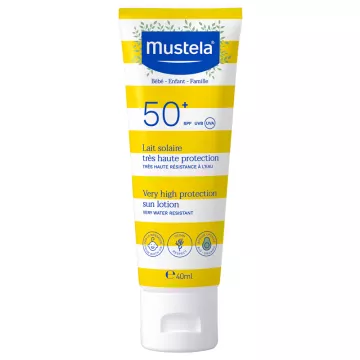
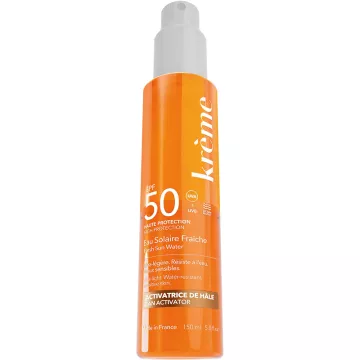
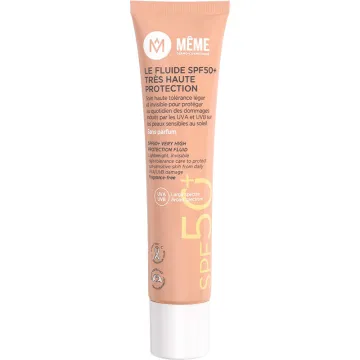
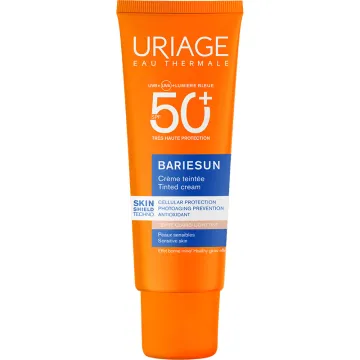
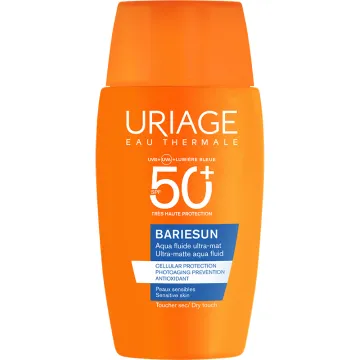
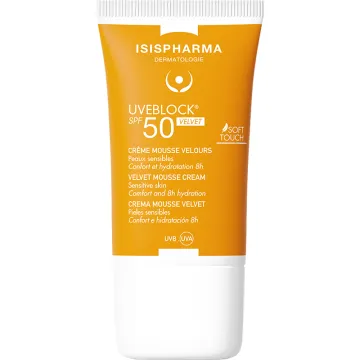
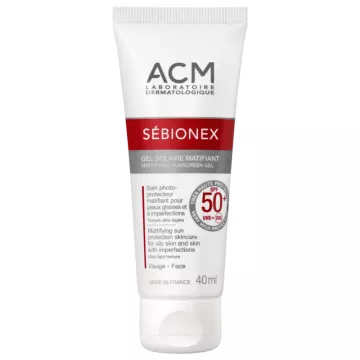
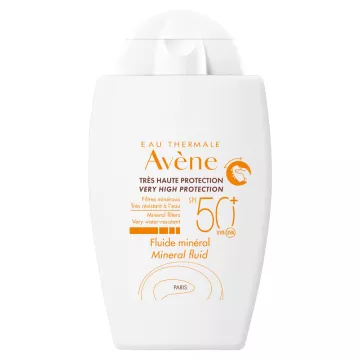
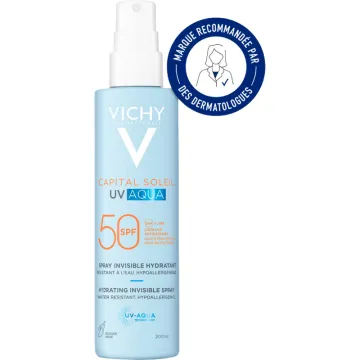
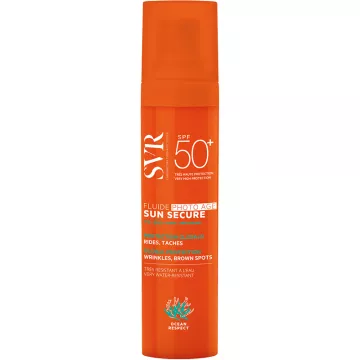
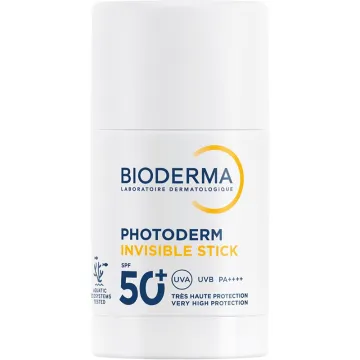
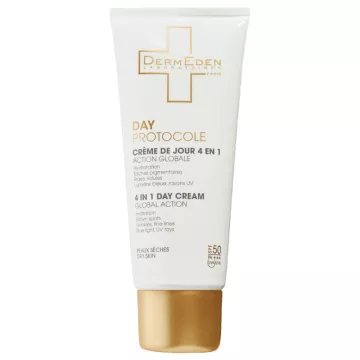
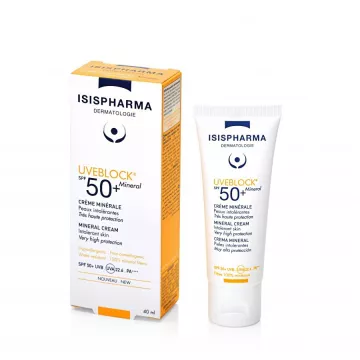
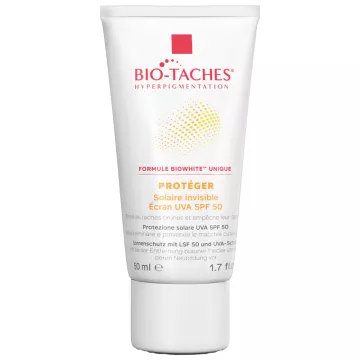
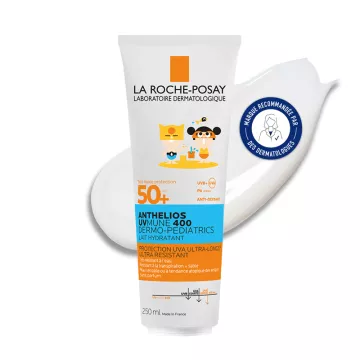
Sun Protection Factor 50, often abbreviated as SPF 50, measures a sunscreen’s ability to protect the skin from ultraviolet rays.
A cream with SPF 50 blocks about 98% of UVB rays, compared to 97% for SPF 30: the percentage difference may seem small, but it corresponds to a significant relative reduction in the amount of UVB rays reaching the skin.
This enhanced protection significantly reduces the risk of sunburn and, in the long term, the risk of skin cancer (WHO and INCa consensus).
For a complete selection, explore our SPF 50 high-protection section.
An SPF 50 is essential in several situations involving high sun exposure risk.
It is particularly recommended for fair skin (phototypes I and II), children, people with a personal or family history of skin cancer, and those undergoing photosensitizing treatment.
It offers enhanced protection that’s ideal for prolonged outdoor exposure—whether in the mountains, at the beach, on snow (where the sun’s rays reflect strongly), or in the tropics.
Discover our full range of sunscreen products from all the brands recommended by pharmacies.
To get the full benefit of SPF 50 sunscreen, apply it generously and evenly to all exposed areas.
Recommended amount: about one teaspoon for the face and neck, and the equivalent of a shot glass (30 ml) for an adult’s body.
Apply the product 30 minutes before sun exposure to allow the filters to set properly and form an effective protective barrier.
Reapply every two hours, immediately after swimming, heavy sweating, or towel-drying.
Daily use of an SPF 50 product provides cumulative long-term benefits for skin health.
It helps prevent premature skin aging, the appearance of dark spots, and loss of skin elasticity.
It keeps skin visibly healthier, firmer, and more radiant over the years, especially on the most exposed areas such as the face, neck, and backs of the hands.
This habit is essential for people living in areas with high sun exposure, working outdoors, or regularly engaging in outdoor activities.
Applying an SPF 50 product to the face is not only possible but strongly recommended by dermatologists.
Opt for formulas specifically developed for the face, which are generally non-comedogenic so as not to clog pores.
These products are designed to respect the delicate nature of facial skin and provide maximum UV protection without a greasy feel or unsightly white residue.
Some formulas also include moisturizing, anti-aging, or mattifying ingredients to seamlessly integrate into your daily routine.
SPF 50 is suitable for most skin types and is a highly versatile option.
For very fair skin, a personal or family history of skin cancer, or extreme exposure (high mountains, tropics), reapply more frequently and combine with other forms of protection.
For sensitive or reactive skin, also browse our sensitive skin care section and opt for mineral filters.
People with a history of skin cancer should undergo regular dermatological follow-up and adjust their sun protection in consultation with their doctor.
SPF 50 primarily measures protection against UVB rays, which cause sunburn.
For complete protection, look for the term “broad spectrum” or the UVA logo inside a circle on the packaging.
Since 2006, European regulations (Recommendation 2006/647/EC) have required a UVA/SPF ratio of at least 1/3 for a product to be labeled “sunscreen”: Most SPF 50 products sold in France therefore provide effective protection against both types of UV rays.
UVA rays, which penetrate deep into the dermis, are primarily responsible for skin aging and cumulative damage that is invisible in the short term.
An SPF 50 product offers substantial protection, but that doesn’t mean you can stay in the sun indefinitely.
The safe duration of exposure depends on your skin type, the daily UV index, altitude, and how much sunscreen you actually apply (which is often insufficient).
Always seek shade during peak hours, generally between noon and 4 p.m. in mainland France (varies by latitude and season).
To soothe and repair your skin after sun exposure, be sure to check out our selection of after-sun care products with moisturizing and soothing properties.
Combining an SPF 50 sunscreen with other forms of protection is highly recommended for optimal protection.
UV-protective clothing (T-shirts designed to block UV rays) provides a stable, continuous physical barrier, which is especially useful for children and during prolonged sun exposure.
Wide-brimmed hats, compliant sunglasses (minimum CE Category 3 standard), and seekingshade are the perfect complement to sunscreen.
For younger children, browse our dedicated selection of children’s sunscreen, formulated for their more delicate skin.
Choosing the right SPF 50 product depends on three main factors: skin type, expected intensity of sun exposure, and the activity you’ll be doing.
For water activities, intense sports, or situations involving heavy sweating, be sure to choose a water-resistant formula.
For daily use in the French climate, opt for lighter, moisturizing formulas with a dry or mattifying finish for optimal comfort.
Always check for the “broad-spectrum” label and the UVA logo to ensure complete protection against UVA and UVB rays.