What is an organic body wash, and how can you really tell if it’s organic?
A certified organic shower gel isn’t just a shower gel with plant-based ingredients—it’s a product whose formula has been audited and certified by an independent organization. Without certification, the term “organic” on a bottle has no legal standing in the cosmetics industry.
- Cosmos Organic (Ecocert, BDIH, Cosmebio, etc.): the leading European standard—requires a minimum percentage of organic ingredients (95% of ingredients must be of natural origin, with at least 20% of the total being organic) and prohibits numerous synthetic ingredients
- Nature et Progrès: a stricter French standard—bans GMOs and nano-ingredients and mandates ethical production criteria
- USDA Organic: U.S. certification—less common on European shower gels
- On the INCI list: organic ingredients are marked with an asterisk (*)—check that the main active ingredients (not just water) are certified
- Be wary of claims such as “natural,” “green,” or “eco” without a certification logo—these are unverified claims (potential greenwashing)
What ingredients determine the quality of an organic shower gel?
Certification guarantees the absence of the worst ingredients—but the quality of the beneficial active ingredients is what really makes the difference.
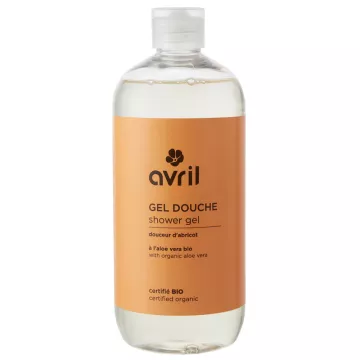
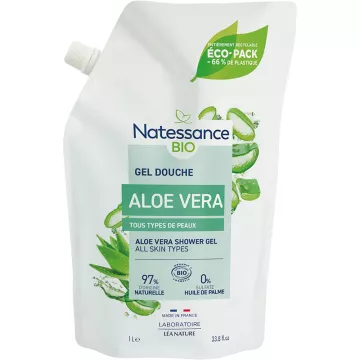
- Certified organic aloe vera: soothing, moisturizing, and balancing—a key active ingredient in the best organic shower gels for sensitive skin
- Mild, naturally derived surfactants: coco-glucoside, lauryl glucoside, disodium coco-glucoside citrate—effectively cleanse without disrupting the skin’s microbiome
- Organic plant oils (jojoba, sweet almond, shea): help restore the skin’s lipid barrier after cleansing—crucial for dry skin
- Plant extracts (calendula, chamomile, lavender): soothing and antioxidant active ingredients—their quality is ensured by their organic certification and effective concentration
- Certified essential oils: fragrant and therapeutic active ingredients—prefer chemotyped essential oils for precise and traceable action
Is organic shower gel suitable for children and babies?
Organic certification is a good starting point—but it isn’t enough on its own for pediatric products.
- Babies (0–3 years): specifically choose “baby line” or “infant” products—free of essential oils (even organic ones), fragrance-free, and alcohol-free
- Children 3–12 years: mild organic shower gel without essential oils or with very mild essential oils (lavender, Roman chamomile in low concentrations)—check the INCI list
- For children with atopic skin: specific eczema/atopic dermatitis lines—certified allergen-free—consultation with a pediatrician or dermatologist recommended
- Always perform a patch test on the forearm before first use—even with a certified organic product
Organic shower gel vs. conventional shower gel: what are we really avoiding?
Organic certification excludes a number of controversial ingredients found in conventional cosmetics.
- Sulfates (SLS/SLES): irritating foaming agents — absent from organic shower gels — replaced by milder plant-based glucosides
- Parabens: preservatives that are potential endocrine disruptors—banned by COSMOS and NP
- Phenoxyethanol: a controversial preservative—not allowed under the strictest certifications (NP) but still tolerated in certain Cosmos standards
- Silicones: non-biodegradable, give an artificial feel — not found in certified organic gels
- Synthetic dyes and synthetic fragrances: replaced by natural dyes and essential oils
- See our personal care line