What is epistaxis, and what are its different types?
Epistaxis is the medical term for any bleeding originating from the nasal cavities, the nasal septum, or the nasopharynx. Its management depends primarily on its location—anterior or posterior—which determines the severity and the treatment. It occurs in 60% of people at least once in their lifetime but requires medical intervention in only 6% of cases. Specialized medical care is essential for severe cases. Nasal care products are available in the store’s ear, nose, and throat (ENT) section.
- Anterior epistaxis: 90% of cases—originating at the Kiesselbach plexus (a cluster of blood vessels in the anteroinferior part of the nasal septum, visible upon examination)—benign, controllable by simple compression—causes: dry air, trauma, nose-picking, rhinitis, allergies
- Posterior epistaxis: 10% of cases — originates in the branches of the sphenopalatine artery or the ethmoidal arteries — profuse, difficult to control by simple compression — more common in the elderly and in patients with hypertension — requires posterior packing or cauterization under ENT supervision
- Main causes: dry mucosa (dry air from heating, air conditioning, winter) — nasal trauma (blow to the nose, contact sports) — nasopharyngitis or rhinitis (inflammation that weakens the capillaries) — high blood pressure (exacerbates the severity but does not directly cause epistaxis) — medications (aspirin, NSAIDs, oral anticoagulants — prolong bleeding time) — inherited (hemophilia, von Willebrand disease) or acquired (thrombocytopenia) coagulation disorders
- Populations at higher risk: children (superficial, hypervascularized Kiesselbach’s plexus—nose-picking, frequent nasopharyngitis) — older adults (atrophied mucosa, hypertension, frequent use of anticoagulants) — contact sport athletes (repeated nasal trauma)
How should epistaxis be managed, and when is medical intervention necessary?
Nasal compression is the first-line treatment for any anterior epistaxis. It is effective in over 90% of mild episodes if performed correctly: while seated, leaning slightly forward (never with the head tilted back), firmly pinch the soft part of the nose (both nostrils, not the bones) for 10 to 15 minutes without letting go, and breathe through the mouth. A cold compress on the bridge of the nose (reflex vasoconstriction) enhances the effect.
- Medical treatments if compression fails: chemical cauterization (silver nitrate—coagulation of the vessel visible during rhinoscopy) or electrical cauterization (under local anesthesia)—anterior packing (resorbable or inflatable packing—maintained for 24 to 48 hours)—posterior packing (posterior packing with a balloon for posterior epistaxis—hospitalization required)
- Advanced treatments for severe cases: surgical ligation of the responsible arteries (sphenopalatine artery, ethmoidal arteries) — endovascular embolization (arterial catheterization with injection of a vessel-blocking agent — 90% effective, reserved for cases where packing has failed) — endoscopic sinus surgery if a visible vascular lesion is present
- Epistaxis while on anticoagulants: compression often takes longer (20 to 30 minutes) — if ineffective, medical consultation is required to assess the level of anticoagulation (INR if on VKA) and consider a temporary adjustment — never stop an anticoagulant without medical advice
- Severe epistaxis—signs requiring urgent management: uncontrolled bleeding after 20 minutes of proper compression—bleeding following craniofacial trauma—signs of acute anemia (pallor, tachycardia, fainting) — profuse bilateral bleeding in a patient with hypertension — a patient on anticoagulants with prolonged bleeding
Preventing epistaxis and protecting the nasal mucosa
Prevention of epistaxis relies on maintaining the nasal mucosa—keeping it hydrated and intact is the best protection against bleeding. A healthy mucosa is supple, well-vascularized, and resistant to microtrauma. Daily nasal irrigation with saline solution removes crusts, the main cause of bleeding due to the tearing of newly formed repair vessels.
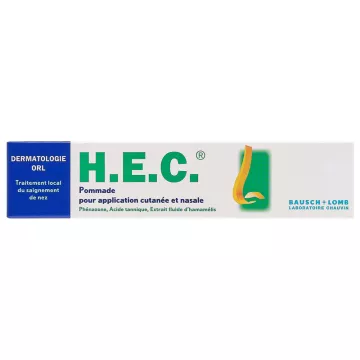
- Local preventive care: moisturizing nasal ointments (petroleum jelly, calendula, shea butter—apply every evening during the winter to the anterior mucosa)—aloe vera gel (moisturizing and healing—gently apply to the septum) — isotonic nasal spray morning and evening — humidifier in the bedroom (40–60%—dry air from heating is the most common trigger)
- Diet and coagulation: vitamin C (strengthens capillary walls by stimulating collagen production) — vitamin K (green vegetables — a cofactor in coagulation — be aware of interactions with VKAs) — rutin (flavonoid—strengthens capillary walls—buckwheat, citrus fruits)—avoid excessive aspirin and NSAIDs if epistaxis is recurrent
- Sports and nosebleeds: nasal protection (helmet with visor, nose guard) for contact sports (rugby, boxing, combat sports) — moisturize the nasal mucosa before exercise (saline spray) — if a nosebleed occurs during exercise, leave the field and apply pressure — intense exercise increases blood pressure and can trigger a posterior nosebleed in predisposed individuals
- Climate and nosebleeds: winter (central heating — indoor humidity < 30% — cracked mucous membranes) — summer/dry climate (mucosal dehydration due to heat) — altitude (dry, thin air — reduced atmospheric pressure promoting bleeding) — adapt by using a humidifier and applying local moisturizers in these situations