


Neurasthenia (a term coined by George Beard in 1869) originally referred to a state of nervous system exhaustion. Although this diagnosis has now been replaced by other conditions (anxiety disorder, chronic fatigue syndrome, burnout), the term is still used in homeopathy and herbal medicine to describe a characteristic clinical picture:
This syndrome particularly affects people subjected to prolonged mental overload or repeated emotional shocks.
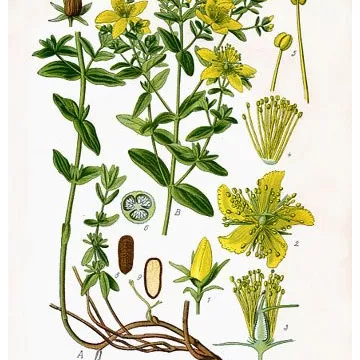
St. John’s wort (Hypericum perforatum, hypericin + hyperforin + flavonoids) is the most extensively studied herb for mild to moderate depression and nervous exhaustion—it is classified as a herbal medicine by the EMA. Its mechanism of action involves the inhibition of serotonin, dopamine, and norepinephrine reuptake (an SSRI-like mechanism). Herbal tea (2 g per 150 ml of boiling water, steeped for 10 minutes, 3 cups per day) is the most economical form. Important warning: St. John’s wort is a potent inducer of CYP3A4—it reduces the effectiveness of oral contraceptives, anticoagulants (warfarin), and immunosuppressants. It must never be combined with conventional antidepressants (risk of serotonin syndrome). Medical advice is essential before use while on any medication.
Griffonia (Griffonia simplicifolia, seeds rich in 5-HTP—a direct precursor of serotonin) is helpful for neurasthenia with depressive symptoms and sleep disorders—5-HTP crosses the blood-brain barrier and increases the synthesis of serotonin and melatonin. Usual dosage: 100–300 mg of 5-HTP per day, taken between meals. Rhodiola (rosavins + salidroside) is the gold-standard adaptogen for neurasthenia caused by overwork—it improves resistance to stressors, reduces mental fatigue, and enhances cognitive performance. Several randomized controlled trials show a significant reduction in symptoms of fatigue and exhaustion after 4 to 8 weeks of supplementation.
Several homeopathic remedies are prescribed based on the symptomatic profile. Picricum acidum (9CH) is indicated for severe mental exhaustion (mental overload, inability to read or think) accompanied by physical prostration. Lecithinum (4CH) is prescribed for nervous fatigue accompanied by memory and concentration problems. Natrum carbonicum (5CH) is suitable for people exhausted by mental exertion who are sensitive to heat, sunlight, and thunderstorms. Xanthoxylum fraxineum is indicated for nervous asthenia with associated neuralgic pain. These remedies are taken as 5 granules 2 to 3 times a day, as a 3-week course of treatment. Associated sleep disturbances (difficulty falling asleep, waking up during the night) can be treated additionally with Coffea or Nux vomica, depending on the nighttime symptoms.
Magnesium deficiency is one of the most common micronutritional causes of nervous irritability and sensory hypersensitivity—symptoms that overlap exactly with the clinical picture of neurasthenia.Magnesium absorption is enhanced by vitamin B6 (pyridoxal phosphate, a cofactor for magnesium uptake into cells)—magnesium + B6 formulations are the most effective for states of nervous tension. The B vitamins (B1 [thiamine], B5 [pantothenic acid], and B12 [methylcobalamin]) are essential cofactors in neuronal energy metabolism—a deficiency of these vitamins, which is common in cases of overwork, directly contributes to nervous exhaustion.