Why is it important to take care of your listening skills and your hearing?
Listening —whether sensory (hearing) or attentive (mindfulness)—is a skill that needs to be nurtured and maintained. Daily exposure to noise, chronic stress, and certain nutritional deficiencies can gradually impair hearing quality and the ability to relax. Discover our ear care products and our serenity and well-being formulas to care for your senses every day.
- Hearing and Noise Exposure: The hair cells in the cochlea (inner ear) are permanently destroyed by prolonged exposure to sounds exceeding 85 dB—such as from headphones, concerts, or noisy work environments—and noise-induced hearing loss is irreversible and cumulative throughout one’s lifetime
- Tinnitus: Persistent ringing or buzzing in the ears—often linked to excessive noise exposure, chronic stress, or certain nutrient deficiencies (magnesium, zinc)—affects sleep quality and concentration—see our tinnitus page
- Ear Care: Earwax is naturally protective and self-cleaning—however, an excess can block the ear canal and reduce hearing—ear-cleaning kits, isotonic sprays, and ceruminolytic solutions are available in our ear care line
- Self-awareness and mental well-being: In a broader sense, knowing how to “listento yourself” means being attentive to your body’s signals of fatigue, stress, and tension— meditation and mindfulness practices cultivate this inner awareness
- The link between stress and sound perception: Chronic stress amplifies sensitivity to noise and exacerbates the perception of tinnitus—an overactive nervous system processes sounds as threats → hyperacusis (hypersensitivity to sound) and noise-related anxiety
Nutrition and Micronutrients to Support Hearing
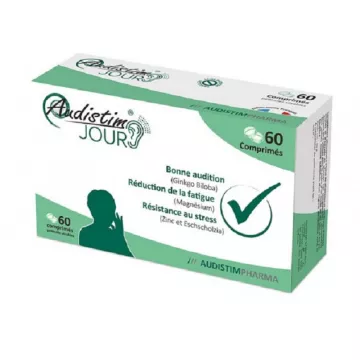
- Magnesium: protects the hair cells of the cochlea from damage caused by noise trauma—studies show that magnesium supplementation before intense noise exposure reduces the risk of temporary hearing loss—also essential for reducing stress and nervous tension, which worsen tinnitus
- Zinc: a key trace element for the auditory system — zinc deficiency has been linked to worsening tinnitus in several studies — plays an antioxidant role in protecting auditory neurons — recommended intake: 10–15 mg/day
- Antioxidants: Oxidative stress is one of the main mechanisms leading to the destruction of hair cells — vitamins C and E, selenium, and coenzyme Q10 protect the inner ear against free radicals associated with noise and aging
- Omega-3 and cochlear circulation: Good blood circulation in the cochlea is essential for hearing health—omega-3s improve blood flow and perfusion of the cochlear capillaries—some epidemiological studies link high consumption of fatty fish to a lower risk of age-related hearing loss
- Ginkgo biloba: the most extensively studied plant for cerebral and cochlear circulation — improves blood flow in the microcirculation of the inner ear — used as an adjunct treatment for tinnitus and vertigo of vascular origin
Active self-awareness, relaxation, and well-being
- Meditation and mindfulness: Regular meditation practice develops the ability to listen to oneself—reduces hyperreactivity to noise—improves tolerance to tinnitus by desensitizing the emotional response—10–20 minutes a day is sufficient to have a measurable effect on stress
- Sleep and auditory recovery: the auditory system regenerates during deep sleep —quality sleep reduces the perception of nighttime tinnitus—discover our relaxation and sleep formulas in our relaxation and sleep line
- Stress Management for Hearing: Relaxation techniques (cardiac coherence, abdominal breathing, sophrology) reduce cortisol, which exacerbates sensitivity to noise — discover our soothing formulas in our Stress and Behavior line
- Preventive hearing protection: earplugs designed for concerts and noisy activities — protection is mandatory in work environments where noise levels reach 85 dB or higher — filtering models that reduce volume without distorting sounds — also suitable for use during sports in noisy environments
- Consult a professional: any sudden hearing loss is a medical emergency (see an ENT specialist within 48 hours)—recently developed tinnitus should be evaluated through an audiometric assessment—self-medication is no substitute for specialized care for established hearing conditions