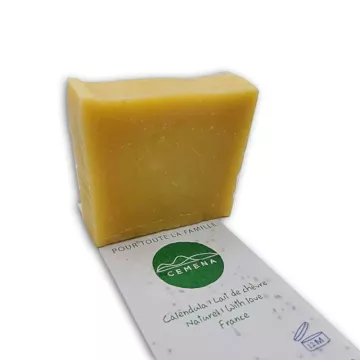
What makes goat's milk effective in soap?
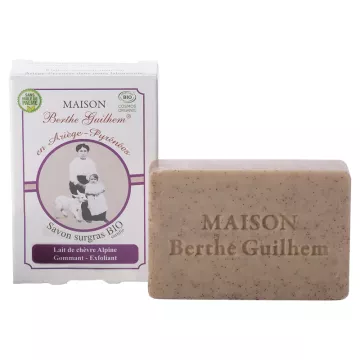
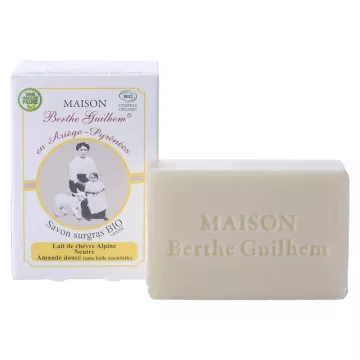
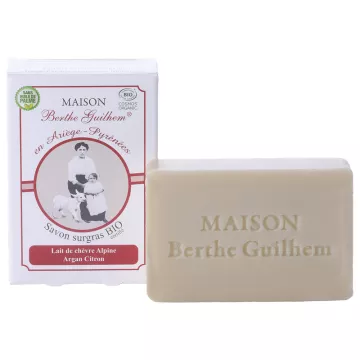
Goat milk soap incorporates fresh or freeze-dried goat milk into the formulation before saponification. Goat milk isn’t just a marketing gimmick—it provides real active ingredients that are partially retained in the finished soap, even after saponification.
- Lactic acid (a natural AHA): present in goat’s milk—a gentle exfoliant that supports epidermal cell renewal—less harsh than concentrated synthetic AHAs, but effective even at low doses
- Milk proteins: remain partially active in the soap—support the skin’s surface hydration and contribute to the creamy texture of the lather
- Fatty acids (caprylic, capric): naturally present in goat’s milk—their lipid profile is similar to that of human skin fatty acids, which explains the high skin tolerance of this type of soap
- pH naturally close to the skin’s pH: goat’s milk (pH 6.4–6.8) helps slightly moderate the alkalinity of the final soap—without bringing it down to pH 5.5 (which requires a syndet), but resulting in a formula that is less harsh than a plant-based soap without milk
For which skin types is goat’s milk soap particularly suitable?
Its active ingredient profile places it between classic superfatted soap and mild syndet—versatile and well-tolerated.
- Dry and devitalized skin: the fatty acids in goat’s milk and moisturizing proteins compensate for the loss of lipids during cleansing—resulting in a creamy lather and rinsing without tightness
- Sensitive and reactive skin: the lipid profile, similar to that of the skin’s own fatty acids, minimizes adverse reactions—well-tolerated on skin that “doesn’t like” conventional soaps
- Mild atopic skin: lactic acid exfoliates gently, while proteins soothe—better tolerated than standard plant-based soaps—severe cases should stick to dermo-cleansing creams
- Adult face: suitable for daily cleansing if skin is normal to dry—less recommended for oily skin, which will benefit more from a clay-based soap
- Children: Acceptable for children over 3 years old when using unscented body soap—a skin patch test is recommended if there is a known allergy to milk proteins
Goat’s milk soap vs. ultra-moisturizing plant-based soap: which one should you choose?
Both are suitable for dry and sensitive skin—but with complementary modes of action.
- Superfatted vegetable soap: pure lipid action—restores the hydrolipidic film during cleansing—no active acids—ideal for very dry skin without any specific texture issues
- Goat’s milk soap: lipid action + gentle exfoliation with lactic acid + proteins—smoother, more radiant skin with regular use—suitable for dry skin that also needs cell renewal
- Ideal combination: alternate between the two depending on the season (ultra-moisturizing soap alone in winter for very dry skin, goat’s milk soap in between seasons)
How to use goat milk soap correctly?
- Lather in your hands with lukewarm water, then apply the foam—do not rub the bar directly on sensitive areas or the face
- Leave on for 30 seconds if you want a gentle exfoliating effect from the lactic acid—otherwise, rinsing immediately is sufficient for hydration
- Rinse with lukewarm water, pat dry, and apply a moisturizer if your skin is dry
- Allergy to cow’s milk proteins: cross-reactivity is possible with goat’s milk—perform a skin test before extended use—both milks contain similar caseins
- Storage: same guidelines as for any artisanal soap—use a draining soap dish and keep it out of the shower between uses
- See our personal care line