Understanding the hair growth cycle is key to optimizing eyelash care. The anagen phase (active growth, 30 to 45 days) is the only window of opportunity for active serums to work—only growing follicles respond to stimulation. The catagen phase (transition, 2–3 weeks) corresponds to the cessation of growth. The telogen phase (rest, 100 days on average) precedes natural shedding and the start of a new cycle. In practice, only 40 to 50% of eyelashes are simultaneously in the anagen phase—which explains the 6- to 12-week delay observed with all active serums before visible results appear.
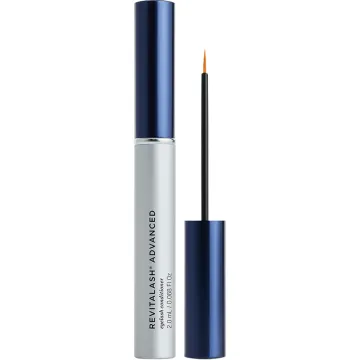
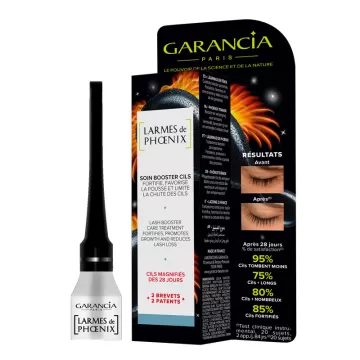
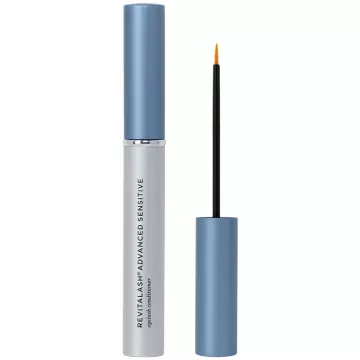
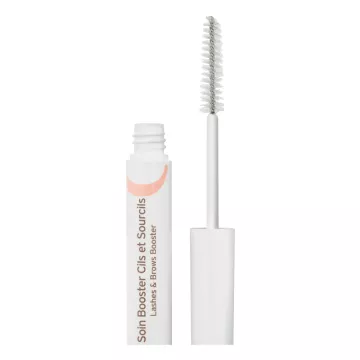
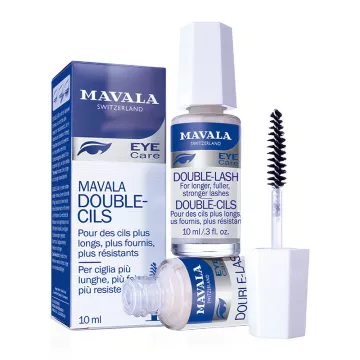
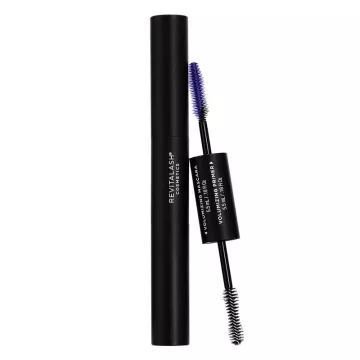
Serums containing prostaglandin analogs (isopropyl cloprostenate—such as Revitalash Advanced) extend the anagen phase by 3 to 6 weeks, increasing eyelash density and length—a clinical efficacy documented in several randomized studies. Their limitation: the effect is reversible upon discontinuation (eyelashes return to their original length within 2 to 3 cycles), and iris pigmentation is possible in case of contact with the mucous membrane. Peptide serums (Myristoyl Pentapeptide-17—Embryolisse Booster, Garancia Larmes de Phoenix) stimulate the synthesis of matrix keratin without altering the growth cycle—a more modest but cumulative effect with no documented side effects.
Vitamin C acts as a cofactor for prolyl and lysyl hydroxylase—enzymes that stabilize the collagen triple helix within the eyelash follicle sheath. A deficiency weakens the peri-follicular connective tissue structure and accelerates the miniaturization of the eyelash bulbs. Vitamin B12 protects the peri-follicular nerve fibers that regulate the duration of the anagen phase—deficiencies (common among vegans) have been linked to diffuse alopecia, including eyelashes, in several clinical case studies.
Hydrolyzed marine collagen (peptides < 3 kDa, 2.5 to 10 g/day) provides glycine, proline, and hydroxyproline for collagen synthesis in the eyelash follicular sheath. A clinical study (Proksch et al., 2014) confirms an improvement in the density of keratoid structures after 8 weeks. Silica (30–50 mg/day) stimulates keratin synthesis in follicular keratinocytes—a deficiency in silica weakens keratoid structures. The combination of marine collagen and silica taken orally is the most well-documented “inside-out” approach for eyelash thickening.
Two mechanical factors contribute to eyelash loss. Forced removal of waterproof mascara is the leading cause of eyelash breakage—using a two-phase makeup remover held on the lashes for 20 seconds before sliding it downward reduces breakage by 60 to 70% compared to horizontal rubbing. Extensions using cyanoacrylate adhesive can lead to irreversible traction alopecia of the eyelashes after 6 to 8 consecutive weeks—a 4- to 6-week break between each application is recommended. For eye contour care, specialized products round out the eyelash care routine.
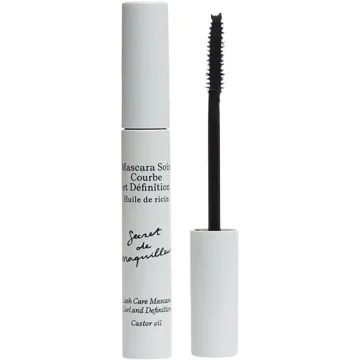
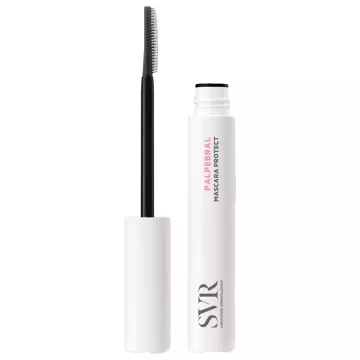
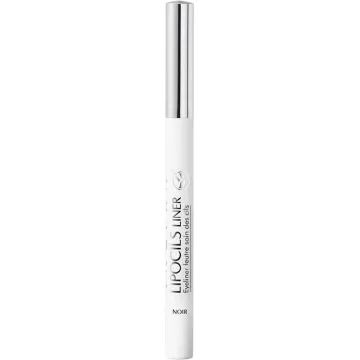
Accessories and primers enhance the results of serum and mascara. The mechanical eyelash curler (Vitry Recharge) creates a curl that depends on the anagen phase—it’s more effective on healthy, well-hydrated lashes. Mascara primer (such as Revitalash Duo) plumps lashes with lightweight waxes before applying colored mascara, increasing apparent volume by 30 to 50%. The clear setting mascara (Talika Lipocils Liner) maintains the curl, nourishes the lash fibers with each application, and can be worn on its own without colored mascara. These three products mechanically reduce the need to apply multiple layers of mascara—a direct cause of weakened and broken lashes.