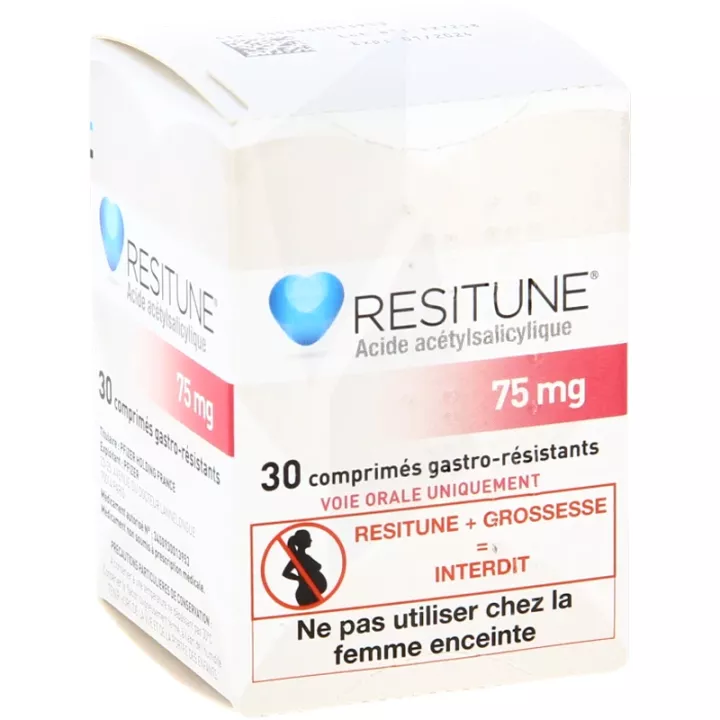
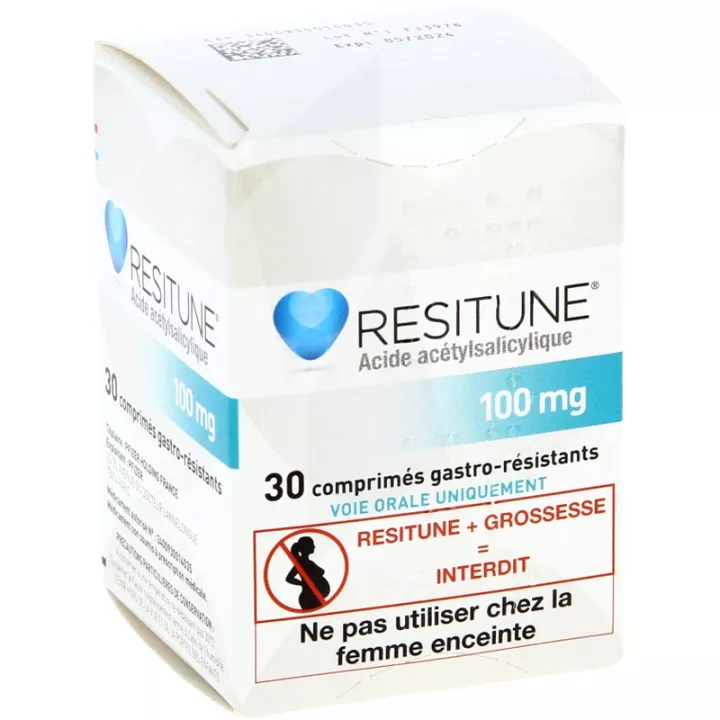
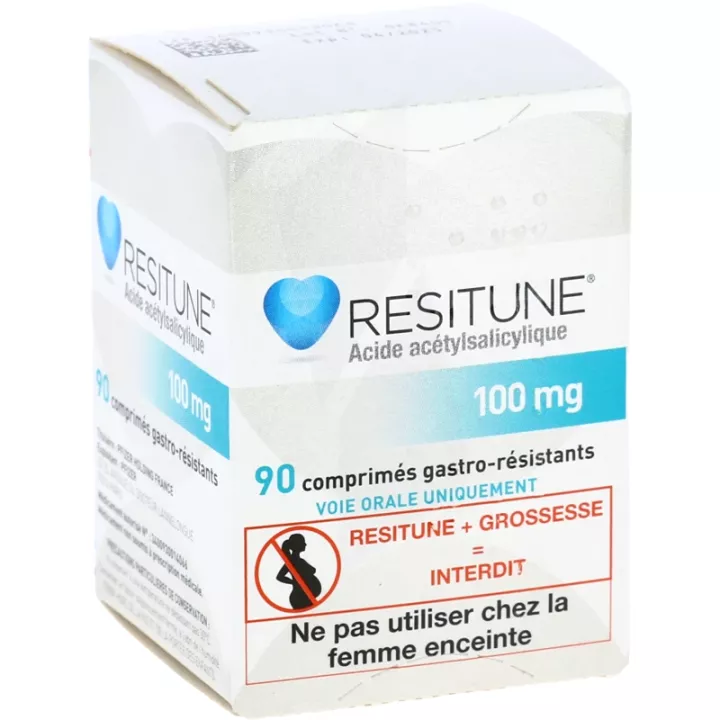
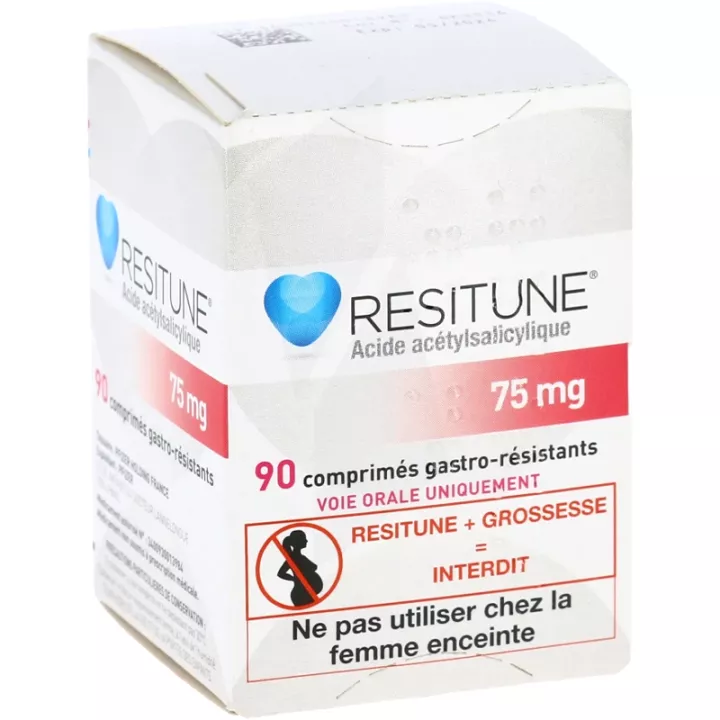

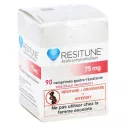
Resitune, enteric-coated aspirin tablets, helps prevent heart attacks and strokes. Suitable for people at risk.

Resitune, classified as an antithrombotic agent and more specifically as an antiplatelet agent, is a medication whose active ingredient isacetylsalicylic acid, commonly known asaspirin. This medication primarily works to prevent blood clots by inhibiting the aggregation of platelets, the cells involved in blood clotting. Resitune’s mechanism of action is designed to prevent thrombosis, which can block arteries and lead to serious cardiovascular complications such as heart attacks and strokes.
The low-dose aspirin contained in Resitune is particularly effective in patients with a history of heart attacks orstrokes. In these cases, this medication helps reduce the risk of recurrence by preventing the formation of new clots. In other words, it promotes better blood circulation and optimal oxygen delivery to vital organs, which is essential for maintaining good cardiovascular health.
In addition, Resitune is used in patients withstable orunstable angina, forms of chest pain often associated with reduced blood flow to the heart. By acting on coagulation mechanisms, it helps reduce the risk of cardiovascular complications associated with these conditions, such as heart attacks.
The benefits of Resitune don’t stop there. This product is also recommended to prevent blood clots after certain cardiac procedures, such asangioplasty, a procedure designed to widen or unblock arteries. By ensuring proper blood flow, Resitune minimizes postoperative risks, promoting optimal recovery.
Resitune is an essential product for effectively preventing serious cardiovascular problems such as heart attacks, strokes, and complications related to angina. Its preventive effects make it a valuable ally for at-risk patients, allowing them to live with greater peace of mind while reducing the risk of recurrence. Choose Resitune for better prevention of cardiovascular complications and to protect your heart long-term.
We also offer Acetylsalicylic Acid 100 mg Mylan (30 tablets) at the best price in our online pharmacy.
It is essential to always follow your doctor’s or pharmacist’s recommendations when taking Resitune. This medication should be taken orally with a sufficient amount of liquid (half a glass of water). The enteric-coated tablets must be swallowed whole, without chewing or crushing them, to preserve the coating that protects the stomach from irritation.
In older adults, acetylsalicylic acid should be used with caution due to increased sensitivity to side effects. Treatment should be regularly reevaluated by a healthcare professional. It is strictly prohibited to administer this medication to children under 16 years of age, unless specifically prescribed by a doctor.
Share your feedback on the usage guidelines and dosage of Resitune with our partner Verified Reviews after your purchase.
Precautions
Never take Resitune if you are allergic to acetylsalicylic acid or any other ingredient in this medication. Additionally, this medication is contraindicated in patients with a history of gastriculcers, intestinal bleeding, or bleeding disorders. People with severe kidney or liver disease, as well as women in their third trimester of pregnancy, should also avoid this medication.
Be especially cautious if you haveasthma, gout, or high blood pressure. Acetylsalicylic acid may worsen some of these conditions. Additionally, due to its effects on blood clotting, it is essential to inform your doctor if you are scheduled to undergo any surgical procedure, even a minor one such as a tooth extraction.
Finally, it is not recommended to consume alcohol while taking Resitune, as this could increase the risk of gastrointestinal bleeding.
Active ingredient: Acetylsalicylic acid.
Inactive ingredients: Microcrystalline cellulose, cornstarch, anhydrous colloidal silica, talc, gelatin, heavy magnesium oxide, Type A methacrylic acid and ethyl acrylate copolymer, Polysorbate 80, titanium dioxide, red iron oxide, black iron oxide, sodium lauryl sulfate, sodium bicarbonate, triethyl citrate, talc.
Presentation
Resitune is available as enteric-coated tablets in 75 mg or 100 mg strengths, packaged in boxes of 30 or 90 tablets.
Pharmacovigilance Report an adverse drug reaction(s)
ANSM - Updated on : 20/11/2023
RESITUNE 75 mg, gastro-resistant tablet
Acetylsalicylic acid
Please read this leaflet carefully before taking this medicine, as it contains important information for you.
Always take this medicine exactly as it is prescribed by your doctor, pharmacist or nurse.
- Keep this leaflet. You may need to read it again.
- Ask your pharmacist for advice and information.
- If you experience any side effects, talk to your doctor, pharmacist or nurse. This also applies to any side effects not mentioned in this leaflet. See section 4.
- You should contact your doctor if you do not feel any improvement or if you feel less well.
What does this leaflet contain?
1. What is RESITUNE 75 mg, gastro-resistant tablet and what is it used for?
2. What do I need to know before taking RESITUNE 75 mg, gastro-resistant tablet?
3. How do I take RESITUNE 75 mg gastro-resistant tablet?
4. What are the possible side effects?
5. How should RESITUNE 75 mg gastro-resistant tablet be stored?
6. Package contents and otherinformation.
1. WHAT IS RESITUNE 75 mg, gastro-resistant tablet AND WHAT IS IT USED FOR?
Pharmacotherapeutic class: antithrombotics: platelet antiaggregants excluding heparin - ATC code: B01AC06
RESITUNE contains acetylsalicylic acid, which at low doses belongs to the group of drugs known as antiplatelet agents. Platelets are small blood cells that cause blood clotting and are involved in thrombosis. When a blood clot forms in an artery, it blocks blood flow and oxygen supply. In the heart, this can lead to a heart attack or angina pectoris; in the brain, it can cause a stroke.
RESITUNE is used to reduce the risk of blood clots and thus prevent the occurrence of :
- heart attacks (in patients who have had a heart attack in the past),
- strokes (in patients who have had a stroke in the past),
- cardiovascular problems in patients with stable angina (a type of chest pain),
- cardiovascular problems in patients with a history of unstable angina (a type of chest pain), other than in a recent acute phase.
RESITUNE is also used to prevent the formation of blood clots in patients who have undergone certain types of heart surgery designed to widen or unblock blood vessels.
2. WHAT DO I HAVE TO KNOW BEFORE TAKING RESITUNE 75 mg, gastro-resistant tablet?
Never take RESITUNE 75 mg, gastro-resistant tablet:
- if you are allergic to acetylsalicylic acid or to any of the other components of this medicine listed in section 6,
- if you are allergic to other salicylates or non-steroidal anti-inflammatory drugs (NSAIDs). NSAIDs are often used to treat arthritis, rheumatism and pain,
- if you have had an asthma attack or swelling of the face, lips, throat or tongue (angioedema) after taking salicylates or NSAIDs,
- if you have or have had a stomach or duodenal ulcer, or any other type of bleeding such as a stroke,
- if you suffer from blood clotting problems,
- if you have severe liver or kidney disease,
- if you are currently in the third trimester of pregnancy, you should not use doses higher than 100 mg/day (see "Pregnancy, breast-feeding and fertility"),
- if you are taking a drug called methotrexate (e.g. for cancer or rheumatoid arthritis) at doses higher than 15 mg/week.
Warnings and precautions
Talk to your doctor, pharmacist or nurse before taking RESITUNE :
- if you have kidney, liver or heart problems,
- if you have or have had stomach or intestinal problems,
- if you have high blood pressure,
- if you suffer from asthma, hay fever, nasal polyps or other chronic respiratory diseases; acetylsalicylic acid can provoke an asthma attack,
- if you suffer or have suffered from gout,
- if you have heavy periods.
You should seek medical advice immediately if your symptoms worsen or if you experience any serious or unexpected side effects, such as unusual bleeding, severe skin reactions or any other signs of severe allergy (see "Possible side effects").
Inform your doctor if you plan to undergo an operation (even a minor one, such as a tooth extraction) as acetylsalicylic acid is a blood thinner, there may be an increased risk of bleeding.
You must take care not to become dehydrated (you may feel thirsty, have a dry mouth), as the use of acetylsalicylic acid can lead to deterioration in kidney function.
This drug cannot be used as an analgesic or antipyretic.
If any of these situations apply to you, or if you're not sure, talk to your doctor or pharmacist.
Children and adolescents
Acetylsalicylic acid may cause Reye's syndrome when administered to children. Reye's syndrome is a very rare, life-threatening disease affecting the brain and liver. For this reason, RESITUNE should not be given to children under 16 years of age, except on the advice of a doctor.
Other medicinal products and RESITUNE 75 mg, gastro-resistant tablet
Tell your doctor or pharmacist if you are taking, have recently taken or may take any other medicines.
The effect of treatment may be influenced if acetylsalicylic acid is taken at the same time as other medicines used to :
- thin the blood/ prevent clots (such as warfarin, heparin, clopidogrel),
- prevent organ rejection after transplantation (e.g. ciclosporin, tacrolimus),
- treat arterial hypertension (such as diuretics and ACE inhibitors),
- regulate heartbeat (such as digoxin),
- treat manic-depressive illnesses (such as lithium),
- treat pain and inflammation (such as NSAIDs like ibuprofen, or steroids),
- treat gout (such as probenecid),
- treat epilepsy (such as valproate, phenytoin),
- to treat cancer or rheumatoid arthritis (such as methotrexate),
- treat diabetes (such as glibenclamide),
- treat depression (selective serotonin reuptake inhibitors (SSRIs) such as sertraline or paroxetine),
- or drugs used as hormone replacement therapy when the adrenal glands or pituitary gland have been destroyed, or to treat inflammation including rheumatic diseases or inflammation of the intestine (such as corticosteroids),
- to treat changes in blood lipid levels (nicotinic acid),
RESITUNE 75 mg, gastro-resistant tablet with alcohol
Alcohol consumption may increase the risk of gastrointestinal bleeding and prolong bleeding time.
Pregnancy, breast-feeding and fertility
Pregnant women should not take acetylsalicylic acid during pregnancy unless advised to do so by their doctor.
You should not take RESITUNE during the last 3 months of your pregnancy, unless your doctor advises otherwise. The daily dose should not exceed 100 mg(see "Never take RESITUNE"). Taking usual or higher doses of this medicine in late pregnancy can cause serious complications for both mother and baby.
Women who are breast-feeding should not take acetylsalicylic acid unless advised to do so by their doctor.
Driving and using machines
RESITUNE may cause dizziness. You should not drive or operate machinery until you know whether this drug affects your ability to do so.
RESITUNE 75 mg, gastro-resistant tablet contains sodium
This medicine contains less than 1 mmol (23 mg) of sodium per tablet, i.e. it is essentially "sodium-free".
3. HOW DO I TAKE RESITUNE 75 mg gastro-resistant tablet?
Always take this medicine exactly as instructed in this leaflet, or as directed by your doctor or pharmacist. Check with your doctor or pharmacist if in doubt.
Dosage
Adults
- Prevention of heart attacks:
The recommended dose is 75 mg to 150 mg once a day.
- Stroke prevention:
The recommended dose is 75 mg to 300 mg once a day.
- Prevention of cardiovascular problems in patients with stable or unstable coronary artery disease (a type of chest pain):
The recommended dose is 75 mg to 150 mg once daily.
- Prevention of blood clots after certain types of heart surgery:
The recommended dose is 75 mg to 150 mg once a day.
Elderly
As for adults. In general, acetylsalicylic acid should be used with caution in the elderly, who are more sensitive to adverse effects. Treatment should be reviewed regularly.
Use in children and adolescents
Acetylsalicylic acid should not be administered to children and adolescents under 16 years of age, unless prescribed by a physician (see "Children and adolescents").
Method of administration
Oral administration.
Tablets should be swallowed whole with sufficient liquid (1/2 glass of water). The tablets have a gastro-resistant coating which protects the stomach from irritation; they must not be crushed, broken or chewed. Do not take the tablets with antacids (drugs used to relieve heartburn or indigestion), as they destroy the gastro-resistant coating of the tablets and may cause stomach irritation.
As the gastro-resistant coating slows absorption, RESITUNE is not recommended for patients with acute myocardial infarction (treatment of heart attack). However, if necessary, tablets may be crushed or chewed to accelerate absorption of acetylsalicylic acid.
If you have taken more RESITUNE 75 mg gastro-resistant tablet than you should have
Consult your doctor or pharmacist immediately.
If you have accidentally taken too many tablets, contact your doctor immediately or go to the nearest emergency department. Show any remaining tablets or the empty box to your doctor.
Symptoms of overdose may include ringing in the ears, hearing problems, headache, dizziness, confusion, nausea, vomiting and abdominal pain. Severe overdose may cause rapid breathing (hyperventilation), fever, excessive sweating, restlessness, convulsions, hallucinations, hypoglycemia, coma and shock.
If you forget to take RESITUNE 75 mg, gastro-resistant tablet
If you miss a dose, wait until your next dose is due, then continue as usual.
Do not take a double dose to make up for the one you missed.
If you stop taking RESITUNE 75 mg, gastro-resistant tablet
If you stop taking RESITUNE, contact your doctor or pharmacist.
If you have any further questions about the use of this medicine, please ask your doctor or pharmacist.
4. WHAT ARE THE POSSIBLE SIDE EFFECTS?
If you notice any of the following serious side effects, stop taking RESITUNE and contact a doctor immediately:
- sudden wheezing, swelling of the lips, face or body, rash, fainting, difficulty swallowing or shock (severe allergic reaction or hypersensitivity reaction). (May affect up to 1 in 1,000 people),
- redness, blistering or peeling of the skin, which may be associated with high fever and joint pain. This can lead to erythema multiforme, Stevens-Johnson syndrome or Lyell syndrome (affecting up to 1 in 1,000 people),
- unusual bleeding into your brain (intracranial haemorrhage) which can cause disorders such as severe headaches accompanied by drowsiness, confusion, loss of consciousness. (May affect up to 1 in 1,000 people),
- a syndrome usually manifested by fever, rash, facial swelling and/or enlarged lymph nodes (drug hypersensitivity syndrome with eosinophilia and systemic symptoms (DRESS syndrome)). (Frequency cannot be estimated on the basis of available data),
- unusual bleeding: blood found in sputum, vomit, urine and stools (black stools). (Frequency cannot be estimated on the basis of available data).
Other adverse reactions
Common adverse reactions (affecting up to 1 in 10 people):
- indigestion,
- increased tendency to bleed.
Uncommon side effects (may affect up to 1 in 100 people):
- urticaria,
- nasal irritation,
- difficulty breathing.
Rare adverse reactions (which may affect up to 1 in 1,000 people):
- severe bleeding from the stomach or intestines, change in blood cell count,
- nausea and vomiting,
- cramps in the lower respiratory tract, asthma attack,
- inflammation of blood vessels,
- bruising with purple patches (skin bleeding),
- abnormal, heavy or prolonged menstrual bleeding.
Undesirable effects of undetermined frequency (frequency cannot be estimated on the basis of available data):
- ringing in the ears (tinnitus) or impaired hearing,
- headaches,
- dizziness (lightheadedness),
- stomach or small intestine ulcers and perforation,
- prolonged bleeding time,
- kidney disease,
- liver disease,
- high blood uric acid levels.
Reporting side effects
If you experience any side effects, please tell your doctor, pharmacist or nurse. This also applies to any side effects not mentioned in this leaflet. You can also report adverse reactions directly via the national reporting system: Agence nationale de sécurité du médicament et des produits de santé (ANSM) and the network of Centres Régionaux de Pharmacovigilance - Website: https://signalement.social-sante.gouv.fr/
By reporting adverse reactions, you are helping to provide more information on drug safety.
5. HOW TO CONSERVE RESITUNE 75 mg, gastro-resistant tablet?
Keep out of sight and reach of children.
Blisters: Store in original, moisture-resistant packaging.
Bottle: Store tightly closed, protected from moisture.
Store at temperatures not exceeding 30°C.
Do not use this medicine after the expiration date indicated onthe box or bottle/blister after EXP. The expiration date refers to the last day of that month.
Do not dispose of any medicine down the drain or in the household waste. Ask your pharmacist to identify any medicines you no longer use. These measures will help protect the environment.
6. CONTENTS AND OTHER INFORMATION
What RESITUNE 75 mg gastro-resistant tablet contains
- The active substance is :
Acetylsalicylic acid........................................................................................................... 75 mg
For one gastro-resistant tablet.
- The other components are :
Microcrystalline cellulose, corn starch, colloidal anhydrous silica, talc, gelatin, heavy magnesium oxide (tablet core) ; copolymer of methacrylic acid and ethyl dacrylate type A, polysorbate 80, titanium dioxide, red iron oxide (E172), black iron oxide (E172), sodium lauryl sulfate, anhydrous colloidal silica, sodium bicarbonate, triethyl citrate, talc (tablet coating).
What RESITUNE 75 mg gastro-resistant tablet is and what it contains
This medicine comes as pink, heart-shaped, biconvex, unmarked tablets in blister packs of 28 or 50 gastro-resistant tablets, or in bottles of 30, 50, 60, 90 or 100 gastro-resistant tablets.
Each bottle contains a desiccant silica gel which must be kept in the bottle to help protect your tablets. The silica gel desiccant is contained in a separate sachet or cartridge and must not be swallowed.
Not all presentations may be marketed.
Marketing authorization holder
23-25, AVENUE DU DOCTEUR LANNELONGUE
75014 PARIS
Marketing authorization holder
PFIZER
23-25, AVENUE DU DOCTEUR LANNELONGUE
75014 PARIS
LOCALITA MARINO DEL TRONTO
63100 ASCOLI PICENO
ITALY
Product names in member states of the European Economic Area
This medicine is authorized in the member states of the European Economic Area under the following names: In accordance with current regulations.
[To be completed subsequently by the holder].
The last date on which this leaflet was revised was :
[To becompletedlater by the holder]
< {MM/YYYY}>< {month/YYYY}.>
Detailed information on this drug is available on the ANSM (France) website.
Ce médicament contient de l'aspirine, qui possède, entre autres propriétés, celle de fluidifier le sang. Cet effet persiste 4 à 8 jours après l'arrêt du traitement. L'enrobage du comprimé permet de libérer la substance active dans l'intestin plutôt que dans l'estomac et de prévenir ainsi l'effet irritant de l'aspirine sur la muqueuse de l'estomac.
Les prix mentionnés ne tiennent pas compte des « honoraires de dispensation » du pharmacien.
| p cp | p cp | |
| Acide acétylsalicylique (aspirine) | 75 mg | 100 mg |
L'aspirine n'est pas un médicament anodin. Seul votre médecin peut décider si la prise prolongée de ce médicament est justifiée par votre état de santé. Signalez à votre médecin tout signe de saignements inhabituels (bleus...).
Des précautions sont nécessaires en cas d'antécédent d'ulcère de l'estomac ou du duodénum, même ancien, d'asthme, de goutte, d'insuffisance rénale ou hépatique modérée et chez la femme qui porte un stérilet.
L'aspirine peut augmenter la durée ou l'abondance des saignements pendant les règles.
Évitez de prendre ce médicament pendant la semaine qui précède une extraction dentaire ou une opération : augmentation du risque d'hémorragie.
Ce médicament peut interagir avec d'autres médicaments, notamment :
les anticoagulants et les antiagrégants plaquettaires (PLAVIX...) : augmentation du risque hémorragique ;les médicaments contenant du probénécide ou du méthotrexate.Informez par ailleurs votre médecin ou votre pharmacien si vous prenez un corticoïde, un diurétique, un antihypertenseur ou un médicament contenant de la digoxine, du lithium, du valproate ou du métamizole.
Des effets néfastes pour la mère et l'enfant à naître ont été mis en évidence lorsque l'aspirine (à une dose supérieures à 100 mg par jour), comme les autres AINS, est utilisée au cours des 4 derniers mois de la grossesse ; le risque existe même avec une seule prise et même si la grossesse est à terme.
En conséquence, en dehors de certaines situations médicales très particulières nécessitant une faible dose d'aspirine (moins de 100 mg par jour), l'aspirine ne peut être utilisée que de façon ponctuelle pendant les 5 premiers mois, et son usage est contre-indiqué à partir du 6e mois.
Ce médicament passe dans le lait maternel. L'allaitement est déconseillé pendant le traitement.
Les comprimés doivent être avalés entiers, avec un demi-verre d'eau.
En raison de l'enrobage gastrorésistant, les comprimés ne doivent pas être écrasés, cassés ou mâchés.
Ce médicament ne doit pas être pris avec un antiacide car ce dernier entraîne une augmentation du pH de l'estomac qui peut dégrader l'enrobage du comprimé.
L'emploi régulier de ce médicament ne contre-indique pas la prise ponctuelle d'aspirine plus fortement dosée, lors d'un mal de tête ou d'une fièvre par exemple.
Hématome, saignement de nez ou des gencives, hémorragie urinaire ou génitale, purpura. Plus rarement, hémorragie du tube digestif (vomissements sanglants, selles noires, ou plus souvent pertes de sang imperceptibles, responsables de l'apparition progressive d'une anémie), hémorragie intracrânienne.
Gastrite, nausées, vomissements, diarrhées, ulcère de l'estomac ou du duodénum.
Réaction cutanée potentiellement grave, réaction allergique (urticaire, asthme, bronchospasme, œdème de Quincke, voire choc), augmentation des transaminases, insuffisance rénale.
Anomalie de la numération formule sanguine, diminution de l'élimination de l'acide urique pouvant entraîner une crise de goutte chez des patients prédisposés.
Lésion du cerveau due à une hémorragie ou à l'obstruction brutale d'une artère. En fonction de l'importance de la lésion, les conséquences sont plus ou moins graves : malaise passager, paralysie, coma.
Abréviation : AVC.
Consultez l'article : Accident vasculaire cérébral (AVC)
Déchet du métabolisme, normalement éliminé par les reins. Son accumulation peut provoquer une crise de goutte. L'acide urique peut également former des calculs dans les voies urinaires.
Abréviation d'anti-inflammatoire non stéroïdien. Famille de médicaments anti-inflammatoires qui ne sont pas dérivés de la cortisone (stéroïdes), et dont le plus connu est l'aspirine.
Consultez l'article : Anti-inflammatoires non stéroïdiens (AINS)
Réaction cutanée (démangeaisons, boutons, gonflement) ou malaise général apparaissant après un contact avec une substance particulière, l'utilisation d'un médicament ou l'ingestion d'un aliment. Les principales formes d'allergie sont l'eczéma, l'urticaire, l'asthme, l'œdème de Quincke et le choc allergique (choc anaphylactique). L'allergie alimentaire peut également se traduire par des troubles digestifs.
Baisse du taux d'hémoglobine dans le sang, qui se traduit le plus souvent par une baisse du nombre des globules rouges. Le fer est indispensable à la synthèse de l'hémoglobine. Une carence en fer lors d'une grossesse, d'un régime végétarien, d'hémorragies abondantes ou répétées (règles) est une cause fréquente d'anémie. D'autres causes, plus rares, sont liées à des carences en vitamines du groupe B.
Douleur oppressante due à une obstruction partielle des artères coronaires qui irriguent le muscle cardiaque. Elle peut se manifester dans la poitrine, les bras ou la mâchoire.
Synonyme : angine de poitrine.
Affection guérie ou toujours en évolution. L'antécédent peut être personnel ou familial. Les antécédents constituent l'histoire de la santé d'une personne.
Médicament qui neutralise l'acidité des sécrétions gastriques ou qui bloque les glandes responsables de la sécrétion d'acide.
Médicament qui empêche les plaquettes de s'agglutiner et donc les caillots de se former. L'antiagrégant plaquettaire le plus ancien est l'aspirine prise à petite dose.
Les antiagrégants ne doivent pas être confondus avec les anticoagulants dont le mécanisme d'action est différent.
Vaisseau sanguin partant du cœur.
Maladie caractérisée par une difficulté à respirer, se traduisant souvent par des sifflements. L'asthme, permanent ou survenant par crise, est dû à un rétrécissement et à une inflammation des bronches.
Consultez l'article : Asthme
Contraction anormale des bronches entraînant une respiration difficile et souvent sifflante. Le bronchospasme est l'un des facteurs responsables de l'asthme.
Malaise brutal et grave avec chute de la pression artérielle. Les principales causes de choc sont les allergies (choc allergique ou anaphylactique), les troubles cardiovasculaires graves (choc cardiovasculaire) et les septicémies (choc septique).
Le sens médical strict de diarrhée est « émission de selles trop fréquentes et trop abondantes ». En fait, le sens commun assimile la diarrhée à la notion de selles liquides et fréquentes. Normalement, les selles sont pâteuses, mais l'émission de selles liquides ou à peine formées, sans douleur ou trouble particulier associé, n'est pas pathologique. On peut parler de diarrhée lorsque les émissions de selles liquides se répètent dans la journée, et que les besoins sont impérieux ou douloureux.
Beaucoup de médicaments peuvent accélérer le transit intestinal et rendre les selles plus liquides, sans que cet effet indésirable soit réellement préoccupant.
Les antibiotiques peuvent altérer la flore digestive, indispensable à la digestion, et provoquer des diarrhées plus ou moins gênantes mais bénignes. L'effet apparaît immédiatement ou après quelques jours de traitement. Une forme de diarrhée grave et exceptionnelle, la colite pseudomembraneuse, peut être observée après un traitement antibiotique ; cette affection se traduit par l'émission de glaires et de fausses membranes (ressemblant à des lambeaux de peau) associées à des douleurs abdominales ; une constipation peut remplacer la diarrhée initiale. La colite pseudomembraneuse peut survenir plusieurs jours après l'arrêt du traitement antibiotique et nécessite un avis médical urgent.
Consultez l'article : Diarrhée et gastro-entérite de l’adulte ou Diarrhée et gastro-entérite de l’enfant
Partie de l'intestin dans laquelle pénètrent les aliments issus de l'estomac.
Inflammation de l'estomac favorisée par le stress, le tabac, l'alcool et certains médicaments tels que l'aspirine ou les anti-inflammatoires.
Qualifie certains comprimés ou gélules dans lesquels la substance active est protégée de l'acidité de l'estomac.
Maladie se manifestant par une rougeur et une douleur vive touchant une articulation (celle du gros orteil le plus souvent), due à une accumulation de cristaux d'acide urique.
Consultez l'article : Goutte
Accumulation anormale de sang à l'intérieur du corps.
Consultez l'article : Hématome et ecchymose
Perte de sang à partir d'une artère ou d'une veine. Une hémorragie peut être externe, mais également interne et passer inaperçue.
Destruction d'une partie du muscle cardiaque (myocarde), privé de sang par obstruction de ses artères.
Consultez l'article : Après un infarctus du myocarde
Incapacité du foie à remplir sa fonction, qui est essentiellement l'élimination de certains déchets, mais également la synthèse de nombreuses substances biologiques indispensables à l'organisme : albumine, cholestérol et facteurs de la coagulation (vitamine K, etc.).
Incapacité des reins à éliminer les déchets ou les substances médicamenteuses. Une insuffisance rénale avancée ne se traduit pas forcément par une diminution de la quantité d'urine éliminée. Seuls une prise de sang et le dosage de la créatinine peuvent révéler cette maladie.
Tissu (membrane) qui tapisse les cavités et les conduits du corps communiquant avec l'extérieur (tube digestif, appareil respiratoire, voies urinaires, etc.).
La numération mesure le nombre de globules rouges (hématies), de globules blancs (leucocytes) et de plaquettes dans le sang. La formule sanguine précise le pourcentage des différents globules blancs : neutrophiles, éosinophiles, basophiles, lymphocytes, monocytes.
Abréviation : NFS.
Mesure de l'acidité ou de l'alcalinité d'une substance. Elle varie de 1, pour un acide fort, à 14 pour une base (alcali) forte. L'eau pure est neutre ; son pH est de 7.
Taches cutanées rouges ou violacées dues à de petites hémorragies sous-cutanées. Le purpura thrombopénique est provoqué par une baisse importante du nombre de plaquettes dans le sang.
Réaction allergique touchant généralement le visage. L'œdème de Quincke se traduit par un gonflement parfois spectaculaire. Les paupières sont souvent les premières touchées. Dans les rares cas où l'œdème touche la gorge, des troubles respiratoires peuvent survenir et un traitement urgent est nécessaire.
Réaction due à l'hypersensibilité de l'organisme à un médicament. Les réactions allergiques peuvent prendre des aspects très variés : urticaire, œdème de Quincke, eczéma, éruption de boutons rappelant la rougeole, etc. Le choc anaphylactique est une réaction allergique généralisée qui provoque un malaise par chute brutale de la tension artérielle.
Consultez l'article : Peut-on être allergique aux médicaments ?
Famille de médicaments dont le plus connu est l'acide acétylsalicylique (aspirine).
Enzymes dosées dans le sang, dont le taux s'élève lors de certaines hépatites. Elles figurent dans les analyses de sang sous le nom de SGOT et SGPT ou ASAT et ALAT.
Lésion en creux de la peau, des muqueuses ou de la cornée.
Éruption de boutons sur la peau, dont l'origine est le plus souvent allergique. Les boutons ressemblent à des piqûres d'orties et leur couleur varie du rose pâle au rouge. L'urticaire peut apparaître ou disparaître en quelques minutes, et provoque d'intenses démangeaisons ; elle peut être localisée ou généralisée à la totalité de la surface cutanée.