When should you use Cicabio Mains for damaged hands?
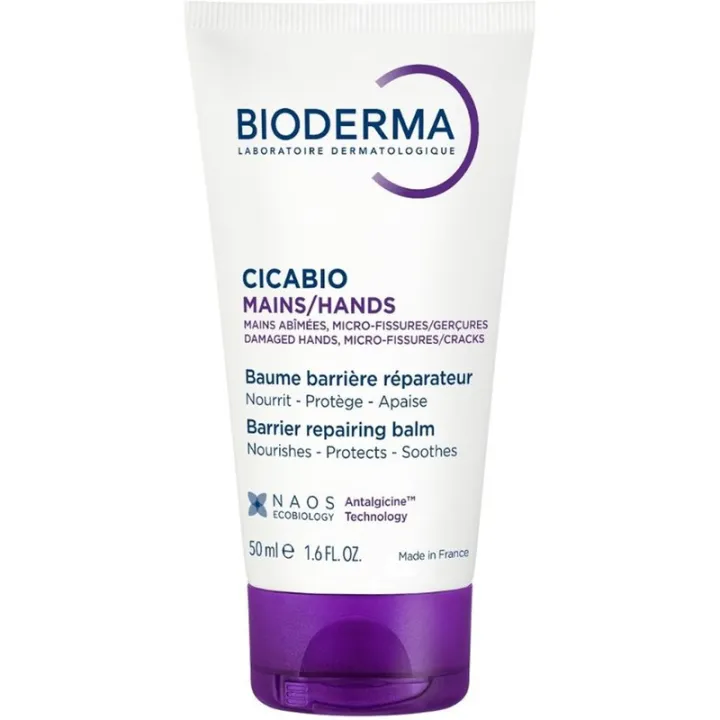
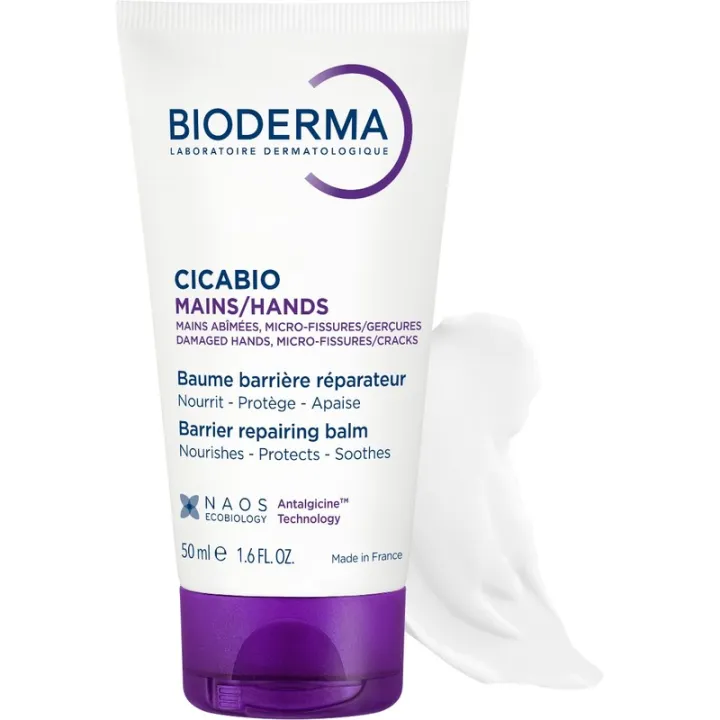
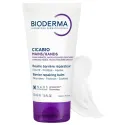
Bioderma Cicabio Mains is designed for damaged hands—hands that can no longer cope when cold weather, water, detergents, and repeated washing take their toll. Among our creams for dry and damaged hands, this is a lightweight balm formulated with glycerin, shea butter, and sodium hyaluronate.
When applied to the skin of the hands, it nourishes, protects, and soothes. It forms a protective film that remains on the skin’s surface between washes and supports the skin when it’s put to the test throughout the day.
Its non-greasy, non-sticky finish makes all the difference in daily life. The balm absorbs without leaving marks on your keyboard, phone, or steering wheel, so you can get right back to what you were doing—a treatment you keep with you rather than saving for bedtime.
It’s designed for both home and professional use. At home, it’s perfect for washing dishes, cleaning, gardening, or cooking. At work, it’s ideal for professions where hands are constantly washed: healthcare, hairdressing, food service, early childhood care, and construction sites. In winter, when dry, cold weather adds to the mix, this is often when it’s needed most.
The step before applying the balm is just as important as the balm itself: a gentle cleanser cleanses without stripping the skin. For this, we recommend Bioderma’s Atoderm shower gel, designed for dry and sensitive skin. Once your hands are washed with it and thoroughly dried, Cicabio Mains then applies its protective film: one gently cleanses, the other takes over on the skin.
How do you apply this barrier balm for hands?
Directions for Use
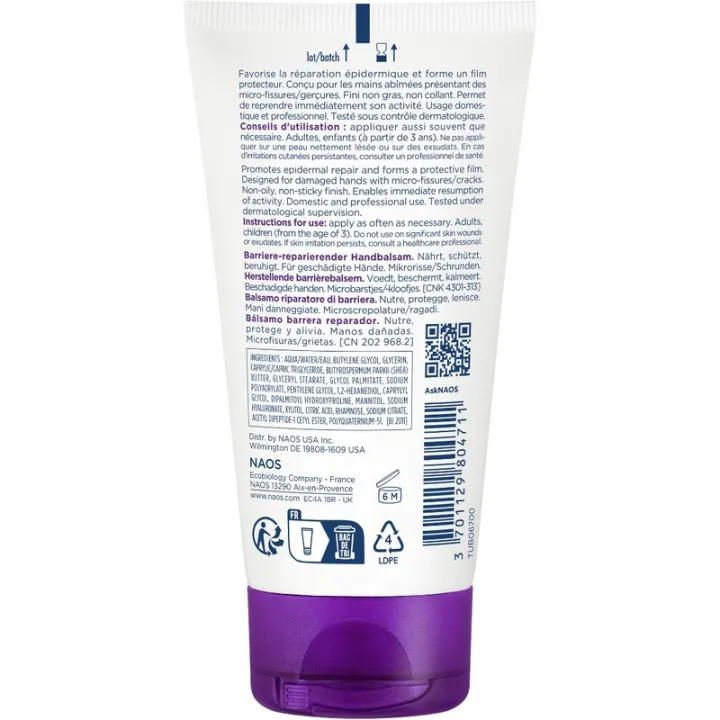
Apply to your hands as often as needed, massaging gently until absorbed.
Share your feedback on the usage instructions and dosage for Bioderma Cicabio Hands Repairing Barrier Balm with our partner “Verified Reviews” after your purchase.
Precautions
- Suitable for adults and children ages 3 and up.
- Do not apply to severely damaged skin (open wounds, bleeding cracks) or to weeping skin.
- If skin irritation persists, consult a healthcare professional.
- A crack that becomes red, hot, painful, or oozing, or that does not heal despite regular care, should be examined by a doctor.
- If your hands become damaged every time they come into contact with water, detergents, or products used at work, you should seek medical advice (from a dermatologist or occupational physician): hand eczema or contact dermatitis may be the cause, and this balm is not a treatment for those conditions.
- If you are taking a prescribed treatment for your hands (such as a cortisone cream), ask your doctor or pharmacist how to apply it.
- In healthcare settings, follow the facility’s guidelines regarding creams compatible with hydroalcoholic solutions and the use of gloves.
- Do not use if you have a known allergy to any of the ingredients. Avoid contact with the eyes.
- Use within 6 months after opening. Keep out of reach of children.
What are the ingredients in this restorative hand balm?
Ingredients
Aqua/Water/Eau, Butylene Glycol, Glycerin, Caprylic/Capric Triglyceride, Butyrospermum Parkii (Shea) Butter, Glyceryl Stearate, Glycol Palmitate, Sodium Polyacrylate, Pentylene Glycol, 1,2-Hexanediol, Caprylyl Glycol, Dipalmitoyl Hydroxyproline, Mannitol, Sodium Hyaluronate, Xylitol, Citric Acid, Rhamnose, Sodium Citrate, Acetyl Dipeptide-1 Cetyl Ester, Polyquaternium-51.
Packaging
50 ml tube.
Our expert advice on using Bioderma Cicabio Hands daily
At the counter, the most common mistake is applying the balm only once, in the evening, even though hands are washed ten or fifteen times a day. Each time you wash your hands, some of the protective film is washed away: it’s after washing—once your hands have been patted dry—that the balm is most effective. Keep the tube near the sink or in your pocket rather than in the bathroom.
A balm is no substitute for protection. When washing dishes, cleaning, or gardening, gloves are still your first line of defense, and lukewarm water is gentler on the skin than hot water. In the evening, applying a slightly more generous amount takes advantage of the hours when your hands won’t be washed again.
FAQ
How can I tell if my hands are dry or damaged before choosing Bioderma Cicabio Mains?
Dry hands feel rough and tight, especially after washing. Damaged hands are a more serious condition: the skin becomes red, feels uncomfortable, and develops micro-cracks or chapping, often on the knuckles and fingertips. Bioderma Cicabio Mains is designed for the latter condition; for simply dry hands, a standard moisturizing hand cream is usually sufficient.
Can I apply Bioderma Cicabio Hands after using hand sanitizer?
Yes. The balm is applied to dry hands once the gel has completely evaporated. It is used between hand-rubbing sessions, not as a replacement for them.
Does Bioderma Cicabio Hands have a scent?
Its ingredient list contains neither fragrance nor essential oils. The balm therefore leaves no scent on the hands, making it easy to use at work or in the kitchen.